19 min read
—



V7 Go
A smarter way to manage due diligence and underwriting
When a private equity fund makes its first exit, the cash doesn't flow to investors and managers in proportion to their stakes. It flows through a sequence written into the limited partnership agreement before the fund held a single investment.
A distribution waterfall is the contractually defined order in which exit proceeds are allocated between limited partners (LPs) and the general partner (GP). Each tier must be satisfied in full before proceeds flow to the next level, with LPs receiving their contributed capital back first, then a minimum annualised return, before the GP earns any carried interest.
The mechanics look straightforward on paper. In practice, fund administrators and junior GPs misjudge three things more than any other:
Whether the preferred return accrues on a simple or compound basis — on a mid-size fund, the difference runs to hundreds of thousands of dollars
Whether the hurdle rate is an IRR threshold or a simple interest target — it is an IRR threshold, and the two produce different outcomes
How the waterfall structure determines when the GP first earns carry and how much clawback exposure LPs carry if early distributions prove excessive
This guide covers the mechanics of both waterfall structures, how internal rate of return (IRR) connects to the preferred return threshold, the clawback provisions that protect LPs when waterfalls over-distribute, and how AI tools now extract waterfall terms from LP agreements and automate the calculation end-to-end.
In this article:
The four-tier waterfall structure: return of capital, preferred return, GP catch-up, and carried interest
American-style (deal-by-deal) vs European-style (whole-of-fund) waterfalls compared
How IRR functions as the preferred return threshold, not a simple interest rate
Clawback provisions, carry escrow, and the LP questions worth asking at term sheet stage
How AI now extracts waterfall parameters from LP agreements and automates IRR reporting for fund managers
The four-tier private equity distribution waterfall structure
Every PE waterfall runs four sequential tiers, all derived from a single source: the limited partnership agreement. The LPA specifies the preferred return rate, whether that return compounds annually or accrues on a simple basis, the catch-up percentage, and the final carried interest split. Fund administrators translate those provisions into a working model; every exit triggers a fresh run through the same sequence.
The four tiers apply at either the deal level or the fund level. In deal-level structures, the waterfall tests each individual exit independently. In fund-level structures, it tests the whole portfolio in aggregate. The distinction is the difference between American-style and European-style structures, covered in the next section. The tier mechanics are identical in both.
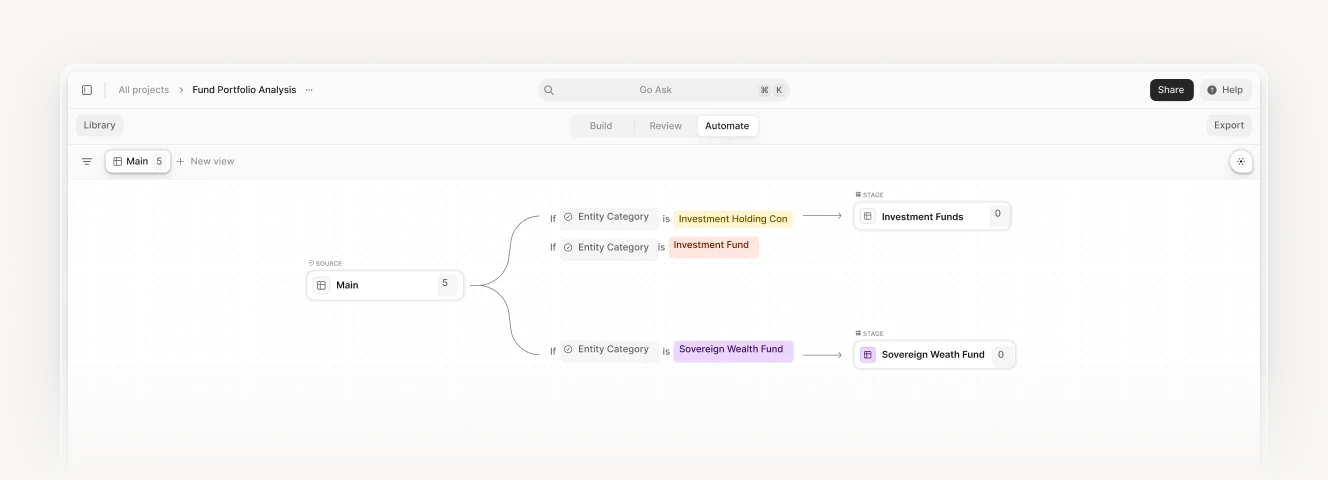
Four sequential tiers govern every PE distribution waterfall. LP agreement language determines the preferred return rate, compounding method, and catch-up percentage that drive each tier's threshold.
Tier 1: Return of capital
The first priority in every distribution waterfall is returning contributed capital to the LPs. Until that amount has been paid in full, the GP receives nothing from the waterfall.
Contributed capital is not merely the amount LPs invested in portfolio companies. It includes all drawn-down commitments: invested equity, management fees, and fund formation expenses charged against LP commitments. A fund with $80m in committed LP capital and $6m in cumulative management fees over its life has a return-of-capital threshold of $86m, not $80m. Every distribution goes toward clearing this total.
This tier exists because the GP is not entitled to a performance fee on capital that was merely returned. Return of capital is the floor of LP protection: without it, a GP could technically earn carry on a fund that produced a zero net return for investors.
Tier 2: Preferred return (hurdle rate)
Once contributed capital is returned, LPs receive a minimum annualised return before the GP earns any carried interest. This threshold is most commonly set at 8% and appears in the LPA as the "preferred return" or "hurdle rate." Both terms are standard; both refer to the same mechanism.
The compounding method determines how large this threshold actually becomes. Funds specify either simple accrual (8% per year on outstanding capital, not compounded) or compound accrual (8% per year, compounded annually on the outstanding balance). On a $10m LP contribution held for six years, simple accrual produces a preferred return of $4.8m; compound accrual at the same rate produces $5.87m — 22% more. Alter Domus's fund administration research identifies compounding as one of the most common LP due diligence questions, and one of the least clearly addressed in first-draft investment documents. Confirm the compounding method before signing; do not assume.
One point that fund documents rarely state explicitly: the preferred return is an IRR target, not a rate applied to a running balance. An 8% preferred return means LPs must achieve an 8% internal rate of return on their capital, accounting for the timing and size of every capital call and every distribution, before the GP earns carry. The distinction is examined in full below, because the timing of exits changes who actually clears the threshold.
Tier 3: GP catch-up
Once the preferred return is fully satisfied, the general partner receives a disproportionate share of incremental distributions until its cumulative share of total fund profits equals the agreed carried interest percentage. This phase is the catch-up tranche.
The catch-up percentage (which specifies what proportion of distributions during this phase go to the GP) is among the most actively negotiated terms in fund documents. At 100% catch-up, the GP receives all proceeds after preferred return is met until the carry target is achieved. At 50% catch-up, distributions during this phase split equally between LP and GP.
The difference in LP outcome is material. Consider a fund with 20% carry where LPs have received $12m in preferred return. The GP's catch-up target is $3m (since $3m divided by $15m total profits distributed equals 20%). At 100% catch-up, the next $3m goes entirely to the GP and the tranche closes immediately. At 50% catch-up, the GP requires $6m of new distributions to accumulate $3m, because $3m of that $6m flows to the LP. The LP receives cash during the catch-up phase at 50%; at 100%, the LP waits for the catch-up to complete before sharing again.
A 100% catch-up is acceptable when paired with meaningful clawback provisions and escrow arrangements. LPs who accept 100% catch-up without strong clawback protections are relying on GP goodwill at termination.
Tier 4: Carried interest split
Once the GP catch-up is complete, remaining distributable proceeds split between LPs and the GP per the LPA. The standard split is 80/20: LPs receive 80% of residual profits; the GP receives 20%. This 20% is the GP's carried interest, often shortened to "carry" in conversation.
Some funds negotiate tiered carry above the standard split. A structure might set carry at 20% up to a 2× multiple on invested capital (MOIC), rising to 25% on returns above a 3× MOIC. Tiered carry aligns GP incentives with exceptional performance, though it is more common in newer fund structures and growth equity than in established large-cap buyout.
Once in the final tier, every new distribution shares between LP and GP at the agreed ratio for the remainder of the fund's life. For a fund with multiple ongoing portfolio positions, this tier can generate distributions, including carry, across several years.
American-style vs European-style waterfall: key differences
The four tiers are consistent across PE waterfalls. What changes is the trigger: when does the waterfall test whether the preferred return has been met, and against what pool of capital? That single design choice has direct consequences for GP liquidity, LP protection, and the realistic enforceability of clawback provisions.
American-style (deal-by-deal) waterfall
In an American-style waterfall, the GP earns carried interest after each exit, provided that individual investment clears the hurdle. The four-tier waterfall runs against a per-deal cost basis, not against the fund's aggregate capital base.
The practical effect is earlier GP liquidity. A fund that closes its first profitable exit in year three can pay carry immediately, rather than requiring the GP to wait until the full portfolio is wound down, sometimes a decade later. For emerging managers who cannot sustain operations on management fees alone, this matters.
The cost is borne by LPs in the form of clawback exposure. If a fund generates two large early exits and several underperforming later investments, the GP may have received carry on the profitable deals while the total fund return never clears the preferred return. LPs' primary protection in this scenario is the clawback provision, which requires the GP to repay excess carry at termination. How effectively that protection operates depends on the escrow and audit structures in the LPA, not on the clawback clause alone.
Common safeguards in American-style structures: 20–30% of distributed carry held in escrow until fund termination, clawback obligations personally guaranteed by individual managing partners, and auditor-certified interim carry tests conducted annually or at each distribution event.
European-style (whole-of-fund) waterfall
In a European-style waterfall, the GP earns no carried interest until all LP capital across the entire portfolio has been returned and the preferred return on that capital paid in full. The waterfall runs at the fund level, not deal by deal.
This is the standard structure for large buyout funds, infrastructure funds, and secondary funds. Its LP-protective logic is straightforward: carry cannot flow until total fund performance justifies it, which eliminates most of the over-payment risk inherent in American-style structures. Clawback exposure for LPs is minimal.
The trade-off is GP liquidity. In a 10-year fund with exits concentrated in years five through eight, individual GP partners may see no carry for six or seven years. Funds operating under European-style terms commonly manage partner liquidity through management company loans secured against anticipated future carry, or by structuring fee step-downs as a bridge mechanism.
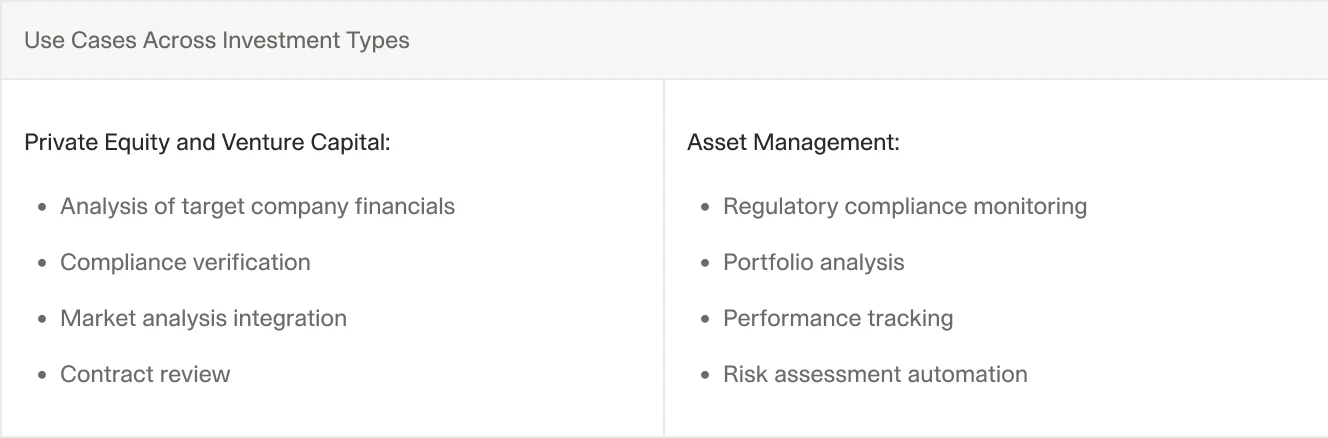
American-style and European-style waterfalls use the same four-tier structure but apply it at different scales: deal by deal versus whole of fund, with direct consequences for GP carry timing and LP clawback exposure.
Feature | American-style | European-style |
|---|---|---|
When carry first flows | After each profitable exit | After all LP capital is returned |
Carry basis | Deal-by-deal | Whole fund |
Clawback risk for LPs | Significant | Minimal |
LP protection level | Lower | Higher |
Most common in | Emerging managers, smaller funds | Large buyout, infrastructure, secondaries |
GP liquidity profile | Earlier | Delayed, often by several years |
One further consideration for LPs evaluating fund terms: continuation funds and secondary transactions create a separate waterfall question. When a GP extends a portfolio holding through a continuation vehicle, selling the asset from the original fund into a new fund at a negotiated price, the distribution waterfall of the original fund closes out at that point. How the secondary buyer's preferred return and carry terms interact with the original fund's LP economics requires specific legal review. For context on the documentation involved, see secondary market documents in private equity.











How IRR fits into waterfall calculation in private equity
Most fund documents state the preferred return as "8% per annum." Most people read this as 8% interest accruing on the LP's outstanding capital balance. That reading is incorrect, and the difference matters for any fund administrator who models waterfall distributions.
The preferred return threshold is an IRR target. An 8% preferred return means limited partners must achieve an internal rate of return of 8% on their contributed capital before the GP earns any carry. IRR is the annualised discount rate at which the net present value of all LP cash flows equals zero: capital calls as negative flows, distributions as positive flows, both counted at their actual dates. It accounts for both the size of each cash flow and exactly when it occurs.
This is not a semantic distinction. A $10m distribution received in year two produces a substantially higher IRR contribution than the same $10m received in year six, because the LP's capital was committed for a shorter period. A fund that returns 1.8× MOIC over four years will clear an 8% preferred return; a fund that returns 1.8× MOIC over nine years may not, even with identical absolute proceeds. The multiple is the same; the timing is not; the IRR differs.
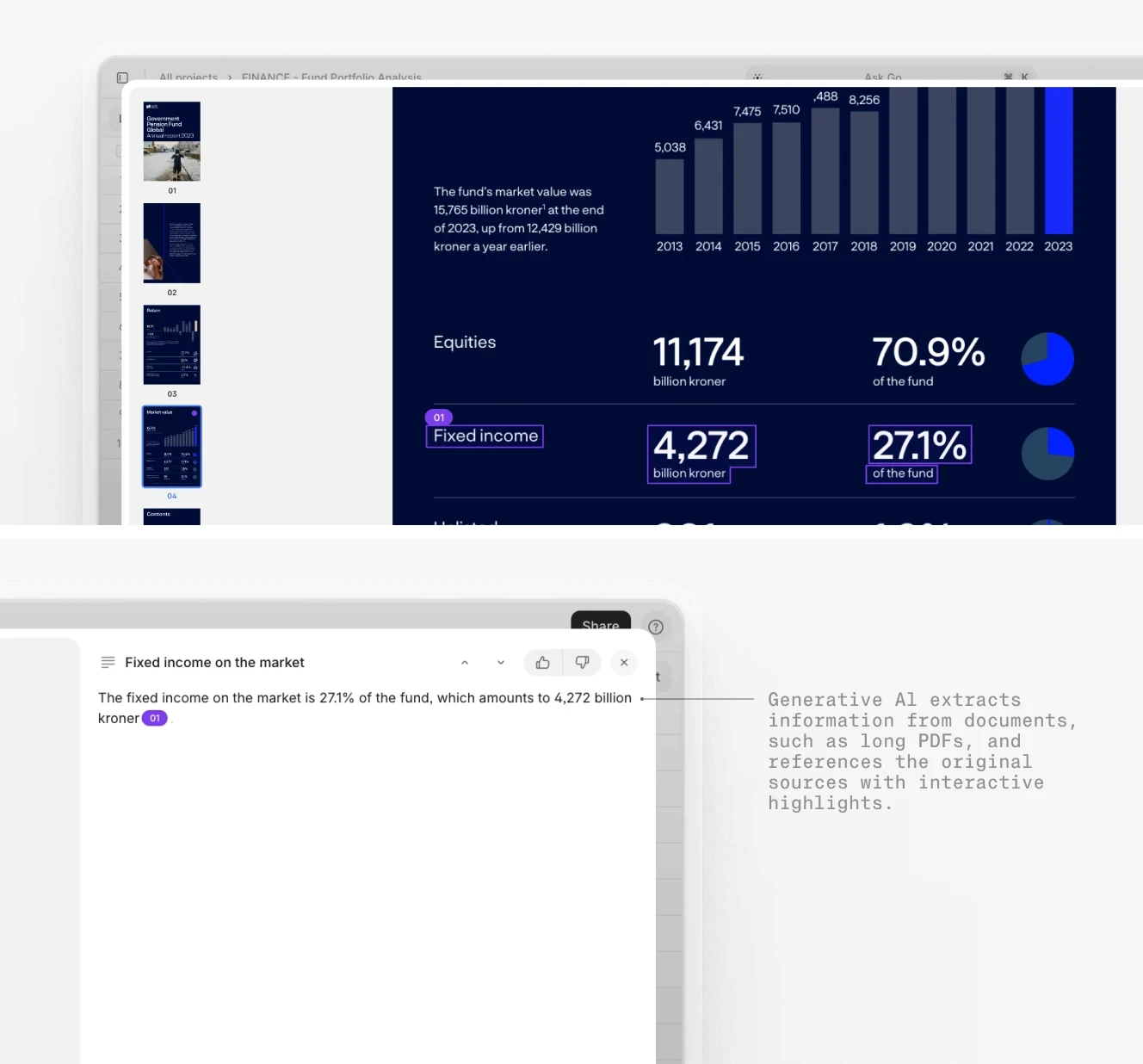
Fund performance dashboards track distributions against the LP cash flow schedule. IRR tests on every distribution event determine whether the preferred return threshold has been met before carry flows to the GP.
At the fund level, IRR is calculated from the LP's actual cash flow schedule: the dates and amounts of each capital drawdown, and the dates and amounts of each distribution received. When a new exit generates a distribution, the waterfall model first allocates that distribution through the four tiers, derives the resulting LP cash flows, and then tests whether the aggregate LP IRR — calculated across all actual drawdown and distribution dates — has cleared 8%. Only when it has does carry flow to the GP.
A complication worth flagging: some GPs use subscription credit facilities to delay LP capital calls, drawing on a short-term credit line rather than calling LP capital immediately when the fund invests. Since IRR is measured from when the LP's capital is actually drawn, not from when the fund deploys, subscription lines compress the measured J-curve and increase reported IRR without improving underlying LP economics. This is distinct from waterfall mechanics, but it is directly relevant when LPs assess whether their preferred return has genuinely been earned. For a detailed treatment, see how subscription lines affect IRR reporting in private equity.
DPI and TVPI: the LP-facing metrics waterfall runs produce
Two metrics appear alongside IRR in LP quarterly reports as direct outputs of waterfall calculations. Distributions to paid-in capital (DPI) measures cash actually returned to LPs as a multiple of invested capital: a DPI of 0.6× means the fund has returned 60 cents for every dollar drawn. Total value to paid-in capital (TVPI) adds the current fair value of unrealised portfolio positions to actual distributions, giving a picture of total value including paper gains.
A fund reporting TVPI of 1.9× with DPI of 0.3× has returned little real cash despite strong projected performance. IRR, DPI, and TVPI tell different parts of the same story: IRR captures time-weighted return, DPI captures realised cash, and TVPI captures total fund value. LPs who monitor only IRR during a fund's active years may not notice that the preferred return is IRR-satisfied on paper while actual distributions remain well below the 1× DPI threshold. All three metrics matter for a complete picture.
Worked example: tracing a distribution through the waterfall
A simplified example shows how the waterfall tiers interact and how IRR determines whether the preferred return has been met.
Assume: a fund closes with $100m of LP contributed capital, drawn in year one. The preferred return is 8% compounded annually. Carried interest is 20% with a 100% catch-up.
Year 0: LPs fund $100m. The ROC threshold is $100m; the preferred return begins accruing immediately.
Year 3: First exit. $60m is distributed.
Year 5: Second exit. $80m is distributed.
Year 3 waterfall (first exit, $60m available):
Tier 1 — Return of capital: $60m goes toward the $100m ROC target. ROC outstanding: $40m. No further tiers triggered.
Year 5 waterfall (second exit, $80m available):
Tier 1 — Return of capital: $40m clears the outstanding ROC balance. Tier 1 complete. $40m remains.
Tier 2 — Preferred return: At 8% compound over five years, the LP's total entitlement on $100m is $100m × (1.08)^5 = $146.93m. The LP has received $100m in ROC. Preferred return outstanding: $46.93m. The remaining $40m from this distribution is applied to the preferred return. Outstanding after year 5: $6.93m. No catch-up or carry triggered.
The fund needs at least one further exit to clear the remaining $6.93m preferred return before the GP catch-up tranche begins. The LP's IRR at year 5, calculated on actual cash flows ($−100m at year 0, $+60m at year 3, $+100m at year 5, with $6.93m still owed), is approximately 7.4%, which is below the 8% threshold. The waterfall confirms no carry has been earned.
If a third exit in year 6 distributes $20m: the first $6.93m clears the preferred return. The GP's catch-up target at this point is $46.93m × (20/80) = $11.73m (the amount the GP needs to accumulate to hold 20% of total profits distributed). The remaining $13.07m of the year-6 distribution enters the catch-up tranche: $11.73m goes to the GP (completing the catch-up), and $1.34m splits 80/20 between LP and GP in the final carried interest tier. The LP receives $1.07m, the GP receives $0.27m from that final slice.
Real waterfall models track capital call dates by individual drawdown, apply the preferred return accrual from the date each tranche was funded, and recalculate the IRR test on every distribution event. The numbers above are rounded for illustration; the logic is exact.
Clawback provisions: when waterfalls over-distribute
A clawback provision is the LP's contractual right to recover excess carried interest from the GP when final fund performance does not justify the carry already paid out. It is most relevant in American-style waterfalls, where the GP earns carry on profitable early exits before later-stage underperformance becomes visible.
The mechanism: at fund termination, or at pre-agreed interim checkpoints, the total carry actually paid to the GP is reconciled against the carry that would have been earned on a whole-fund basis. If the GP received more than the final fund returns justify, it is obligated to return the excess to LPs. That obligation typically falls on the GP entity and, in many agreements, on individual managing partners personally.
Several practical complications reduce real-world enforceability. Carry distributed to individual GP partners over a fund's 10-year life may have been spent, invested elsewhere, or given to charity by the time the terminal reconciliation occurs. Many agreements therefore cap the clawback obligation at after-tax amounts: the GP owes back only what it net-received. At a 37% marginal rate, LPs may recover 63 cents on the dollar of excess carry, not 100 cents. This is a structural limitation of the clawback mechanism, not a drafting failure.
LP protective mechanisms to assess before committing to a fund:
Carry escrow: A percentage of distributed carry is held in a segregated account pending final reconciliation. Proskauer's Private Equity Fund Terms Study found that 42% of funds escrow nothing (they distribute carry as earned and rely entirely on the clawback clause) while 25% escrow 100% of interim carry. The escrow percentage is a direct measure of available LP protection. Funds that escrow nothing place the full burden of clawback recovery on post-termination enforcement.
Letters of credit: Some LPAs require individual GP partners to post personal letters of credit covering their expected clawback obligation, providing security that does not depend on the partner's future financial position.
Audit certification: A third-party auditor certifies at agreed intervals that the carry distributed to date does not exceed the amount justified by current fund performance. This limits the window during which over-distribution can compound without detection.
LP questions worth asking at term sheet stage: What percentage of interim carry is escrowed, and until when? Is the clawback obligation tested annually or only at fund termination? Does it apply gross of taxes or is the GP's net liability capped at after-tax proceeds? Is it personally guaranteed by individual managing partners?
LP reporting standards are also relevant here. The Institutional Limited Partners Association (ILPA) has published reporting templates that include clawback position tracking and carry escrow balance disclosures as expected components of quarterly reporting. For GPs seeking to meet LP transparency expectations, see ILPA reporting templates and GP requirements.
How AI is automating waterfall calculation and IRR reporting in private equity
The standard fund administration workflow for a distribution waterfall runs as follows: open the LP agreement, locate the waterfall provisions (which may be split across multiple sections: the economics in one article, the compounding specification in the definitions section, and the clawback mechanics in a separate schedule), translate those terms into an Excel model, update capital account balances for each LP, apply the waterfall logic to the distribution, and run the IRR calculation on the resulting LP cash flow schedule. Each new exit requires reopening both documents.
A typical LP agreement runs to 200 pages or more. Legal-to-model translation requires both legal reading fluency and financial modelling expertise. A mis-read catch-up percentage or a missed compounding specification produces a materially incorrect carry calculation and, in an American-style waterfall, an immediate over- or under-payment to the GP.
These are not theoretical errors. Fund-level disputes between LPs and GPs over waterfall calculations, and GP restatements of carried interest positions, frequently trace back to a model parameter set incorrectly at fund close and not caught until a large exit exposed the discrepancy. The gap between what the LPA says and what the model reflects is where errors accumulate.
The gap between LP agreement language and the distribution model is where waterfall errors accumulate. An AI agent closes that gap: it reads the full LP agreement, locates the waterfall provisions regardless of where they appear in the document, and extracts the relevant parameters as structured data — preferred return rate, compounding method, catch-up percentage, carry split, and any tiered carry thresholds — feeding them directly into the distribution model. No re-entry. No translation risk.
V7 Go's document processing agents handle LP agreements, term sheets, side letters, and capital account statements across a portfolio. The same extraction workflow that supports AI-driven fund due diligence applies at fund close, so the parameters extracted when the LPA is signed are the parameters driving distributions throughout the fund's life. Combined with the AI financial model builder, there is no manual handoff between reading the agreement and running the numbers.
Each new exit triggers an automatic re-run: the agent reads the distribution amount, re-applies the waterfall tiers against current capital account balances, recalculates IRR from the updated LP cash flow schedule, and generates a distribution notice with tier-by-tier attribution — return of capital, preferred return, GP catch-up, carried interest — in the proportions the LPA specifies. LPs receive an auditable schedule, not a summary total.
What AI changes, and what it does not: AI removes the parameter-translation risk between LPA language and model input, and eliminates the model-rebuilding labour for each exit event. It does not replace the GP's judgment on exit timing, valuation, or portfolio construction, the inputs that determine whether the preferred return is met. That judgment remains human. The calculation that follows it need not be. For a broader look at AI across the private equity fund administration workflow, including LP agreement analysis and side letter processing, see LP agreement analysis with AI and AI-driven private equity fund due diligence.
A distribution waterfall is a mechanical translation of decisions already made — which deals were struck, at what price, and when exits closed. The waterfall converts those outcomes into LP economics according to the rules written into the LPA. Fund administrators cannot change the mechanics at distribution time; they can only ensure the model accurately reflects the agreement and runs promptly when a distribution occurs.
The question is no longer whether to automate. It is whether the team translating LP agreement language into a live distribution model is doing it by hand or not. V7 Go handles LPA parameter extraction, waterfall modelling, IRR computation, and distribution reporting as a connected workflow — the same platform fund teams use for due diligence and investment committee documentation.
What is a distribution waterfall in private equity?
A distribution waterfall is the contractually defined order in which exit proceeds are allocated between limited partners (LPs) and the general partner (GP) in a private equity fund. Each tier must be fully satisfied before proceeds flow to the next. LPs receive their contributed capital back first, then a minimum annualised return (the preferred return), before the GP earns any carried interest (carry). The structure is specified in the limited partnership agreement.
+
What is the difference between an American and European waterfall?
American-style waterfalls (deal-by-deal) pay the GP carried interest after each profitable exit, provided that individual deal clears the preferred return threshold. European-style waterfalls (whole-of-fund) require all LP capital across the full portfolio to be returned, plus the preferred return paid in full, before the GP receives any carry. American-style structures offer GPs earlier liquidity but expose LPs to greater clawback risk. European-style structures are more LP-protective and are the standard for large buyout and infrastructure funds.
+
How does a GP catch-up provision work?
Once limited partners have received their preferred return, the general partner enters a catch-up phase in which it receives a disproportionate share of incremental distributions until its cumulative share of total profits equals the agreed carry percentage — typically 20%. At 100% catch-up, the GP receives all distributions during this phase until the target is met. At 50% catch-up, distributions split equally between LP and GP throughout. The catch-up tranche ends once the GP's share of total profits equals the carry percentage, at which point the standard carried interest split applies.
+
What is carried interest and how is it calculated?
Carried interest is the GP's performance fee — its share of the fund's profits above the preferred return threshold. It is calculated as a percentage (typically 20%) of total profits distributed after LPs have received their contributed capital back and their preferred return. The carry is only earned after the GP catch-up tranche completes. In a standard 80/20 fund, the GP receives 20 cents of every dollar of residual profit once the preferred return and catch-up are satisfied, for the remainder of the fund's life.
+
What is a preferred return (hurdle rate) in private equity?
IRR — internal rate of return — is the mechanism by which the preferred return threshold is tested in a PE waterfall. An 8% preferred return does not mean 8% interest on a running balance; it means LPs must achieve an 8% IRR on their contributed capital, accounting for the exact dates and sizes of every capital call and every distribution. When a new exit generates a distribution, the waterfall model derives the resulting LP cash flows, then calculates aggregate LP IRR across all actual drawdown and distribution dates. Only when that IRR clears 8% does carry flow to the GP. Because IRR is time-weighted, a fund returning 1.8× over four years will typically clear an 8% hurdle; the same 1.8× over nine years may not — the multiple is identical, but the IRR differs because capital was committed for longer.
+
How is IRR used in private equity waterfall distributions?
Go is more accurate and robust than calling a model provider directly. By breaking down complex tasks into reasoning steps with Index Knowledge, Go enables LLMs to query your data more accurately than an out of the box API call. Combining this with conditional logic, which can route high sensitivity data to a human review, Go builds robustness into your AI powered workflows.
+
Casimir is a seasoned tech journalist and content creator specializing in AI implementation and new technologies. His expertise lies in LLM orchestration, chatbots, generative AI applications, and computer vision.