12 min read
—



V7 Go
A smarter way to manage due diligence and underwriting
During a flagship fundraise, a private equity firm's investor relations team can receive more due diligence questionnaires in a week than it can answer in a month. Each one runs to hundreds of questions across fund terms, governance, valuations, and ESG. Answered by hand, a single comprehensive questionnaire consumes fifteen to forty hours of senior time. Choosing the right due diligence questionnaire software is the difference between a fundraise that keeps moving and one that stalls in the back office.
The catch is that "DDQ automation" describes two jobs that have almost nothing in common, and most buyers do not realise it until after they have signed. One job is answering the questionnaires that limited partners send you, drawing accurate, defensible responses out of your own firm's documents. The other is the reverse: your deal team receives a target company's completed questionnaire, two hundred questions of dense responses, and has to extract, cross-check, and act on what is inside before the investment committee meets. Both are called DDQ automation. They need different tools.
Most of the market solves the first job and ignores the second. That is the gap this guide is about. Fundraising itself is only getting more competitive, with Bain's Global Private Equity Report tracking a market where capital takes longer to close and diligence gets heavier every cycle, so the cost of doing this by hand keeps rising. If you want the wider tooling picture beyond questionnaires, our guide to the best due diligence software for M&A covers virtual data rooms and deal management; this article stays narrow, on the questionnaire itself.
Written for the VP of investor relations weighing a purchase, and the M&A analyst who inherits the target's responses, it covers the two workflows, the tools that serve each, the features that actually separate them, and how to build a working AI process around them.
In this article:
What a due diligence questionnaire is, and why M&A and PE teams are really dealing with two of them.
The best AI tools for each workflow, compared without the marketing gloss.
The five features that separate real DDQ automation software from an expensive search bar.
How to build an AI DDQ workflow, for both answering and reviewing questionnaires.
What a due diligence questionnaire is, and why M&A teams have two of them
A due diligence questionnaire (DDQ) is a structured set of questions used to assess a firm or a company before money changes hands, covering strategy, operations, financial controls, compliance, and governance. In private equity it is the backbone of how limited partners (LPs) evaluate the general partners (GPs) they might back, and how acquirers interrogate the companies they might buy. The confusion, and the reason so many software purchases disappoint, is that those are two different documents moving in two different directions.
Get the direction wrong and the tool you bought solves a problem you do not have. So before comparing anything, sort out which questionnaire you are actually fighting.
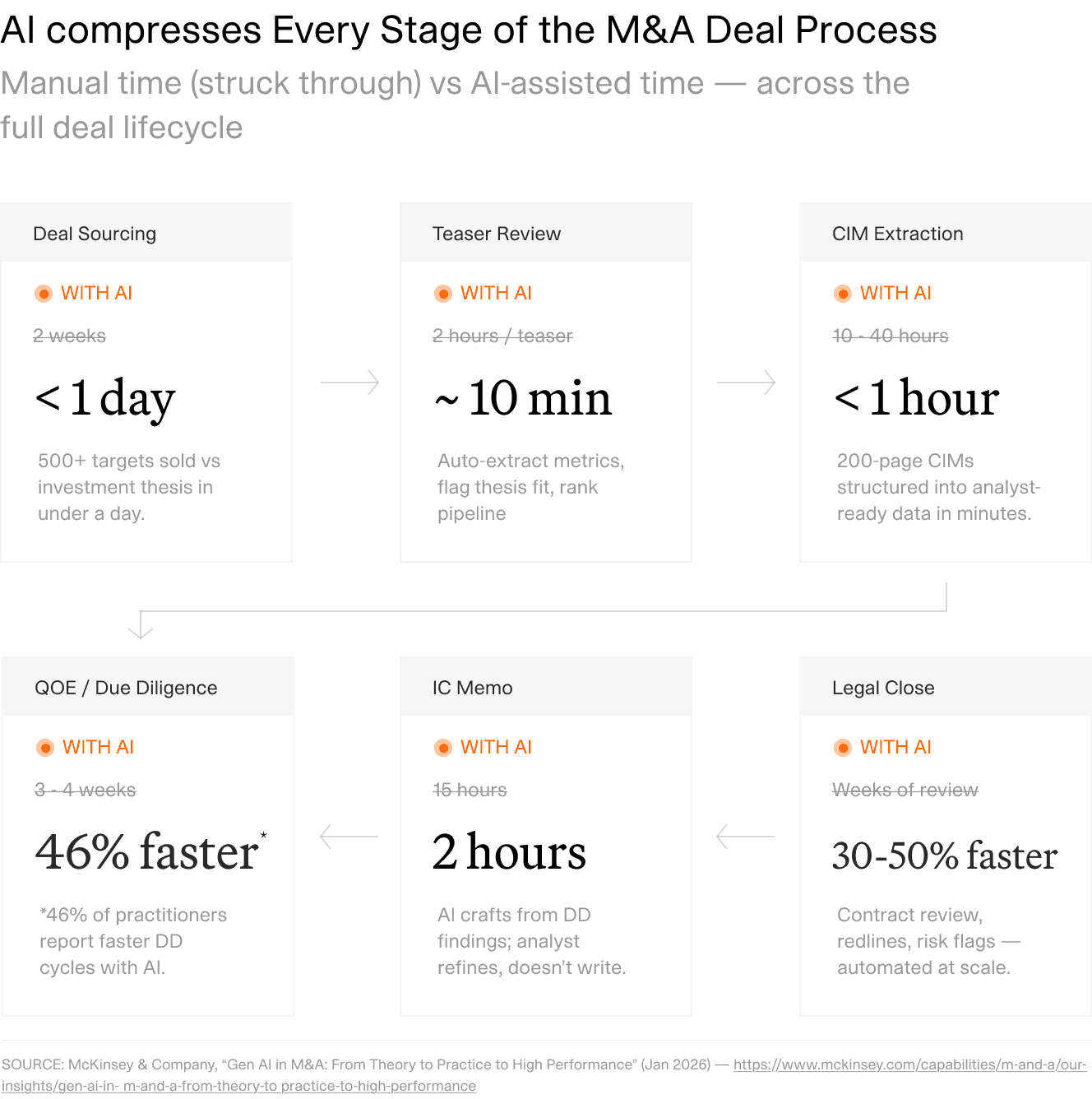
Across a deal, AI compresses the slowest stages. Diligence, questionnaires included, is one of the biggest time sinks it removes.
The outbound DDQ: answering your investors
The outbound DDQ is the one a fund manager receives from an LP and has to answer. The reference standard here is the ILPA Due Diligence Questionnaire, published by the Institutional Limited Partners Association. Its 2.0 version organises roughly twenty diligence topics and typically runs to between one hundred and three hundred questions, and its update expanded the ESG and diversity sections that LPs now scrutinise closely. The work is not creative. It is retrieval: every answer already exists somewhere in the firm's private placement memorandum, Form ADV, prior questionnaires, and operational reports, and the job is finding it, phrasing it consistently, and making sure it is current.
The inbound DDQ: reviewing a target's responses
The inbound DDQ runs the other way. Your deal team sends a questionnaire to an acquisition target, or receives the target's completed responses in the data room, and now has to read them. This is not retrieval, it is analysis: pulling the ownership structure, the litigation history, the customer concentration, and the regulatory status out of a two-hundred-question response package, then catching the gaps, the contradictions, and the missing attachments before any of it reaches the investment committee. Our guide to private equity fund due diligence covers where those gaps usually hide.
Picture the moment it bites. A target returns a two-hundred-question response package the week before the investment committee meets, and two of your three analysts are already committed to another deal. The questionnaire is answered, technically, but nobody has read it closely enough to notice that the litigation section contradicts a figure in the financials, or that three promised attachments never arrived. That is the inbound problem, and no content library solves it.
Almost every tool on the market handles the outbound job. Almost none handles the inbound one. Keep that asymmetry in mind, because it is the single most useful filter when you look at the options.











The best due diligence questionnaire software, compared
The right tool depends entirely on which of the two jobs you are doing, so the honest way to compare is by workflow first and feature second. The instinct is to shortlist whatever has the biggest content library and the longest integration list. Wrong. The first question is not which platform is best. It is whether you are answering questionnaires or reviewing them, because no tool is genuinely excellent at both, and most are built for one.
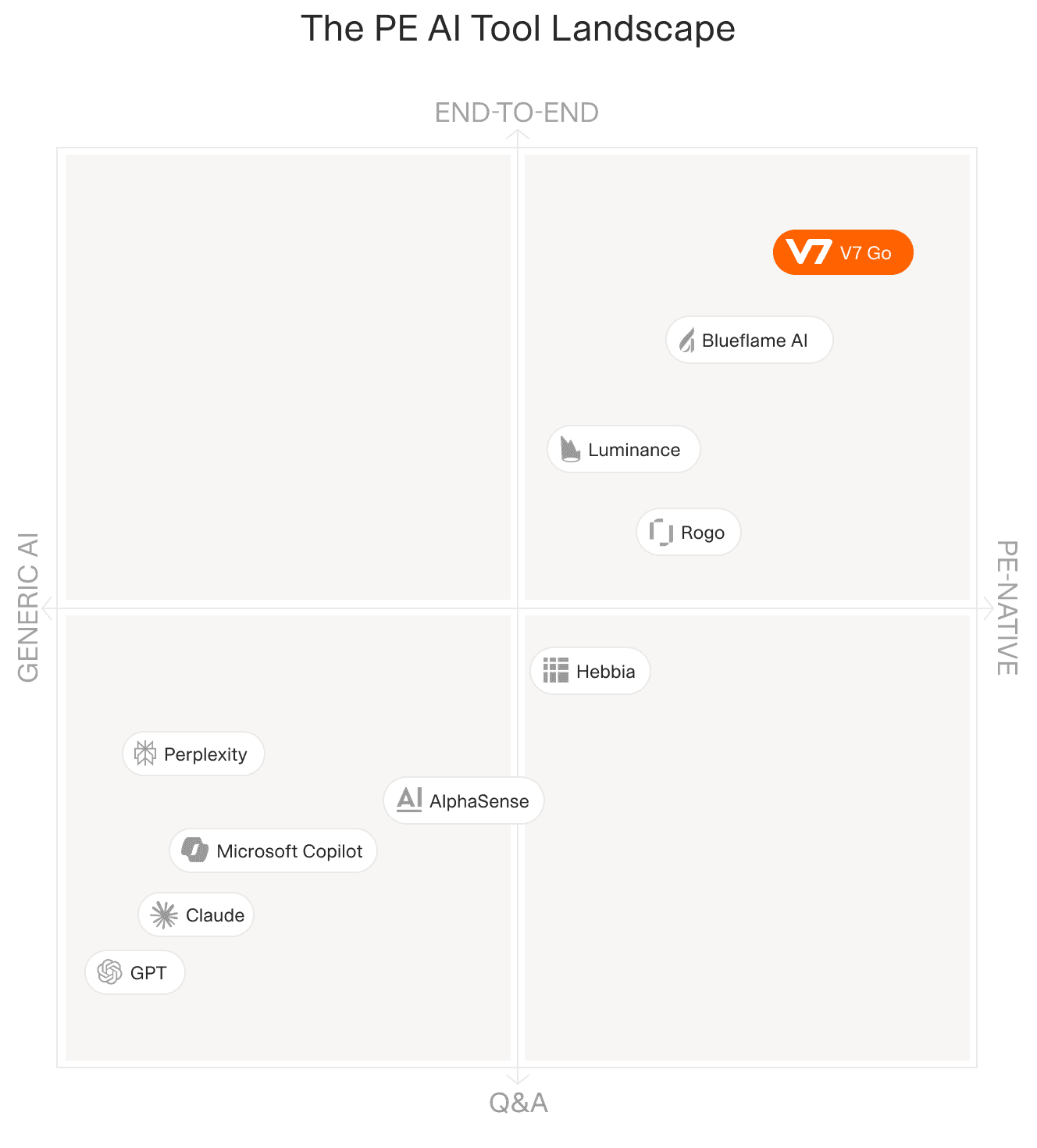
DDQ tools sit at different points between a generic question-and-answer box and a PE-native, end-to-end workflow. The direction of your questionnaire decides which corner you need.
Tool | Primary workflow | Best for | Where it is strongest |
|---|---|---|---|
Arphie | Outbound | Fund IR teams answering LP DDQs | Source attribution and support for ILPA and AIMA templates |
DiligenceVault | Outbound | Institutional investors and fund admins | Purpose-built LP and GP diligence workflows |
Ontra | Outbound | Private markets fund managers | Precedent library native to private markets |
Responsive | Outbound | Enterprise compliance teams at high volume | Scale and collaboration across large teams |
Loopio | Outbound | Enterprises with recurring RFP and DDQ volume | Content library management and multi-team review |
V7 Go | Inbound and both | M&A buy-side teams reviewing target responses | Extracting structured, cited data from incoming DDQ packages |
A few notes the table cannot carry. The outbound specialists, the platforms built for fund managers answering LPs, mostly differ at the edges: how good the source attribution is, whether they ship ILPA and AIMA templates out of the box, and how much of the content library you have to maintain by hand. That last point matters more than the demos admit. A content library is only as good as its upkeep, and without a named owner keeping it current, answer quality decays quietly until someone submits a stale figure to an LP.
Private Markets
Turn complex deal documents into better investment decisions.
The inbound job is the one the market has barely addressed. When the question is not "help us answer this" but "read this two-hundred-question response and tell us what is in it," a content library is beside the point. You need extraction, not generation, and that is a different tool. It is also where V7 Go sits, and the reason it appears in the table with a different job description from everything above it.
Two categories are worth calling out before you shortlist. Some tools answer only from verified sources and refuse to generate anything they cannot cite, trading a little coverage for zero fabrication, which is a fair deal in regulated work. Others are enterprise RFP platforms that also do DDQs, powerful at high volume but heavy for a boutique fund running a handful of questionnaires a quarter. Neither is wrong. Both are the wrong purchase if they do not match your volume and your direction.
Five features that separate real DDQ automation software from a search bar
Once you know your direction, five features decide whether a platform is worth the licence. Everything else is packaging.
Source attribution you can audit
Every answer, whether generated for an LP or extracted from a target, should trace back to a specific source document, ideally to the exact page or cell. In regulated work this is not a nicety. An unattributed answer is an audit liability, and a tool that produces confident text with no citation is quietly transferring risk onto the analyst who signs it. Look for traceable answers, a confidence score on each one, and a review gate for the low-confidence cases.
How the knowledge is maintained
Most outbound tools rest on a manually curated content library, and the maintenance burden is the part buyers underestimate. Ask the vendor two questions: who owns keeping the library current, and how long is the initial setup. Four to eight weeks is common for enterprise tools. An approach that indexes your live documents rather than a hand-maintained library removes that standing chore, which matters when a key figure like AUM changes and needs to propagate everywhere at once.
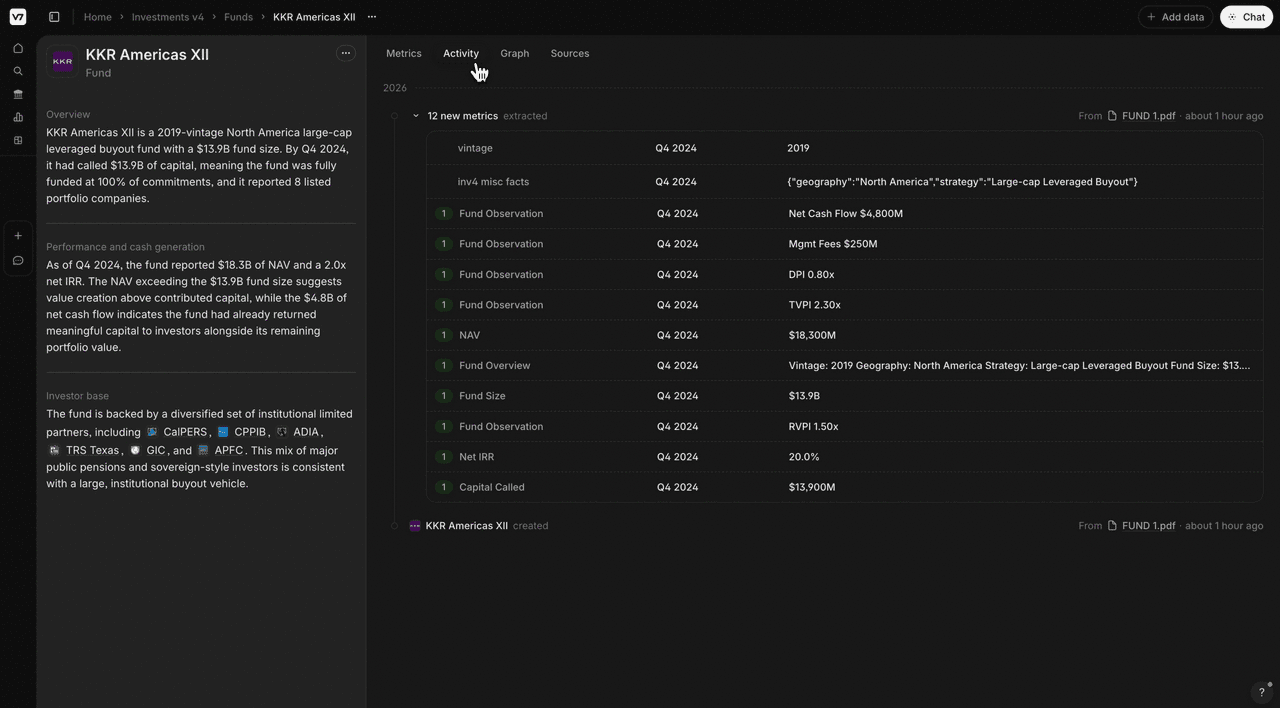
Every extracted metric here traces back to the specific source document it was pulled from and is timestamped, the same provenance a DDQ answer needs to survive a compliance review.
This is what V7 Go's Context Graph is built to do: point it at a fund's own filings, financials, and prior questionnaire responses, and it builds a relationship graph across funds, investors, and source documents rather than a flat library someone has to prune by hand. When a figure like AUM or a fund's net IRR changes in the underlying filing, the graph reflects it everywhere that figure is used, and every answer it hands back cites the exact document and line it came from, which is the difference between an answer you can defend to an LP's operational due diligence team and one you are hoping nobody checks. The same grounding is what makes AI for private equity fundraising teams comfortable letting an agent draft the first pass of a DDQ response rather than a summary intern.
Format flexibility
DDQs arrive as Excel spreadsheets, Word documents, PDFs, and web portal forms, and a target's response package will mix all of them. A tool that only ingests one format becomes the bottleneck it was supposed to remove. Confirm the platform can take any incoming structure and map it without a manual reformatting step first.
Security posture that survives an IC's scrutiny
For deal data the floor is SOC 2 Type II, GDPR readiness, and a private deployment option where your documents are isolated and never used to train shared models. Ask directly whether document content ever leaves your environment, and get the answer in writing. This is the one criterion where "probably fine" is not an acceptable answer.
Fit with your existing deal stack
The output of a DDQ workflow has to land somewhere useful: a CRM, a deal-tracking system, an investment memo. A platform that connects to your live deal context and pushes structured results onward through an API is worth more than one that leaves the data sitting in its own interface. Ask whether it reads your deal context or only its own static store.
How to build an AI DDQ automation workflow
The tool is not the hard part. The workflow is, and it is different for each direction. Here is the shape of both, stripped to the steps that matter.
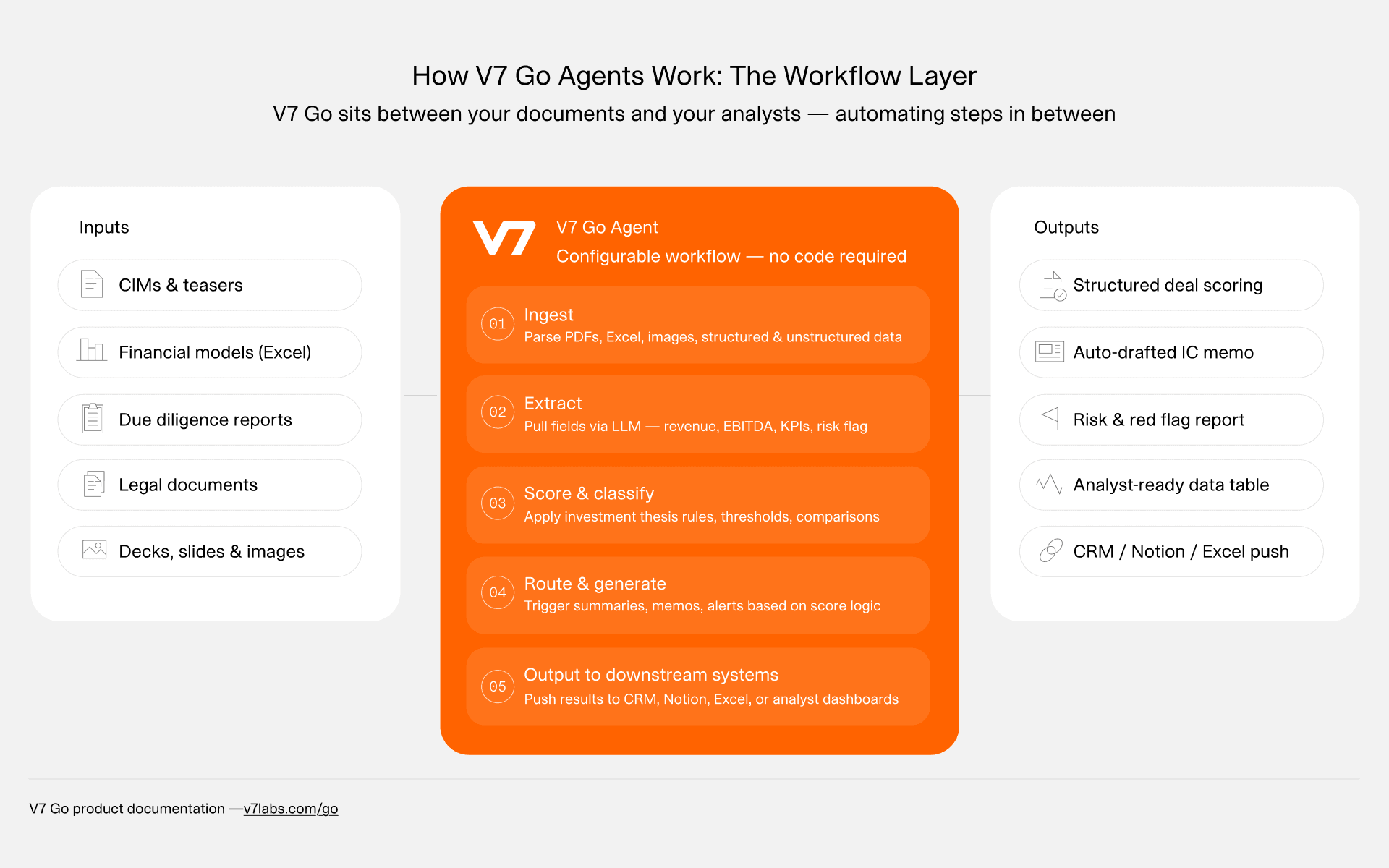
Both DDQ workflows follow the same spine: ingest the documents, extract or generate with citations, review the flagged items, and push the result into the systems the team already uses.
Answering an LP questionnaire (outbound)
Index the firm's own materials first: the placement memorandum, Form ADV, prior questionnaire responses, reference letters, and operational reports. When an LP's questionnaire arrives, the system maps its structure, whether ILPA, AIMA, or a bespoke format, and drafts a first-pass answer to each question with a citation and a confidence score. Your compliance and IR people then review the low-confidence answers rather than the whole document, approve the rest, and lock everything with an approval timestamp so a current figure never reverts to a stale one. The final questionnaire exports in the LP's required format with the audit trail intact. The blank page, the part that eats senior time, is gone.
Reviewing a target's responses (inbound)
The inbound flow inverts it. The target's completed response package goes in, across whatever mix of Word, PDF, and Excel it arrived in. The system extracts the fields that drive the decision, ownership structure, regulatory status, litigation history, customer concentration, then flags the unanswered sections, the contradictions between documents, and the attachments that were promised but not included. The structured output populates the deal record and rolls straight into an investment memo, so what reaches the committee is a red-flag summary with every claim linked back to the source passage, not a folder someone still has to read end to end.
What V7 Go does differently for due diligence questionnaires
V7 Go is built for both directions, and it is the inbound review workflow, the one the rest of the market skips, that makes it worth a PE deal team's attention. It is an AI agent platform, and the DDQ agent runs the two jobs above as configured workflows rather than a single prompt.
On the outbound side, the agent takes a questionnaire in any format and answers it question by question, each response cited to a source document and scored for confidence so an analyst reviews and signs rather than writes from scratch. The difference is measurable: in one V7 Go finance benchmark, a general chat assistant answered 41 of 63 DDQ questions and left the rest blank, while the agent workflow answered all 63, each traceable to its source. On the inbound side, the agent extracts structured data straight out of a target's response package, flags what is missing or inconsistent, and feeds the result into the deal record. The output is not a file the team then has to process. V7 Go is the operational layer where the review happens, with structured deal data flowing onward to a CRM or deal system through an API when the workflow calls for it.
Because every extracted answer is grounded in a source, the findings carry into an investment committee memo without a second pass of manual checking, which is what turns a questionnaire from a bottleneck into the first step of the deal analysis. You can see the completion side in V7's DDQ completion workflow, and the walkthrough below covers how the finance workflows fit together.

How V7 Go handles finance workflows, from DDQ completion to CIM extraction, with every answer traceable to its source.
The buying decision looks like a feature comparison and it is really a direction check. Before the content libraries and the integration lists, answer one question: are you answering questionnaires, or reading them. Get that right and the shortlist writes itself. Get it wrong and you will own an expensive tool that solves the other team's problem.
For most fund managers, an outbound completion platform with strong source attribution is the right buy. For a deal team drowning in a target's responses, the inbound review workflow is the one that actually saves the week, and it is the one almost nobody sells. Start with the questionnaire that is costing you the most time right now, and match the tool to its direction rather than to its demo.
If you want to see the inbound and outbound workflows run against your own questionnaires, V7 runs a working session built around your documents. That is the concrete next step, and it takes about the length of a first-round diligence call.
What is a due diligence questionnaire in M&A?
A due diligence questionnaire, or DDQ, is a structured set of questions used to assess a firm or a company before an investment or acquisition, covering areas such as strategy, operations, financial controls, legal standing, and compliance. In private equity it runs in two directions. Limited partners send DDQs to general partners to evaluate a fund before committing capital, most often using the Institutional Limited Partners Association template as the reference standard. In mergers and acquisitions, a buyer sends a questionnaire to a target company, or receives the target's completed responses, and uses them to understand the business across every function before the deal closes. The two versions look similar but demand different work: one is about answering accurately from your own records, the other about extracting and checking the answers someone else has given you. Confusing them is the most common reason a DDQ software purchase disappoints.
+
Can AI complete due diligence questionnaires automatically?
AI can draft the large majority of a DDQ response on its own by searching a firm's indexed documents for the relevant material and generating answers with citations, which removes the blank-page problem that consumes senior time. It does not remove the human. The reliable pattern is that the system answers every question, attaches a source and a confidence score to each, and routes the low-confidence answers to a compliance or investor relations reviewer while the high-confidence ones are approved quickly. That keeps the reviewer focused on the handful of answers that genuinely need judgment rather than re-reading the whole questionnaire. New question types, regulatory sign-off, and anything sensitive still need a person. The practical effect is a shift from writing to reviewing, which is where the time savings come from: manual completion measured in tens of hours compresses to a few, without giving up the audit trail that regulated work requires.
+
What is the ILPA due diligence questionnaire?
The ILPA Due Diligence Questionnaire is a standardised template published by the Institutional Limited Partners Association and used by institutional investors to assess private equity fund managers. Its 2.0 version organises roughly twenty diligence topics, including fund terms, firm governance, risk and compliance, accounting and valuation, reporting, ESG, and diversity, and a full questionnaire typically contains between one hundred and three hundred questions. The 2.0 update expanded the ESG section and added a diversity metrics template, reflecting the areas LPs now scrutinise most closely. It has become the industry reference point for limited-partner due diligence, which is why most outbound DDQ software ships with the ILPA structure built in. It is worth stressing that the ILPA DDQ is an investor-to-manager document, sent by an LP to a GP. That is a different thing from the buyer-to-target questionnaire used in an M&A acquisition, even though both are called due diligence questionnaires.
+
How long does it take to complete a due diligence questionnaire?
Completed by hand, a comprehensive due diligence questionnaire takes roughly fifteen to forty hours, depending on its length and how many subject-matter experts have to be pulled in to answer specific sections. A full ILPA-style questionnaire with a hundred or more questions across governance, valuations, and ESG is firmly at the upper end, especially when compliance and investor relations both need to review before anything is submitted. AI-assisted completion compresses this to a few hours by drafting answers from the firm's indexed documents and flagging only the items that need human attention, so senior staff review rather than write. The saving goes beyond clock time. It also removes the scramble of tracking down who knows the answer to question 87, because the system has already found and cited it. During an active fundraise, when questionnaires arrive faster than a team can answer them, that compression is often the difference between keeping the process moving and holding up a close.
+
What is the best DDQ software for private equity?
A virtual data room is secure storage for sharing due diligence materials with outside parties during a deal, a controlled place to post documents and track who has looked at them. DDQ software is an active workflow tool that automates the question-and-answer process itself, either drafting a firm's responses to an investor questionnaire or extracting and analysing the responses a target has provided. They solve adjacent but distinct problems, and most private equity firms use both: the data room holds the documents, while the DDQ platform manages the structured questionnaire that accompanies them. The distinction matters when buying, because a data room will not answer or review a questionnaire, and DDQ software is not a substitute for secure document sharing. A complete diligence stack usually includes a data room for storage and exchange, DDQ automation for the questionnaire workflow, and a deal or investment memo system where the findings are assembled for the committee.
+
What is the difference between DDQ software and a virtual data room?
Go is more accurate and robust than calling a model provider directly. By breaking down complex tasks into reasoning steps with Index Knowledge, Go enables LLMs to query your data more accurately than an out of the box API call. Combining this with conditional logic, which can route high sensitivity data to a human review, Go builds robustness into your AI powered workflows.
+
Casimir is a seasoned tech journalist and content creator specializing in AI implementation and new technologies. His expertise lies in LLM orchestration, chatbots, generative AI applications, and computer vision.