14 min read
—



Casimir Rajnerowicz
Content Creator
V7 Go
A smarter way to manage due diligence and underwriting
Most private equity firms did not design their tech stack. They accumulated it.
A customer relationship management system bought when the firm was six people and needed somewhere to keep banker contacts. A virtual data room chosen by whichever adviser ran the first large process. A portfolio monitoring platform added when the portfolio passed ten companies and the spreadsheet stopped working. Fund accounting inherited from the administrator. An LP portal bought after an investor asked for one.
Eight to twelve tools, each a reasonable decision at the time, none of them chosen with reference to the others.
The cost of that shows up in a specific and consistent place: the handoffs. Deal data extracted from documents sitting in the data room gets re-keyed into the CRM. Portfolio company reporting arrives in one format and is retyped into the monitoring platform. Performance figures are reconciled by hand between monitoring and fund accounting every quarter, because the two systems disagree and neither is wrong.
This article takes a lifecycle view of the private equity tech stack rather than a category view. Five stages, what runs at each, what has to move between them, and where the manual layer between tools is starting to disappear.
In this article:
What a PE tech stack is, and how it differs from a list of PE software.
The five lifecycle stages, the tools that run at each, and the integration each stage requires.
The three places the stack reliably breaks.
Five questions for auditing a stack you already own.
Why AI belongs across the stack rather than in it as another category.
What is a private equity tech stack
A private equity tech stack is the complete set of software and data platforms a firm runs across the investment lifecycle, from sourcing through to exit. The word that matters is stack rather than software.
A list of tools is an inventory. A stack implies architecture: which systems connect to which, what data moves between them, which one is authoritative when two disagree, and who owns each layer. Most firms can produce the inventory immediately and struggle with the architecture, which is the useful diagnostic.
The stack has also grown faster than the firms running it. Preqin's 2026 outlook describes a market where fundraising has concentrated and hold periods have extended, and both push in the same direction operationally: more reporting cycles per fund, more investor scrutiny per cycle, and longer periods over which a portfolio company's data has to stay consistent. Tooling decisions that were reasonable for a three-year hold become expensive across seven.
The lifecycle map underneath everything below:
Lifecycle stage | Primary tools | Data produced |
|---|---|---|
Origination and sourcing | CRM, market intelligence | Company records, relationship history, deal pipeline |
Evaluation and diligence | Virtual data room, financial analysis | Document inventory, extracted deal data |
Execution and close | CRM, legal and document management | Signed documents, ownership records |
Portfolio management | Monitoring platform, portfolio company ERP | Operational KPIs, financial performance |
LP reporting and exit | Fund accounting, LP portal | Capital statements, NAV, distributions |
Two distinctions are worth fixing before going further, because conflating them causes most stack design errors.
Fund accounting is not portfolio monitoring. Fund accounting produces the official books: net asset value, capital accounts, waterfall calculations, K-1s. Portfolio monitoring produces operational analytics: earnings against budget, covenant headroom, hold period milestones. Different tools, different owners, different audiences, and a recurring reconciliation problem where firms treat them as one thing.
Firm ERP is not portfolio company ERP. The first is the fund's own back office. The second is software the firm deploys inside portfolio companies as part of a value creation plan. Operations teams at firms with an operational mandate often maintain a standard portfolio company toolkit and an implementation sequence they run repeatedly.
Stage one: origination and sourcing
Two systems do the work here, and the relationship between them determines how much of the team's sourcing effort is recoverable.
The CRM is the system of record for deal and relationship data. Purpose-built private equity CRMs such as Affinity, DealCloud, 4Degrees and Dynamo differ from adapted general CRMs on one axis that matters: relationship intelligence. A transactional pipeline tracker records that a deal exists and what stage it is at. A relationship intelligence system records who at the firm knows whom, how warm the connection is, and when it was last touched, mostly by reading email and calendar metadata rather than by asking people to log activity.
That distinction predicts adoption. Deal teams do not reliably log contact activity, so a system that depends on them doing it degrades within two quarters.
Market intelligence covers company search and market data: PitchBook, Capital IQ, Grata, SourceScrub. Firms use these to find proprietary deal flow, size markets, and maintain a coverage universe.
The integration requirement at this stage is that market intelligence data reaches the CRM without anyone retyping it. Native connectors exist between the major data providers and the major CRMs. Where they do not, firms use middleware, and where neither exists an analyst copies company records by hand, which is the point at which the coverage universe stops being current.
AI already sits inside this stage rather than alongside it. Relationship scoring and company search both use it, and neither is presented to the user as an AI feature. For the market-monitoring side of sourcing, our guide to AI daily market briefings for investment teams covers the workflow.
Stage two: evaluation and diligence
This is where the stack carries the most documents and the least structure.
The virtual data room is the deal workspace: Datasite, Intralinks, Ansarada, iDeals. Firms use them for more than storage. The category structure, the counterparty question-and-answer module, permission management and the audit trail are the working parts. Our comparison of AI virtual data rooms covers how that category is changing.
Financial analysis is Excel, with market data from Capital IQ or FactSet alongside it. This is worth stating plainly because vendors keep predicting otherwise: dedicated modelling software has not displaced Excel in private equity and shows no sign of doing so. Models get built in spreadsheets, shared as spreadsheets, and audited as spreadsheets. Related: private equity analysis tools.
Document analysis is the third component and until recently it was not a tool at all. It was an associate.
The integration requirement here is the widest gap in the stack. Documents live in the data room. Structured deal data belongs in the CRM. Nothing connects them, so the transfer is manual: someone reads the confidential information memorandum, extracts revenue, earnings, management detail, thesis and risks, and types them into the deal record. Four to six hours per memorandum, repeated for every opportunity that clears initial screening.
This is the specific bridge AI document automation covers, and the mechanism is worth being precise about: it reads the documents, produces structured fields against a schema the firm defines, and populates the deal record directly. The document stays in the data room. The data ends up in the system of record. See CIM to CRM extraction for that workflow in detail.











Stage three: execution and close
The shortest stage in tooling terms and the one most often run out of email.
Legal project management covers signing, conditions precedent and closing deliverables. Some firms run this inside the CRM, where DealCloud in particular has capable execution modules; others use a general project tool; many use a checklist someone maintains. Document management is the data room transitioning from diligence workspace to final repository. Cap table and ownership records go into Carta or an equivalent, or into a spreadsheet that will be wrong within a year.
The integration requirement is that closing documents feed back into the CRM deal record and trigger the portfolio monitoring setup for the new company. That second half rarely happens automatically, which is why a company can be owned for six weeks before it appears in the monitoring platform.
AI at this stage handles the document review that clusters around close. Side letters are the clearest example: an LP-by-LP read for most favoured nation provisions, fee offsets and co-investment rights, where the work is mechanical, the volume arrives at once, and the cost of missing a provision is measured in years.
Stage four: portfolio management
The longest stage by duration and the one where tooling choices compound.
Portfolio monitoring platforms aggregate KPIs from portfolio companies, compare actuals against budget, and generate committee and investor dashboards. Chronograph, Allvue, Juniper Square and Burgiss are the common choices. Fund accounting produces the official numbers, usually Allvue, eFront, FundCount or the administrator's own system.
Portfolio company ERP is the third layer and belongs to the operating team rather than the deal team. Firms with an operational value creation mandate deploy standard systems into portfolio companies, commonly NetSuite in the mid-market, Sage Intacct for services and software businesses, and SAP at the larger end.
The integration requirement is KPI ingestion, and there are only three ways to do it. Portfolio companies fill in a template. The monitoring platform connects to portfolio company systems by API. Or the finance team exports and someone loads it. Manual submission is the default and it scales badly: past roughly ten companies the chasing becomes a job, and the data arrives in whatever format each finance director prefers.
This is the other place document extraction earns its keep. Portfolio companies submit board packs and management accounts as PDFs and spreadsheets in formats nobody controls, and reading those into a consistent KPI set is exactly the problem that resists templating. Our guide to portfolio monitoring in private equity covers the operational side, and portfolio management software covers the category.
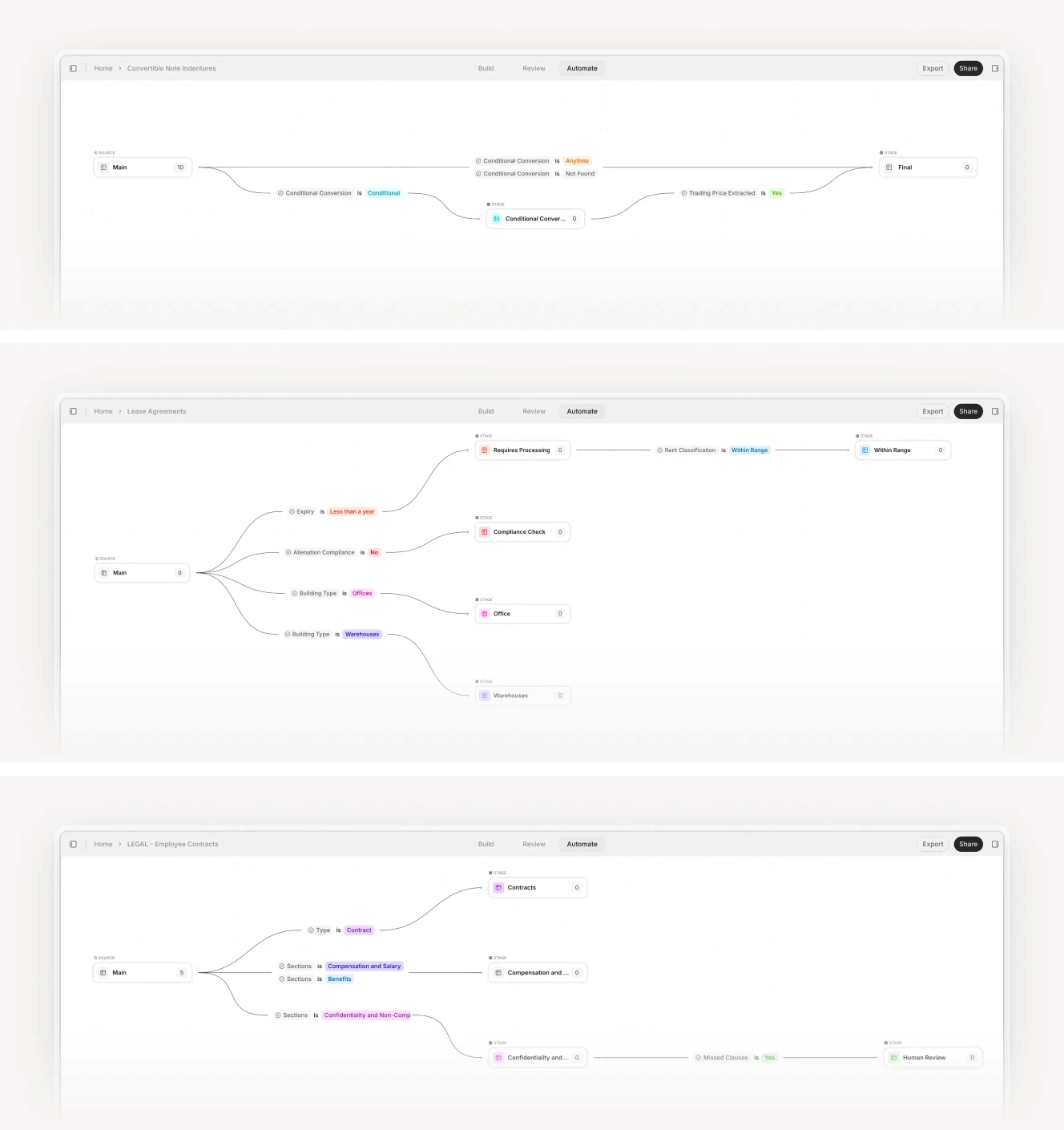
Ingestion is a routing problem before it is an extraction problem. Different submission formats, different completeness, different escalation paths when a figure is missing.
Stage five: LP reporting and exit
The stage with the least tolerance for error and frequently the most manual assembly.
LP portals give investors self-service access to capital statements, notices, tax documents and performance reporting. Juniper Square, Allvue, Dynamo and Carta all offer them. Fund accounting supplies the official figures. Investor relations activity, side letter commitments and re-up conversations usually sit back in the CRM.
The integration requirement is a chain: fund accounting produces net asset value, the portal publishes the capital statement, the CRM records the investor interaction. Break any link and someone reconciles by hand every quarter.
The quarterly LP report is where the manual assembly concentrates. Portfolio performance narrative, fund-level commentary, deal updates and the numbers to support them, pulled from three systems and written into a template. Three to four days per quarter is normal. The ILPA reporting templates have made the format more consistent across the industry, which helps the recipient more than the preparer.
Where the stack breaks
Three failures recur across firms of every size, and they are all handoffs rather than tools.
The CRM and data room gap. Deal data lives in documents; the system of record expects structured fields; nothing connects them. This is the largest single source of manual re-entry in the stack and the one most firms have simply accepted.
The close and monitoring gap. A new portfolio company has to be set up in the monitoring platform, with a reporting template agreed and a submission cadence established. No tool owns this handoff, so it happens when someone remembers.
The monitoring and fund accounting gap. Operational performance data and official net asset value are produced by different systems on different bases and they will not agree. Firms running both face a reconciliation every quarter, and the resolution is usually a spreadsheet maintained by one person.
Underneath all three sits a governance question most firms have never answered explicitly: which system is the system of record. The answer should be the CRM, with every other tool drawing deal context from it. Firms that have not designated one end up with three versions of the same company name, two views of the same commitment, and no way to settle which is right.
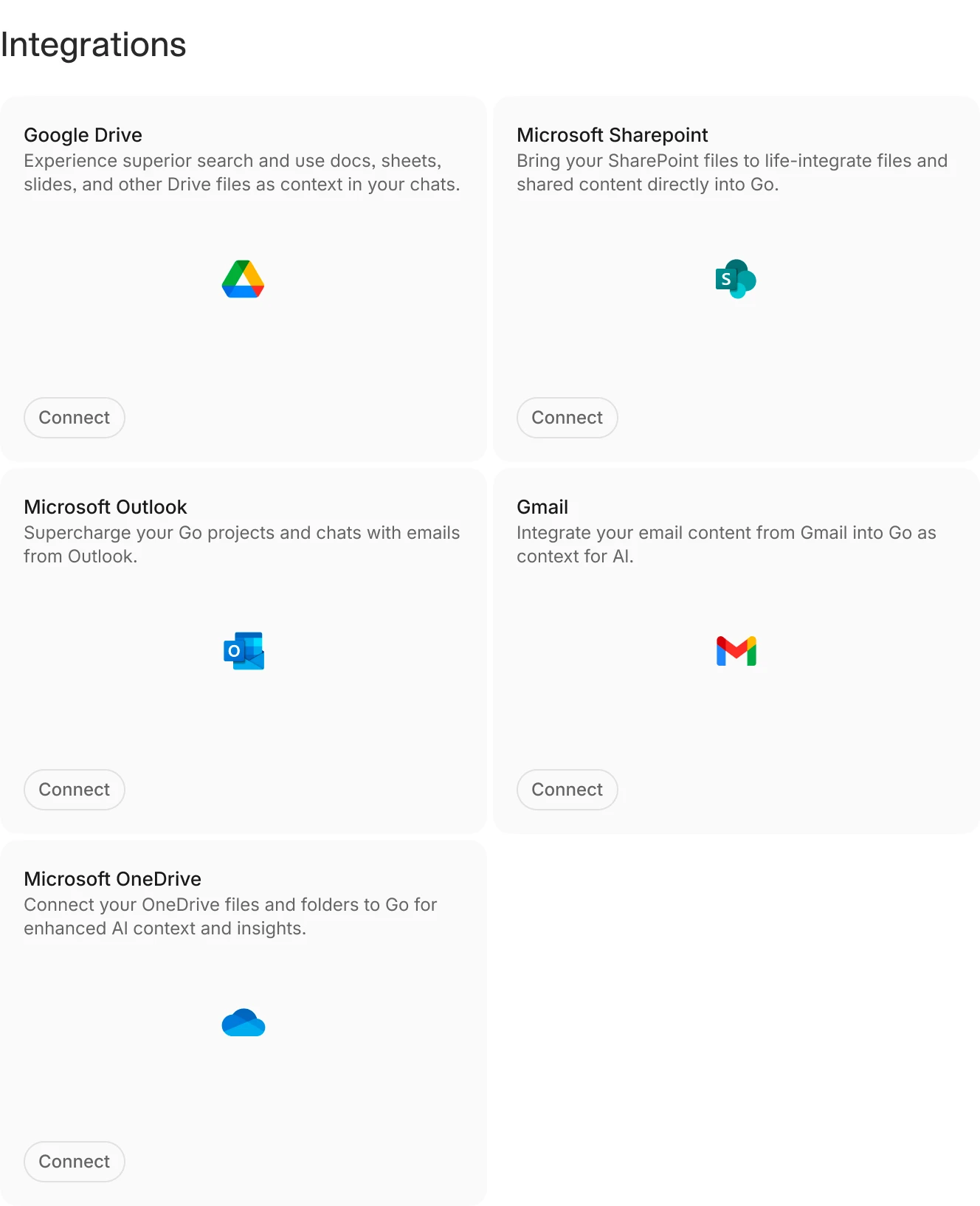
Most of what a stack needs to connect to is unglamorous: the shared drive, the mailbox, the folder where documents actually arrive.
How to assess a stack you already own
Five questions per tool. They take an afternoon and they surface more than a vendor demo will.
Does it reduce manual data entry, or create it? Some tools are net negative on this measure and survive because nobody has counted.
Does it integrate natively with the tools on either side of it in the lifecycle, or does a person bridge the gap?
Is it used by everyone, or by the two people who championed it? Partial adoption is worse than none, because the data is neither complete nor trusted.
Will it hold as assets under management and headcount grow, or is there a known ceiling?
Does the vendor have an active roadmap, or is this a platform being quietly sunsetted?
Three patterns show up repeatedly as technical debt. A general CRM adapted for private equity with plugins, which works and creates integration complexity for as long as the firm owns it. Portfolio monitoring in Excel, which is fine to about ten companies. And LP reporting assembled by hand from three sources every quarter, which is the clearest sign that the reporting chain has a break in it.
A fourth pattern is worth naming because it is invisible until an audit: tools bought to satisfy a single investor request. An LP asks for a portal, or for reporting in a particular format, and the firm buys a system to answer one relationship. Those purchases rarely get revisited, and they accumulate. The structural characteristics of private equity, long fund lives and a fixed investor base, mean a tool bought in year two is often still running in year nine.
On cost, published benchmarks for private equity stacks are thin and most circulating figures are vendor-supplied. Rather than repeat a number, the more reliable exercise is internal: total the annual licence cost across every tool in the inventory, then divide by assets under management. Most firms have never calculated it, and the ratio is usually the more interesting number than the absolute.
Where AI fits in the stack
The instinct is to add AI as a sixth category and buy a tool for it. That produces a ninth system with its own login and its own island of data.
The more useful framing is that AI is a layer that runs across the stage boundaries rather than inside any one of them, because the work it does best is precisely the work that falls between tools. Reading a document held in one system and producing structured fields for another is not a category. It is the handoff.
Before the stage map, one orientation on the vendors themselves, because the category is crowded and the axes that matter are not the ones vendor sites lead with. Two questions separate the options. How much of the tool assumes private markets, as opposed to being a general document or workflow product with a finance page. And how much of the job it does end to end, as opposed to handling one step and handing the rest back.

Positioning map from V7 Go competitive analysis. The axes are deliberately unglamorous: how much private markets context is assumed, and how much of the workflow the tool completes without handing work back.
Read the lower-left quadrant carefully, because that is where most stacks accumulate. General-purpose tools that handle one step well are cheap to start with and expensive to live with, since each one leaves a handoff for a person. The useful question in a procurement conversation is not which quadrant a vendor claims, it is which steps it finishes and which it returns.
Stage | What the AI layer does | Which gap it closes |
|---|---|---|
Sourcing | Company search, relationship scoring | Coverage universe currency |
Evaluation | Document extraction into deal records | Data room to CRM |
Execution | Side letter and closing document review | Legal review capacity |
Portfolio management | Portfolio company report extraction into KPIs | Submission to monitoring platform |
LP reporting | First-draft report assembly from structured data | Monitoring and accounting to narrative |
Read down the third column rather than the second. Every entry is one of the handoffs identified earlier, which is the argument for treating this as infrastructure rather than as an application.
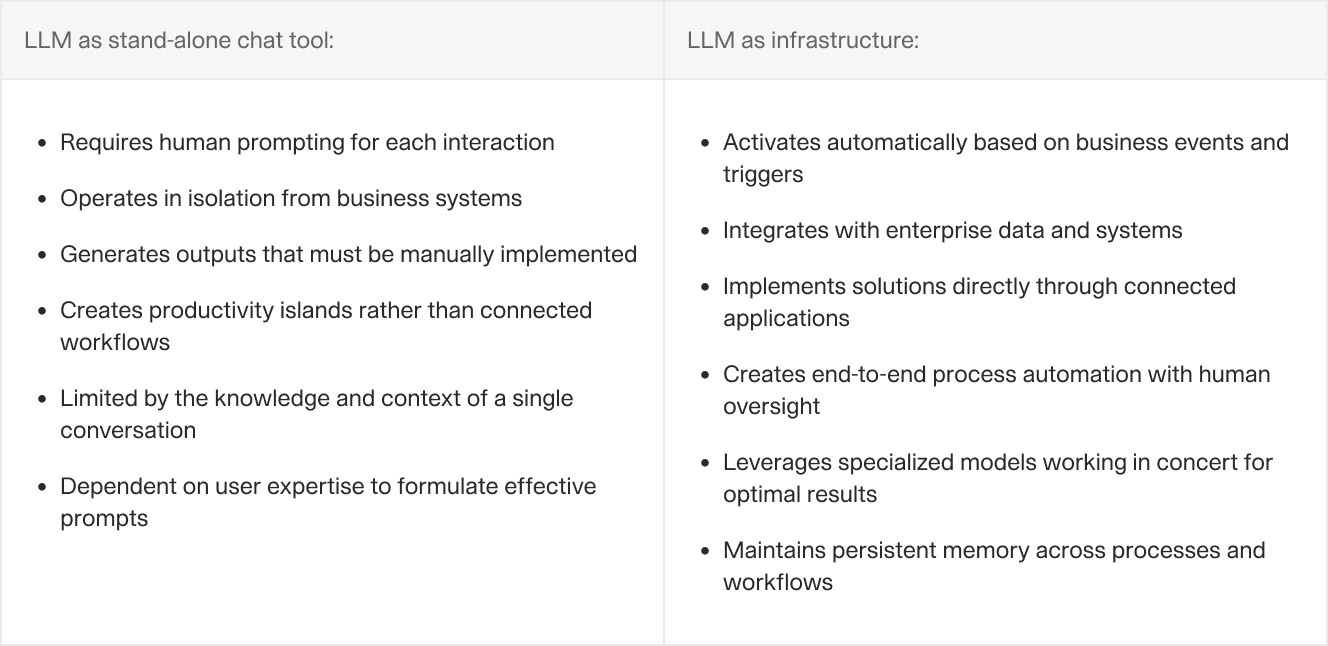
The distinction that matters for a stack decision. An assistant produces an answer for a person. Infrastructure produces a record for a system.
This is where V7 Go sits, and it is worth being specific rather than describing it as a platform. It reads deal and portfolio documents, produces structured fields against a schema the firm defines, attaches a source reference to every value, and pushes the result into the CRM, the monitoring platform or a data store through an API or connector. It is not a CRM, a data room or a monitoring system, and it does not replace any of them.
One further capability belongs in a stack conversation rather than a feature list. Documents processed this way accumulate into a queryable layer over the firm's own history, which the Context Graph maintains: every company evaluated, every commitment, every relationship between them. That is the thing no individual tool in the stack holds, because each one sees only its own stage.
What to do with this
Two exercises, in order, before any purchase.
First, draw the map. List every tool, place it on the lifecycle, and draw a line wherever data moves between two of them. Mark each line as native integration, middleware, or person. The person lines are your backlog, and for most firms there are more of them than expected.
Second, pick the most expensive person line rather than the most annoying one. These are usually different. The annoying one is a weekly irritation somebody complains about. The expensive one is quiet, recurring and load-bearing, and it is generally either the data room to CRM handoff or the portfolio company submission to monitoring platform handoff, because both scale with volume the firm intends to increase.
Then resist buying a tool for it until you have written down what the structured output needs to contain. Half the integration failures in private equity stacks are not tooling problems. They are the absence of an agreed schema, which means two systems hold the same field under different names and nobody has decided which is authoritative.
A stack is not the tools. It is what moves between them, and that part is designed rather than purchased.
If you want to see the document layer run against your own deal files and portfolio company reporting rather than a demo set, V7's solutions engineers configure the schema and the destination system with you first. Book a working session and bring the handoff that costs you the most.
What is a private equity tech stack?
A private equity tech stack is the complete set of software and data platforms a firm runs across the investment lifecycle, from sourcing through to exit. The distinction between a stack and a list of software matters. A list is an inventory of tools. A stack implies architecture: which systems connect to which, what data moves between them, which system is authoritative when two disagree, and who owns each layer. A typical mid-market firm runs eight to twelve tools spanning five stages. Origination uses a CRM and market intelligence. Evaluation uses a virtual data room and financial analysis. Execution uses document and legal management. Portfolio management uses a monitoring platform and, at the portfolio company level, ERP. LP reporting uses fund accounting and an investor portal. Most firms can produce the inventory immediately and struggle to describe the architecture, which is usually where the operational cost sits.
+
What software do private equity firms use?
By stage. For sourcing, purpose-built CRMs such as Affinity, DealCloud, 4Degrees and Dynamo, alongside market intelligence from PitchBook, Capital IQ, Grata or SourceScrub. For diligence, virtual data rooms including Datasite, Intralinks, Ansarada and iDeals, with financial analysis done almost universally in Excel. For portfolio management, monitoring platforms such as Chronograph, Allvue, Juniper Square and Burgiss. For fund accounting, Allvue, eFront, FundCount or an administrator's own system. For investor reporting, LP portals from Juniper Square, Allvue, Dynamo or Carta. Firms with operational value creation mandates also deploy ERP inside portfolio companies, commonly NetSuite in the mid-market and Sage Intacct for services and software businesses. The specific vendor matters less than whether the tools at adjacent lifecycle stages exchange data without a person in between.
+
What is the difference between fund accounting and portfolio monitoring?
They answer different questions and should not be conflated, though many firms treat them as one system. Fund accounting produces the official books: net asset value, capital accounts, distribution waterfalls, carried interest and tax reporting. It is the authoritative record and it is what auditors examine. Portfolio monitoring produces operational analytics: earnings against budget, covenant headroom, KPI trends, hold period progress. Its audience is the deal and operating teams rather than the auditor. The practical consequence is that the two systems are built on different bases and will not agree, so firms running both face a reconciliation every quarter. Understanding which is authoritative for which figure, and documenting that, removes most of the recurring argument about whose number is correct.
+
How do private equity firms integrate their software?
Three mechanisms, in descending order of reliability. Native integrations are built by the vendors and maintained by them, which is why native connectors between the major market data providers and the major CRMs are worth prioritising in tool selection. API middleware connects systems that have no native link, which works but creates something the firm has to maintain. And a person, which is what most firms actually use at the widest gaps. The three handoffs that most often fall to a person are data room to CRM, where deal data extracted from documents is re-keyed into the deal record; close to monitoring, where a newly acquired company has to be set up for reporting; and monitoring to fund accounting, where operational and official figures are reconciled by hand each quarter.
+
What is the system of record in a PE tech stack?
Across the stages rather than inside any one of them, which is why treating AI as a sixth software category tends to produce another disconnected system. The work AI does best in this stack is the work that falls between tools: reading a document held in one system and producing structured fields for another. That maps directly onto the known gaps. At evaluation it closes the data room to CRM handoff by extracting deal data from confidential information memoranda into the deal record. At execution it handles side letter and closing document review. In portfolio management it reads portfolio company reporting submitted in inconsistent formats into a consistent KPI set. At LP reporting it assembles first drafts from structured data. In each case the underlying tools stay in place and the manual bridge between them is what disappears.
+
Where does AI fit in a private equity tech stack?
Go is more accurate and robust than calling a model provider directly. By breaking down complex tasks into reasoning steps with Index Knowledge, Go enables LLMs to query your data more accurately than an out of the box API call. Combining this with conditional logic, which can route high sensitivity data to a human review, Go builds robustness into your AI powered workflows.
