12 min read
—



Casimir Rajnerowicz
Content Creator
V7 Go
A smarter way to manage due diligence and underwriting
A family office running eleven legal entities in QuickBooks has eleven company files. Closing a month means opening each one and exporting a trial balance. Then pasting all eleven into a workbook that one person built and only that person understands, keying the intercompany loans in by hand, and hoping the eliminations net to zero. When they do not, the search for the missing 4,000 dollars takes a day.
That workbook is what family office accounting software replaces. The category covers platforms that hold every entity a family owns in one general ledger: the trusts, the limited liability companies, the partnerships, the foundations, the operating businesses, and the individuals who sit above them. One journal entry posts across every entity it touches. Consolidation runs inside the system rather than in a spreadsheet. Ownership percentages live in the platform instead of in somebody's head.
Search for it and you get nine vendor pages and a Reddit thread. The Reddit thread ranks third and leads the AI Overview, which is Google saying, fairly directly, that none of the nine answered the question. This article is an attempt at the answer. What these platforms actually do, how the serious ones differ, and what the migration off QuickBooks genuinely costs. Then the part every vendor page skips: where the numbers come from in the first place.
A disclosure belongs up front. V7 Go publishes this article and V7 Go does not sell accounting software. We build AI infrastructure for private markets: the document layer that feeds platforms like the ones compared below. That shapes what we know well and what we know less well, and the comparison section says so where it applies.
What family office accounting software actually does
Family office accounting software maintains a multi-entity general ledger for the legal structures a family owns assets through, automates the intercompany entries and eliminations between them, applies ownership and partnership allocations, and produces consolidated financial statements without an export to Excel.
It is defined most clearly by what sits either side of it. Above it are reporting platforms, which aggregate positions and calculate performance. Below it is general-purpose accounting software, which handles one company at a time. Family office accounting software occupies the middle: full double-entry bookkeeping, but built to hold sixty entities in one database rather than one.
What makes a family office harder than a mid-sized group with subsidiaries is not the number of entities. It is that the ownership is irregular. A holding company might be held 40 per cent by one trust, 35 per cent by another and 25 per cent directly. A partnership allocates according to a document rather than a formula, and that document was drafted by a lawyer in 2009 and amended twice. Reporting boundaries are family politics as much as legal fact: what the eldest sibling sees is a governance decision, not a permissions default.
Accounting or reporting: which one you actually need
These two categories are conflated across almost every page that ranks for either of them, and getting the distinction right will save more money than any feature comparison.
Reporting platforms such as Addepar, Masttro and Asset Vantage pull positions from custodians, normalise them, calculate internal rate of return and time-weighted return, and produce performance packs. They answer the principal's question: what do we own and how is it doing.
Accounting platforms such as Sage Intacct, Gravity, Asseta and FundCount maintain the general ledger. They answer the accountant's question: what are the generally accepted accounting principles (GAAP) financial statements for each entity, and can we defend them in an audit.
An office that needs a consolidated performance view for one principal may need a reporting platform and nothing else. An office whose auditor is asking for entity-level statements and a clean trail needs the accounting platform. Plenty need both, and at that point the question that decides the purchase is not which platform has more features but how well the two talk to each other. If you are working through the reporting side of that decision, our guide to family office reporting software covers it in the same depth this article covers the ledger.
The five capabilities that separate platforms
Ordered by how much they differentiate in a real evaluation, which is not the order vendor feature grids use.
1. Multi-entity accounting and consolidation
The test is simple and most demos will pass it, so make it specific. Ask to post a single journal entry that touches four entities and watch it happen once rather than four times. Then ask to run a consolidation and watch whether anything leaves the system. Gravity Software's customer quote about posting one entry across eighteen entities is the clearest articulation any vendor has published of what this capability is worth, and it is worth roughly a day per close.
The failure mode to probe is partial consolidation: platforms that consolidate the balance sheet cleanly and then require a manual step for the cash flow statement. Ask for all three statements, consolidated, on screen.

2. Intercompany entries and eliminations
Family entities lend to each other constantly. The management company bills the trusts for services. One partnership funds another's capital call. A principal's personal entity covers a property expense that belongs to the real estate holding company and gets repaid eleven months later.
Every one of those creates a matched pair of entries that has to eliminate on consolidation. Doing it by hand is where spreadsheet-based consolidation fails an audit, because the eliminations are correct until the moment somebody adds a row above the formula range. Automated intercompany handling is the single strongest argument for moving off a general-purpose ledger, and it is the capability most worth testing against your own transactions rather than the vendor's demo data.
3. Partnership allocation and ownership
The hardest capability in the category and the one most likely to be over-claimed. Ownership percentages differ per entity, change when a trust distributes, and sometimes follow a waterfall defined in a partnership agreement rather than a flat percentage. Gravity describes reporting on entity combinations that match proportional family ownership; FundCount builds its entity model around exactly this.
The evaluation move that matters: bring your own structure to the demo. Not a simplified version, the real one, including the entity nobody can quite explain. A platform that models it in the room is a genuinely different product from one that promises to model it during implementation.
4. Investment accounting for private holdings
This is where the accounting category touches the reporting category, and where most family office ledgers quietly go stale.
Public market positions arrive through custodian connections and stay current on their own. Private fund positions do not. A commitment to a buyout fund generates four kinds of document. A capital call notice with a due date. A distribution notice split between return of capital and gain. A quarterly capital account statement carrying net asset value and unfunded commitment. And a Schedule K-1 that arrives in March or later and restates several figures you already booked. Each is a PDF, on the manager's schedule, in the manager's format. Every one becomes a journal entry that somebody types.
The valuation basis for those holdings follows investment company accounting, and the AICPA investment companies guide is the reference an auditor will work from. Ask a vendor one question about it. Does the platform carry private holdings at fair value, using the manager's reported net asset value as the input? Or does it carry cost and leave the adjustment to a journal entry somebody remembers to post?
Ask any vendor how private fund positions get into the ledger. The honest answer is usually a person with two windows open. That is not a criticism of the platform, which is an accounting system and not a document processor, but it does mean the capability sits outside whatever you buy.
Related reading: portfolio reconciliation covers the position-level version of the same problem, and portfolio performance reporting covers what happens downstream once the figures are in.
5. Permissions that survive family politics
Role-based access is a bullet on every vendor page and a governance requirement in practice. Siblings hold different stakes and do not always want each other to see them. In-laws have access to some entities and not others. Next-generation family members join the council at twenty-five and their access has to be defined before that birthday, not improvised after it.
The specification to insist on is field level rather than module level. Being able to say that a user sees this entity but not that one is the baseline. Being able to say that a user sees an entity's balance sheet but not its compensation lines is what family offices actually need, and fewer platforms do it than claim to.











The platforms, and who each one fits
Seven options that come up in real shortlists, plus the incumbent most offices are leaving. Ratings reflect published capability and public documentation. V7 Go does not compete in this category and has no commercial reason to rank one of these above another; where our knowledge of a platform is thin, the table says so rather than guessing.
Platform | Best for | Multi-entity ledger | Partnership allocation | Investment accounting |
|---|---|---|---|---|
Sage Intacct | Offices wanting a mainstream ERP-grade ledger with a large implementation partner network | Strong, dimensional | Moderate | Via integration |
Gravity Software | Offices already standardised on Microsoft 365 and Power BI | Strong, single database | Strong, proportional ownership | Basic, tracks cost and market value |
Asseta | Offices wanting an accounting platform built for family offices from the start | Strong | Moderate | Moderate |
FundCount | Accounting-forward offices that want the ledger and the performance reporting in one system | Strong | Strong | Strong |
Asset Vantage | Offices wanting accounting and reporting unified, with entity-level visibility | Strong | Moderate | Strong |
Eton Solutions | Administration-heavy offices wanting workflow and bill pay alongside the ledger | Strong | Moderate | Strong |
Acumatica or NetSuite | Offices with substantial operating businesses where the family assets are the smaller problem | Strong | Weak for family structures | Weak |
QuickBooks | Offices below roughly eight entities with simple ownership | One file per entity | None | None |
Two observations about this list that the vendor pages will not offer. First, the generic enterprise resource planning route, Acumatica or NetSuite, is chosen more often than it should be, usually because the family's operating business already runs on it. It handles multi-entity consolidation well and family ownership structures badly, and the gap gets filled by a consultant and a set of custom fields that nobody maintains after year two.
Second, the platforms that unify accounting and reporting, FundCount and Asset Vantage most clearly, solve a real integration problem and cost something for it: their performance analytics are less deep than a dedicated reporting platform's. That trade is worth making for some offices and not others, and which side you land on depends almost entirely on whether the principal or the auditor is the more demanding reader.
When a family office outgrows QuickBooks
Both the accounting firms and the vendors write about this moment and neither says what triggers it. Four signals, in the order they usually appear:
The entity count passes roughly eight to ten. Below that, one company file each and a consolidation workbook is genuinely manageable. Above it, the workbook becomes the system of record and nobody meant that to happen.
Month-end close takes longer than a month's data takes to arrive. If February closes in the third week of March, the office has stopped producing management information and started producing history.
The consolidation lives with one person. The single most common reason a family office finally moves is that the controller who built the workbook resigns. Treating that as a technology decision after the fact is expensive; treating it as one before is not.
The auditor asks for something the system cannot produce. Usually an elimination schedule tying to the consolidated statements, or the trail from a consolidated figure back to the entries that made it.
What the migration actually involves
No page on this search results page answers this, which is odd given it is the question that stalls the purchase.
Chart of accounts redesign. The existing chart evolved. The new one has to be designed, because a multi-entity ledger uses dimensions rather than account-code prefixes to distinguish entities, and porting the old numbering across defeats the point. Budget two to four weeks of a controller's time, not a vendor's.
Historical data. Decide how many years come across and in what form. Most offices bring two to three years of transaction detail and opening balances for anything older. Bringing everything is expensive and rarely used.
Opening balances and a parallel run. One or two months closed in both systems and reconciled to each other. Skipping this is the most common cause of a migration that has to be redone.
Asseta publishes a day zero, day thirty, day sixty timeline: chart of accounts and historical import, then bank and brokerage connections and permissions, then full reporting migration. It is a useful reference point and it assumes clean source data. An office arriving with three years of transactions categorised inconsistently across eleven company files should read those numbers as the floor rather than the estimate.
Software, or an outsourced accounting service
Worth saying plainly because no vendor will. A family office with six entities, simple ownership and a part-time bookkeeper is often better served by a specialist family office accounting firm than by buying a platform. Buying software at that scale means buying an implementation project, and the project is larger than the problem.
The crossover comes at one of two points. Either entity complexity reaches the level where an outside firm spends most of its time asking questions the office has to answer anyway, or the family wants the ledger in-house for confidentiality. Both are good reasons. Neither is a feature comparison.
Where the numbers come from
Every platform above assumes the data is already inside it. That assumption is the unexamined part of the whole category, and it is where the work actually sits.
A family office ledger depends on a standing inventory of documents, each arriving on somebody else's schedule:
Capital account statements, quarterly, one per fund position, carrying net asset value, contributions, distributions, unfunded commitment and since-inception return. Capital call and distribution notices, irregular, each with a due date and a split between return of capital and gain, and only sometimes following the ILPA capital call and distribution template.Schedule K-1s, annually and late, restating figures already booked. Bank and custodian statements for the entities without a feed. Invoices and bills against the operating entities and the properties. Partnership agreements and amendments, which define the allocation the ledger applies.
For an office with forty fund positions across twenty entities, that is several hundred documents a year. Each produces between one and a dozen figures that a person reads off a PDF and types into a system. The ledger is exactly as current as the last document somebody got to.
What document extraction changes
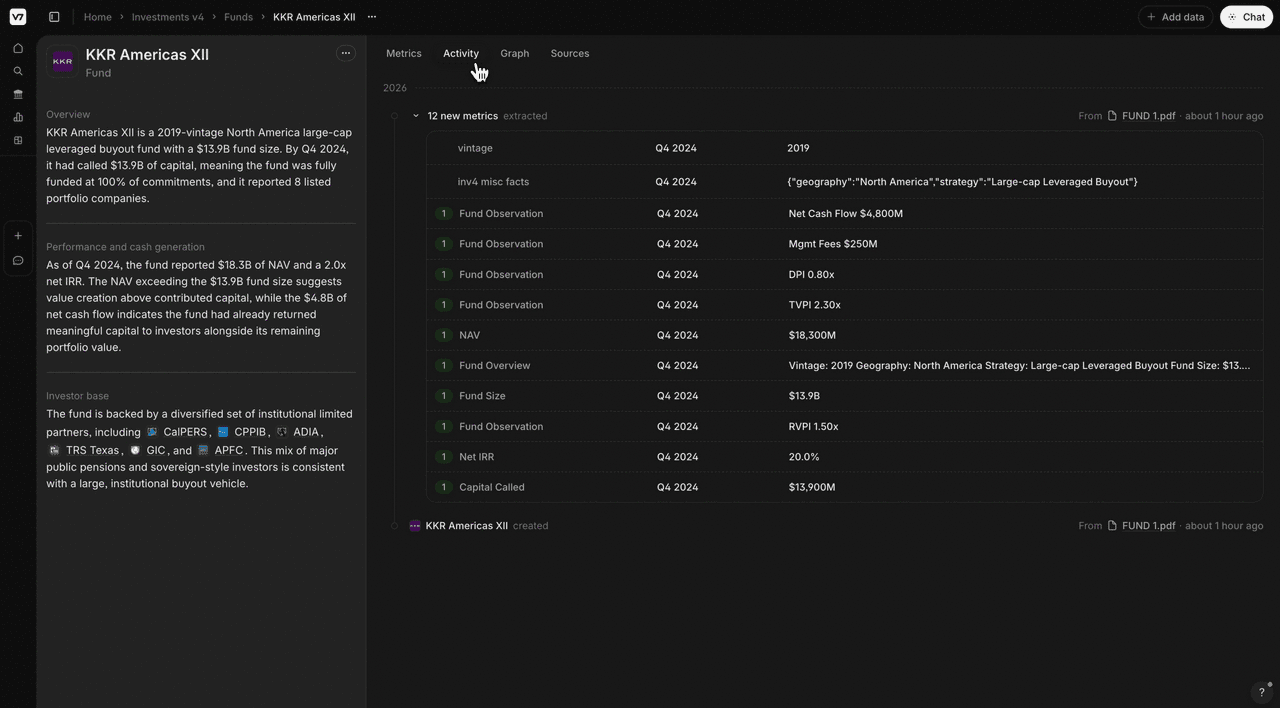
The narrow version of this problem has a narrow solution. Read the documents automatically, return the same fields in the same shape every time, and keep every value traceable to the page it came from.
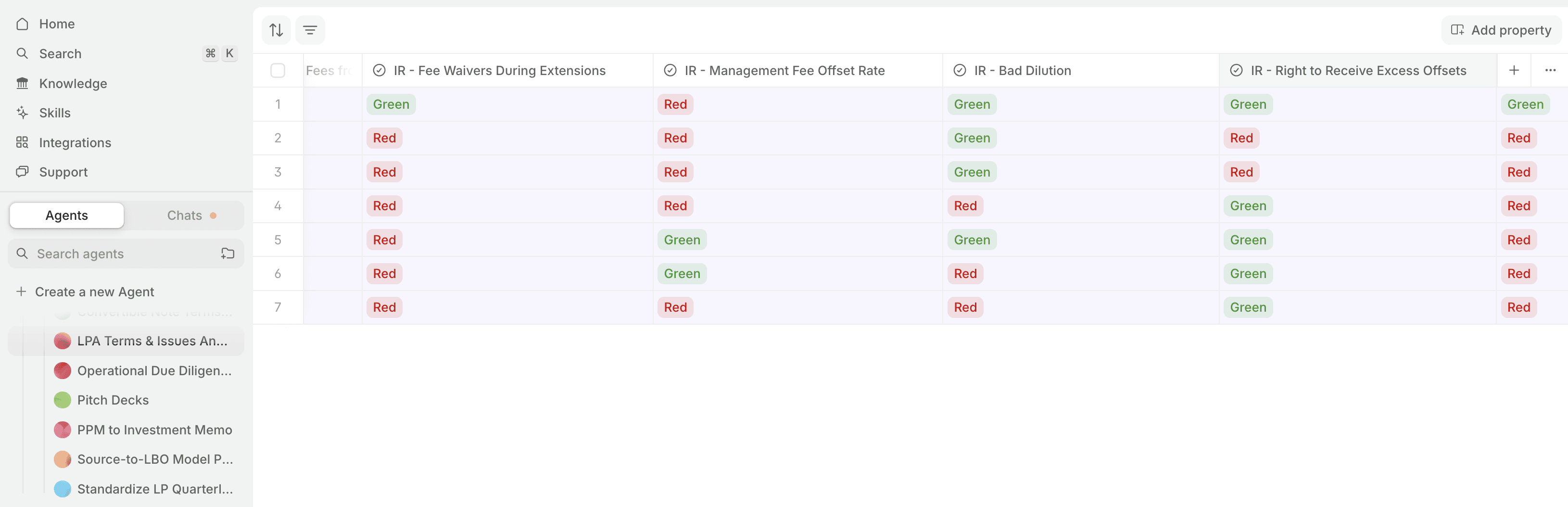
Three properties matter for accounting specifically, and they are not the properties usually advertised. Typed output. A capital account statement produces the same eleven fields whether it came from a mega-fund's template or a lower-middle-market manager's Word document. Where a manager follows the ILPA reporting template the mapping is already half done. The journal entry template on the other side never changes. Deterministic workflows. The steps are defined once and the five hundredth run takes the same route as the first, which is the property an audit trail actually requires. An assistant that re-plans its approach each time cannot give you that. Citations to source. Each extracted figure links to the sentence in the PDF or the cell in the spreadsheet it came from, so the year-end question of where a number came from has an answer that takes seconds.

None of this posts the entry. The general ledger stays where it is. What changes is that the analyst reviews structured figures against a highlighted source rather than transcribing them, which is a different job and a considerably faster one. The same mechanics apply outside the family office context, and our guide to AI for accounting covers the general case, while PDF data extraction software covers how the extraction itself works.
The entity problem, and why a graph solves it
There is a second problem underneath the first, and it is specific to family offices. The documents do not agree on names.
A single fund position might appear as one legal name on the capital account statement and an abbreviation on the wire confirmation. Then as a fund family name in the manager letter, and an entirely different registered entity on the K-1. Multiply that by the trusts and limited liability companies that hold them, several of which were named after the same grandparent. Answering the question of which entities hold a given fund means resolving all of it, and doing that by search across a document store degrades as the store grows.
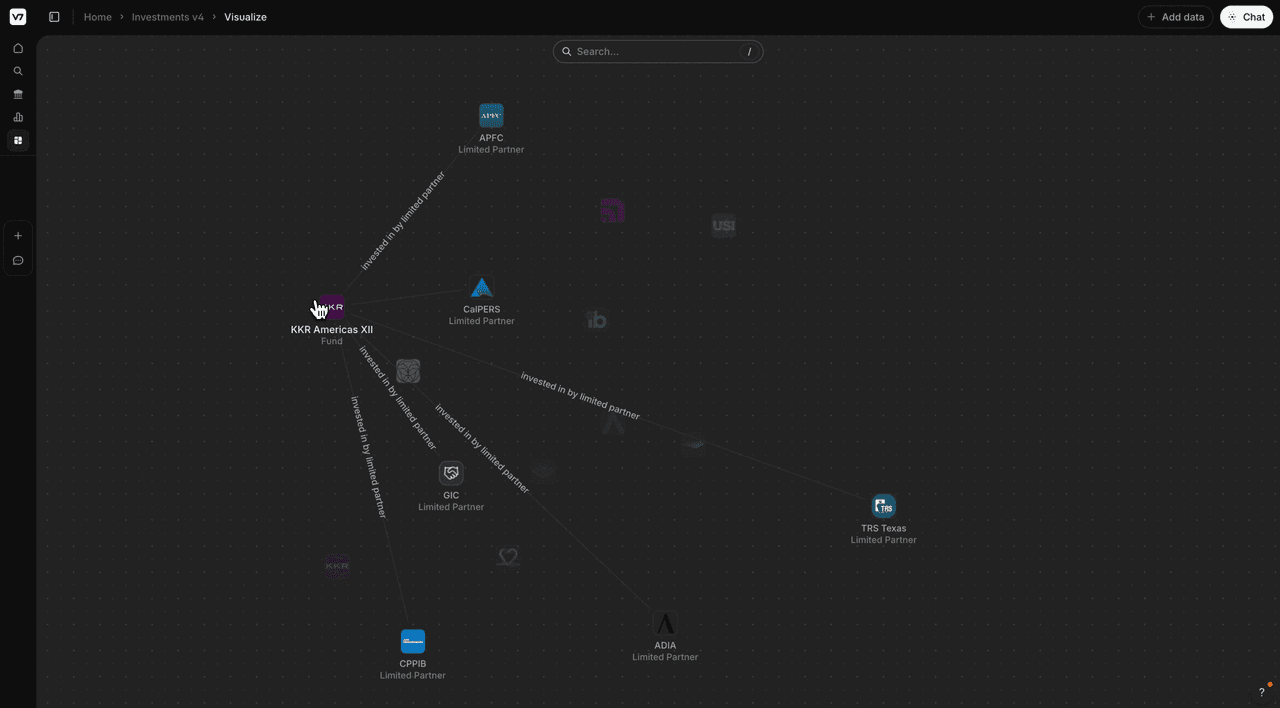
The Context Graph handles this by resolving entities and relationships at the point a document is ingested rather than at the point somebody asks. Holdings, ownership links and the documents that evidence them are stored as a structure, so the query is a traversal rather than a search. Our benchmark on a private markets corpus found the difference widens with scale. Accuracy held from ten documents to a thousand where retrieval-based approaches fell away. On multi-step questions, which is what an entity question is, the gap was substantial. The Context Graph explainer covers how it is built.
The practical version for an accounting team: the entity map stays current as documents arrive, rather than living in the controller's memory and a tab of the consolidation workbook.
Before you talk to a vendor
Two pieces of preparation change every demo that follows, and both take under a day.
Write down the entity structure as it really is. Every legal entity, its ownership, and the two or three that are genuinely awkward. Take that to the demo and insist on seeing it modelled live. The gap between platforms that can and platforms that will get there during implementation is the largest single difference in this category, and it is invisible on a feature grid.
Count the documents. How many capital account statements, K-1s, calls and distributions arrived last year, and roughly how many hours went into keying them in. Most offices have never counted, and the figure decides whether the document layer is worth addressing separately from the accounting platform or whether it is a rounding error. Below about fifteen fund positions it usually is a rounding error. Above forty it usually is not.
Both exercises produce the same artefact: a clear picture of where the office's accounting time actually goes. In our experience that picture rarely matches what the team expected before they measured it, and it changes which problem gets solved first.
What is family office accounting?
Family office accounting is the bookkeeping and financial reporting function for the legal entities a wealthy family owns assets through, rather than for a single operating company. In practice that means maintaining a general ledger across trusts, limited liability companies, partnerships, foundations and operating businesses at once. It posts the intercompany entries between them, applies ownership and partnership allocations, and produces both entity-level and consolidated financial statements. It differs from corporate accounting in two ways that matter. Ownership is irregular rather than uniform, so allocations follow documents rather than a formula. And the reporting audience is mixed: an auditor wants generally accepted accounting principles statements per entity, while a principal wants one consolidated picture, and the same ledger has to serve both.
+
What is the best family office accounting software?
There is no single answer, and the honest one depends on three variables. Entity count and ownership complexity determine how much the allocation engine matters: below roughly ten entities with simple ownership, most platforms are adequate and the decision is about price and implementation. The share of the portfolio in private assets determines whether investment accounting depth is a requirement or a nice-to-have. And whether the office already runs a separate reporting platform determines whether a unified system such as FundCount or Asset Vantage is an advantage or a duplication. Sage Intacct is the mainstream choice with the largest implementation partner network. Gravity suits offices already on Microsoft 365. Asseta is built for family offices from the ground up. FundCount and Asset Vantage combine accounting with reporting.
+
What is the difference between family office accounting and family office reporting software?
Accounting software maintains the general ledger. It handles double-entry bookkeeping across every legal entity, intercompany eliminations, partnership allocations and financial statements that an auditor will accept. Reporting software aggregates positions from custodians, calculates performance using internal rate of return and time-weighted return, and produces the packs a principal or an investment committee reads. The two categories answer different questions: what are the financial statements for this entity, versus what do we own and how is it performing. Some platforms do both, and they trade depth in one for coverage of the other. An office that needs only a consolidated performance view may not need a new ledger at all, which is worth establishing before shortlisting anything.
+
What is the best accounting software for managing multiple companies?
For general businesses with several subsidiaries, the mainstream multi-entity options are Sage Intacct, NetSuite, Acumatica and Gravity Software. All four hold multiple entities in one database, automate intercompany entries and consolidate without an export. For a family office the shortlist narrows. Family structures add three requirements a conventional group does not have. Ownership percentages that differ per entity. Partnership allocations defined by agreement rather than by shareholding. And permissions that separate family members from each other, not only staff from management. Sage Intacct and Gravity handle these reasonably. NetSuite and Acumatica handle consolidation well and family ownership poorly, which is why offices that adopt them because the operating business already runs on them usually end up with custom fields maintaining the difference.
+
When should a family office move off QuickBooks?
Not the accounting itself, and any vendor implying otherwise is overselling. Judgement about revenue recognition, valuation policy for private holdings, and how a partnership agreement should be applied stays with qualified people, as does anything an auditor will test. What AI does change is the data entry that feeds the ledger. Capital account statements, capital call and distribution notices, Schedule K-1s, custodian statements and invoices can be read automatically into typed fields. Each extracted figure links back to the page it came from, so an analyst reviews rather than transcribes. For an office with forty or more fund positions that is the largest single block of manual time in the accounting cycle. Below about fifteen positions it is not worth addressing separately.
+
Can AI do family office accounting?
Go is more accurate and robust than calling a model provider directly. By breaking down complex tasks into reasoning steps with Index Knowledge, Go enables LLMs to query your data more accurately than an out of the box API call. Combining this with conditional logic, which can route high sensitivity data to a human review, Go builds robustness into your AI powered workflows.
