12 min read
—



V7 Go
A smarter way to manage due diligence and underwriting
The private equity secondary market did roughly 162 billion dollars of transaction volume in 2024, a record and a sharp jump on the year before, and it has kept climbing since. What was once a quiet corner where distressed sellers offloaded unwanted fund stakes at a discount is now a mainstream tool that both investors and managers use on purpose. If you work in private markets and have not had to understand how a secondary actually works, you are running out of time.
Almost all of that volume splits into two kinds of deal that look similar on the surface and behave nothing alike underneath. In an LP-led secondary, a limited partner sells its existing interest in a fund to another investor, and the fund itself carries on unchanged. In a GP-led secondary, the manager moves one or more assets out of an ageing fund into a new continuation vehicle it also runs, and gives the existing investors a choice: cash out or roll over. The initiator is different, the governance is different, and the risks a buyer takes on are different, which is why treating them as one topic is where most explanations go wrong.
This is a practitioner's guide to the difference. It assumes you know what private equity is and starts from what a secondary is, then works through how LP-led and GP-led deals are structured, how they are priced, the conflict at the heart of a GP-led transaction, and the document load that sits behind every one of them. For the closely related question of what a fund's own agreement governs, our explainer on the limited partnership agreement in private equity is a useful companion.
In this article:
What private equity secondaries are, and who trades in the market.
How LP-led secondaries work, from why LPs sell to how they are priced.
How GP-led secondaries and continuation vehicles work, and the conflict they create.
A direct comparison, and the document burden behind every deal.
What private equity secondaries are
Private equity secondaries are the resale market for existing fund interests, the only real way for a limited partner (LP) to exit a private equity position before the fund reaches the end of its life. Where the primary market is about committing fresh capital to a new fund, the secondary market is about trading commitments that already exist, at a price set between a willing buyer and a willing seller rather than by the fund's own timetable.
The market has three broad transaction types: LP-led sales of fund interests, GP-led deals built around continuation vehicles, and direct secondaries in individual companies. This guide covers the first two, which account for nearly all the volume. The appeal to buyers is concrete rather than abstract. A secondary buys into a portfolio that already exists, so the classic J-curve of early losses is largely behind it, the assets have a track record to underwrite rather than a blind pool to trust, and the entry price usually sits at a discount to net asset value (NAV). The market has grown into these advantages: Bain's Global Private Equity Report and the secondary-market advisers that track volume have charted a market that has roughly quadrupled over the past decade and now clears well over 150 billion dollars a year.
Who participates in the secondary market
The buy side is led by dedicated secondaries funds, with pension funds, sovereign wealth funds, and insurers alongside them, and a growing share of retail money arriving through semi-liquid vehicles such as US registered funds, European ELTIFs, and UK long-term asset funds. On the sell side sit LPs managing their own portfolios and GPs running continuation processes on their assets. Between them are the brokers and placement agents who run the auctions, particularly for the larger LP portfolio sales. The retail channel is the fastest-growing part of this picture, but the market is still, in the main, an institutional one, and the mechanics reflect it.
LP-led secondaries: the traditional model
An LP-led secondary is the older and simpler of the two: a limited partner sells its interest in a fund to a replacement investor, who steps into the seller's shoes and inherits everything, including the unfunded commitment. The fund's structure, its manager, and its other investors are untouched. What changes is a name on the register.
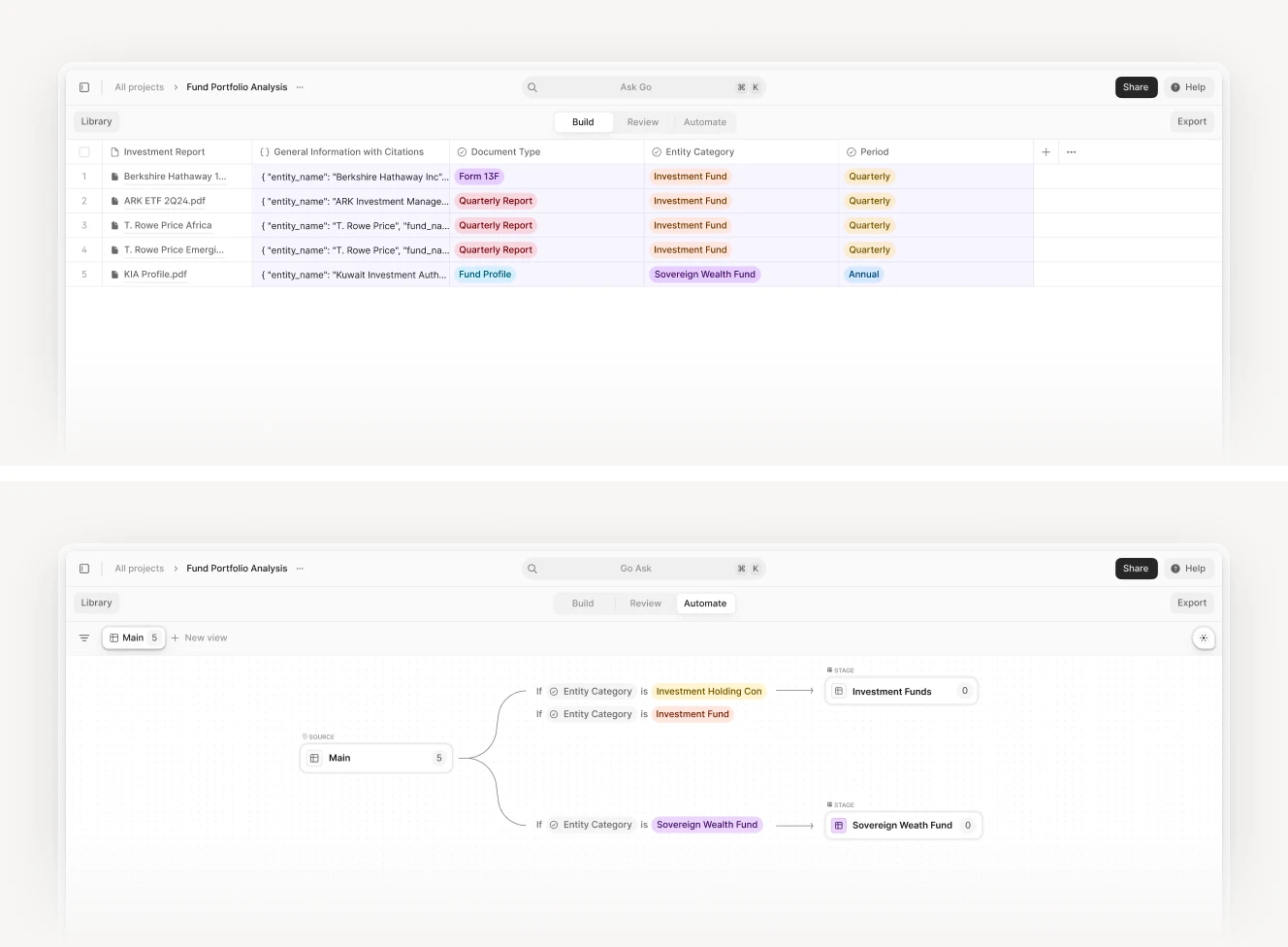
An LP-led sale transfers a stake in an existing portfolio. The buyer is underwriting a known set of assets with a track record, which is what makes the diligence a fund-level exercise rather than a bet on a blind pool.
LPs sell for reasons that are rarely about a bad fund. A pension plan rebalances an over-allocated private markets book; a bank sheds positions to manage regulatory capital; an institution needs liquidity, or wants out of an overcommitment, or is tidying a manager relationship before the next fundraise. Because the seller usually wants the best price rather than a fast exit, the larger sales run through a broker-led auction. Pricing is expressed as a discount to NAV, and for good-quality buyout fund interests that discount has been narrow in recent years, with average pricing sitting in the low-to-mid nineties as a percentage of NAV per the secondary-market advisers; distressed or lower-quality positions go for less. For the buyer, the reward is broad, diversified exposure to a maturing portfolio that is already returning capital.
The LP-led transaction process, step by step
The sequence is well worn. The selling LP appoints a secondary broker, who assembles the marketing pack: fund financials, a portfolio summary, and the all-important unfunded commitment schedule. The broker runs a bidding process among secondary buyers and lands on a price. The GP is then brought in, because its consent is almost always required to transfer an interest, and any right of first offer or first refusal in the limited partnership agreement has to be checked and, if it exists, respected. Once consent is in hand, a transfer agreement is executed, any regulatory filings are made, and the deal settles. None of the steps is exotic. The friction is in the documents, and there are more of them than the summary suggests.











GP-led secondaries and continuation vehicles
A GP-led secondary inverts the initiator: here the general partner (GP), not an investor, drives the deal, moving one or more assets out of an existing fund into a new continuation vehicle it will continue to manage. The point is to hold on to assets the manager believes still have room to run, past the deadline the original fund imposes. A continuation vehicle, sometimes called a continuation fund, is simply that new fund, created to hold the assets for a further period, usually three to five years, with a fresh set of investors and, for the existing ones, a decision to make.
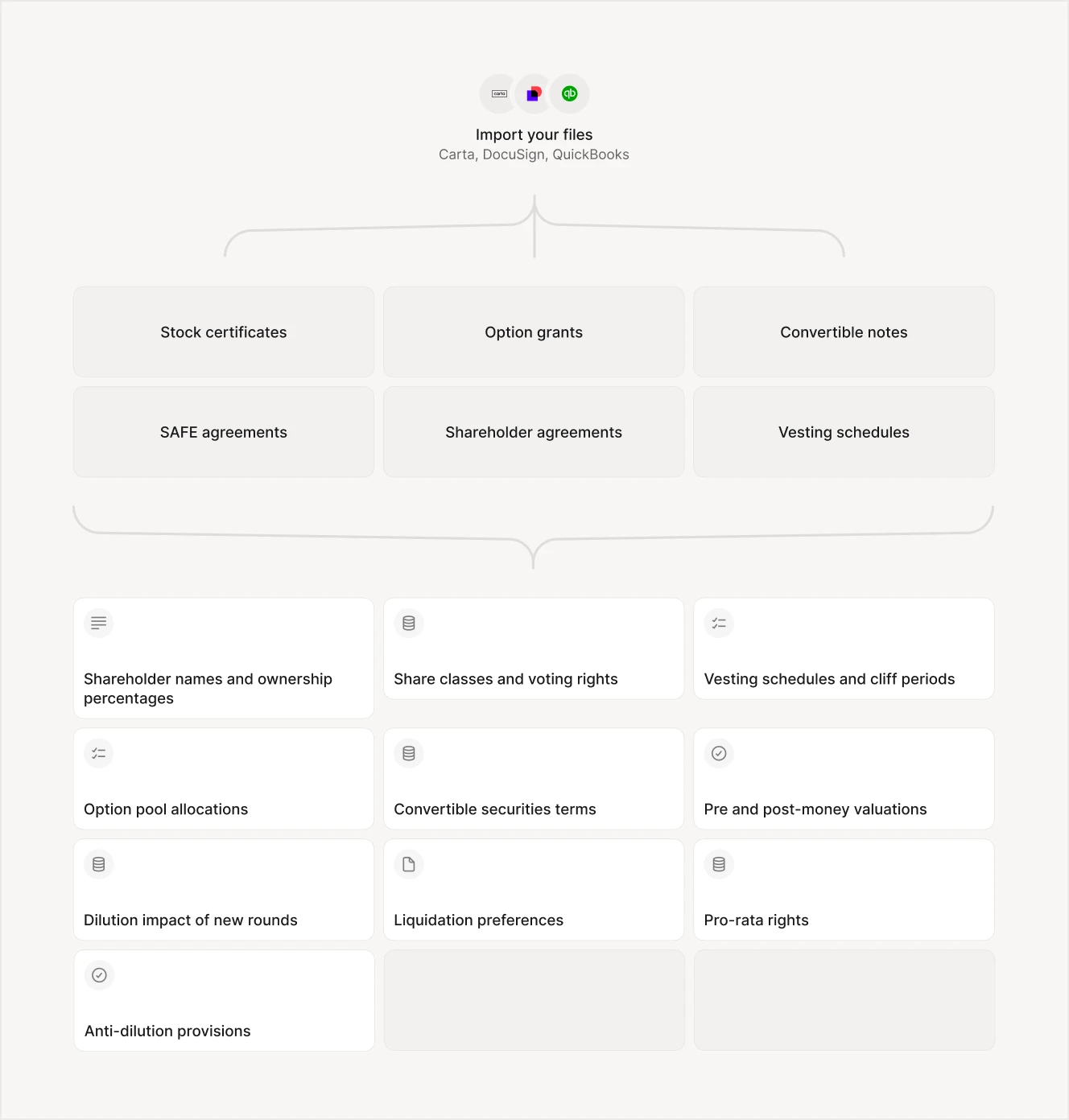
A GP-led deal spins up a new fund around specific assets, which means a new agreement, new terms, and a new documentation package on top of the transfer itself.
The manager's reasons are a mix of the honourable and the commercial, and it is worth being clear-eyed about both. A continuation vehicle lets a GP keep a trophy asset it does not want to sell into a soft market, hand liquidity to investors who want it without forcing a fire sale on those who do not, and, not incidentally, reset the clock on management fees and carried interest while it raises its next flagship. GP-led deals have grown from a niche into roughly half of all secondary volume, and continuation vehicles have, on the whole, performed well for the investors who rolled into them, which is a large part of why the structure has lost its old stigma.
Single-asset versus multi-asset continuation vehicles
Continuation vehicles come in two shapes. A single-asset continuation fund holds one company, which concentrates the investor's exposure entirely on that asset and is typically reserved for a manager's standout performer. A multi-asset continuation vehicle holds several, which spreads the risk and suits a GP with a handful of solid businesses rather than one star. Single-asset deals are the larger and the more scrutinised of the two, precisely because there is nowhere to hide: the investor is making a concentrated bet on one company at a price the manager has a strong interest in.
The LP election: sell, roll, or commit
When a GP-led deal is put to the existing investors, each faces a three-way choice rather than a simple yes or no. They can sell, taking cash at the secondary price and exiting the asset. They can roll over, keeping their exposure by moving into the continuation vehicle on its new terms. Or they can roll and commit fresh capital, topping up to avoid being diluted by the incoming investors. The right answer turns on liquidity needs, conviction in the manager, and, above all, whether the price looks fair, which is exactly where the governance comes in. A high proportion of investors choosing to sell rather than roll is a signal worth reading: it usually means the people who know the asset best are not convinced.
Conflicts of interest and the fairness opinion
The GP-led structure contains a conflict that no amount of good faith removes. The same manager is, in effect, selling the asset on behalf of the departing investors and buying it on behalf of the continuing ones, while standing to gain from the fee and carry reset the deal creates. The market's answer is governance. In almost every institutional fund, the limited partner advisory committee (LPAC) must approve the transaction or waive the conflict before it can proceed, working from a preliminary term sheet, a draft fairness opinion, and the proposed election structure. That fairness opinion, an independent financial adviser's view on whether the price is fair, is near-universal market practice, and best practice pairs it with a full rollover of existing carried interest into the continuation vehicle so the manager's incentives sit with the investors who stay.
The regulatory picture is worth stating precisely, because it is easy to get wrong. In 2023 the US Securities and Exchange Commission adopted rules that would have made a fairness or valuation opinion a formal requirement for registered advisers running GP-led secondaries. A federal appeals court then vacated those rules in 2024, a reversal several firms including Morgan Lewis documented in detail. So the mandate is gone; the practice is not. A fairness opinion remains what buyers, sellers, and LPACs expect on any credible GP-led deal, which is a useful reminder that in private markets, market standard often does more work than the rulebook.
LP-led versus GP-led: the comparison
Set the two side by side and the differences that matter for a buyer or an investor come into focus. The initiator changes everything downstream.
Dimension | LP-led | GP-led |
|---|---|---|
Who initiates | A limited partner | The general partner |
Purpose | LP liquidity and portfolio management | Extend the hold on chosen assets, offer LP liquidity |
Structure | Fund interest transfers; the fund is unchanged | A new continuation vehicle is formed |
Exposure | Broad, the whole fund portfolio | Concentrated, one asset or a few |
Diligence focus | Fund-level: vintage, manager, NAV | Asset-level: company quality, price, GP motive |
Conflict of interest | Low | High, the GP sits on both sides |
Governance | GP consent and LPA transfer terms | LPAC approval, fairness opinion, LP election |
Investor choice | Sell or hold | Sell, roll, or roll and commit |
The practical takeaway for a buyer is that the two deals demand different diligence entirely. An LP-led purchase is underwritten at the fund level: vintage year and remaining life, the reliability of the last NAV mark, the unfunded commitment you are taking on, and the manager's record, the fund-level checks our guide to private equity fund due diligence works through. A GP-led purchase is underwritten at the asset level: the quality of the specific company on its own fundamentals rather than the GP's deck, the credibility of the fairness opinion and who produced it, and the read-through from how many existing investors chose to roll rather than sell. Get the level of analysis wrong for the deal type and the diligence, however thorough, is aimed at the wrong target.
The document burden behind every secondary
Secondaries are, underneath the market narrative, a document-heavy business, and the load is the part that scales badly. A single GP-led deal generates the continuation vehicle's own agreement, the LPAC consent and waiver package, the fairness opinion and its supporting materials, election notices and ballots for every existing investor, transfer paperwork for those who roll, and side letters for the incoming ones. An LP portfolio sale multiplies the problem the other way: a twenty-fund portfolio means twenty sets of transfer provisions to check, twenty consent processes, and twenty unfunded commitment schedules to reconcile, each buried in an agreement written for primary investors rather than secondary buyers.
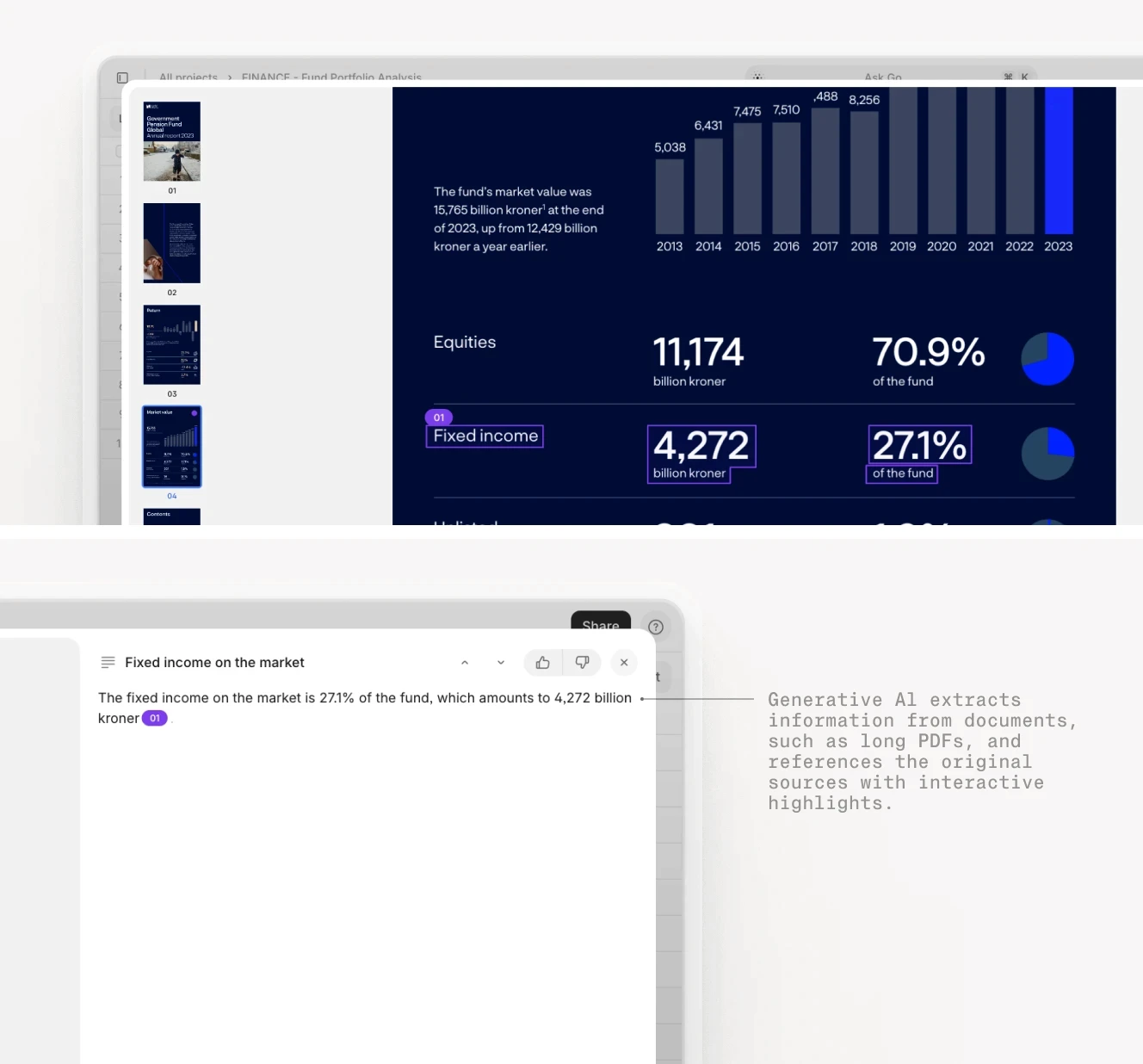
Much of secondaries diligence is text extraction and comparison: finding transfer-restriction language across LPAs and pulling NAV and unfunded figures from statements, with every figure traceable to its source.
The bottleneck is not the market judgement, which is what the secondaries team is actually paid for; it is the throughput of finding transfer-restriction clauses across a stack of LPAs, comparing election mechanics across funds, and pulling NAV and unfunded commitment figures out of quarterly statements. This is document work that AI is well suited to, extracting and cross-referencing provisions across many agreements at once, and it is the subject of our companion piece on why the secondary market needs better documents. Purpose-built platforms such as V7 Go, through work like its LPA analysis agent, apply exactly this to secondaries diligence, so the team spends its time on the price and the asset rather than on locating the clause. It sits alongside the broader use of AI in private equity and the diligence workflows in our guide to the private equity due diligence process.
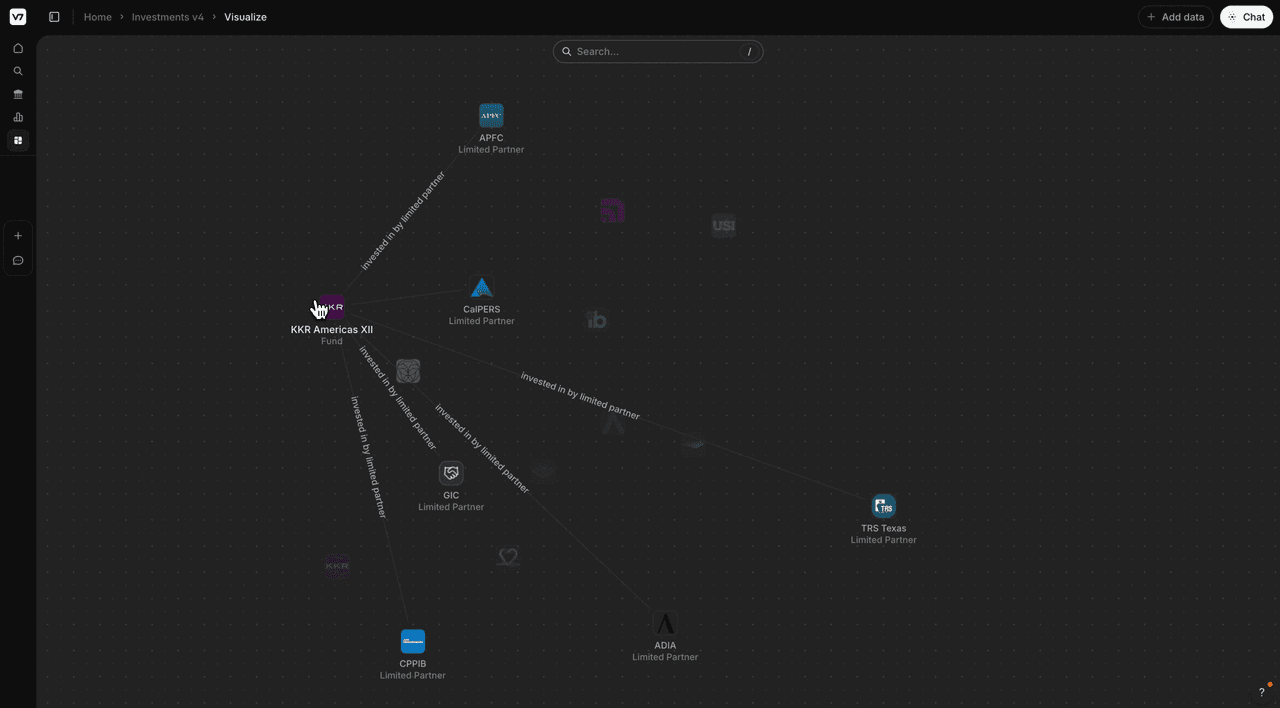
A fund node connected to its limited partners in V7 Go's Context Graph. The same relationship structure a secondaries team otherwise tracks by hand across LPAs and side letters, held here as a persistent, queryable graph.
That cross-referencing compounds the more of it a firm does. Connect a secondaries team's data rooms, LPAs, and quarterly statements to a Context Graph and the platform builds this kind of relationship graph of funds, general partners, and limited partners as it goes, the same structure a team already carries in its head about who commits alongside whom, just persistent and queryable instead of living in one analyst's memory. Ask which LPs in a given fund rolled into a prior continuation vehicle, or how a specific transfer-restriction clause has been negotiated across a GP's fund family, and the answer comes back tied to the LPA clause it was drawn from, not a summary someone still has to go re-verify. That grounding is what lets AI for private equity teams act on the output during a live auction, where there is no time to double check a citation that turns out to be wrong.
The honest summary is that LP-led and GP-led secondaries share a name and little else. One is a change of ownership in a fund that carries on as before; the other is a manager building a new vehicle around assets it does not want to let go, with a conflict at its centre that governance exists to manage. Confuse the two and you underwrite the wrong risk.
For anyone evaluating a secondary, the discipline is to match the analysis to the deal: fund-level judgement for an LP-led purchase, asset-level scrutiny and a hard look at the fairness opinion and the election results for a GP-led one. The market has grown up, the stigma around continuation vehicles has largely gone, and the structures are now a permanent part of how private equity manages liquidity. The practitioners who do well in it are the ones who read the documents that the deal actually turns on, not the summary that sells it.
If you want to see how AI handles the document load behind a secondaries process, from LPA transfer provisions to unfunded commitment schedules, V7 runs a working session built around your own deal documents. That is the concrete next step, and it takes about the length of a first screening call.
What is the difference between LP-led and GP-led secondaries?
The difference is who initiates the transaction and what happens to the fund. In an LP-led secondary, a limited partner sells its existing interest in a private equity fund to another investor, who takes over that stake, including any unfunded commitment, while the fund itself, its manager, and its other investors carry on unchanged. It is essentially a change of ownership of one investor's position. In a GP-led secondary, the general partner, the manager, initiates the deal by moving one or more assets out of an existing fund into a new continuation vehicle that the same manager runs, and the existing investors are given a choice to cash out or roll their interest into the new vehicle. The practical consequences differ sharply: an LP-led deal gives a buyer broad, diversified exposure to an existing portfolio with relatively simple governance, whereas a GP-led deal gives concentrated exposure to specific assets, carries an inherent conflict of interest because the manager sits on both sides, and requires more governance, including advisory committee approval and a fairness opinion.
+
How are private equity secondaries priced?
Private equity secondaries are priced as a discount, or occasionally a premium, to the fund's net asset value, which is the reported value of the underlying assets. For an LP-led sale, the seller usually runs a broker-led auction among secondary buyers to find the best price, and for good-quality buyout fund interests in recent years that pricing has been relatively strong, with average pricing sitting in the low-to-mid nineties as a percentage of NAV according to the secondary-market advisers who track the market; lower-quality or distressed positions trade at wider discounts. GP-led pricing works differently: rather than a broad auction, the price is typically negotiated with a lead secondary buyer who anchors the deal, and it is then validated by an independent fairness opinion that assesses whether the price is fair to the existing investors. In both cases the discount to NAV reflects the buyer's compensation for illiquidity, the time value of waiting for distributions, and any uncertainty about whether the reported NAV is current, since valuations can lag the market by a quarter or more.
+
What is a continuation vehicle in private equity?
A continuation vehicle, also called a continuation fund, is a new fund created by a private equity manager to hold one or more assets transferred out of an existing fund that is reaching the end of its life. Rather than sell the assets to an outside buyer or wind the fund down, the manager moves the assets it wants to keep into the new vehicle and continues to manage them for a further period, typically three to five years. The existing investors in the original fund are offered a choice: sell their interest for cash at the transaction price, or roll their interest into the continuation vehicle and stay invested, usually on new terms. New investors, led by secondary buyers, provide the capital that funds the cash-out for those who sell. Continuation vehicles come in two forms: single-asset vehicles that hold one company, which concentrate exposure and are usually reserved for a manager's best asset, and multi-asset vehicles that hold several. They have become one of the fastest-growing parts of the secondary market and now account for roughly half of all secondary volume.
+
Why do GP-led secondary transactions need a fairness opinion?
A GP-led secondary contains an inherent conflict of interest, and the fairness opinion is the market's main tool for managing it. In the transaction, the same manager is effectively selling the asset on behalf of the investors who are cashing out and buying it on behalf of the continuation vehicle and its new investors, while also standing to benefit from the reset of management fees and carried interest that the deal creates. That puts the manager on both sides of a price negotiation with itself. A fairness opinion, produced by an independent financial adviser, gives the existing investors and the advisory committee an outside view on whether the price is fair, which is why it has become near-universal practice on credible GP-led deals. It is worth being precise on the regulatory position: the US Securities and Exchange Commission adopted rules in 2023 that would have made such an opinion a formal requirement for registered advisers, but a federal court vacated those rules in 2024. The requirement is therefore no longer in force, yet the fairness opinion remains standard practice because buyers, sellers, and advisory committees continue to expect it.
+
How big is the private equity secondary market?
When a manager creates a GP-led continuation fund, the existing limited partners in the original fund receive an election notice and must choose among three options. The first is to sell, taking cash at the agreed secondary transaction price and exiting the asset entirely, which locks in their return and gives them liquidity. The second is to roll over, moving their interest into the new continuation vehicle and staying invested in the asset, though usually on new terms that can include a different management fee and carry structure and a fresh holding period of three to five years. The third is to roll their interest and commit additional capital, which lets them maintain or increase their exposure and avoid being diluted by the incoming secondary investors. The right choice depends on the investor's own liquidity needs, its confidence in the manager, its view of whether the price is fair, and its appetite for a longer hold. A useful signal for anyone assessing the deal is the split itself: if a large share of existing investors choose to sell rather than roll, it often indicates that the investors closest to the asset are sceptical of the price or the prospects.
+
What happens to existing LPs when a GP-led continuation fund is created?
Go is more accurate and robust than calling a model provider directly. By breaking down complex tasks into reasoning steps with Index Knowledge, Go enables LLMs to query your data more accurately than an out of the box API call. Combining this with conditional logic, which can route high sensitivity data to a human review, Go builds robustness into your AI powered workflows.
+
Casimir is a seasoned tech journalist and content creator specializing in AI implementation and new technologies. His expertise lies in LLM orchestration, chatbots, generative AI applications, and computer vision.