11 min read
—


Most covenant monitoring watches the ratios. The obligations that break are the reporting deadlines, insurance conditions and reserve releases around them.

Casimir Rajnerowicz
Content Creator
V7 Go
A smarter way to manage due diligence and underwriting
A credit agreement is not one obligation. It is a few dozen, of which the financial covenants are the smallest and best-behaved group.
Most covenant monitoring is built around the ratios: leverage, debt service coverage, interest cover. Those matter, and they are also the part of the document that already lives in a spreadsheet somewhere. The obligations that break are the other ones. A reporting deadline counted from a fiscal quarter end. An insurance certificate that has to name the lender. A reserve condition that releases funds only once something else has been delivered.
This guide covers the whole path: abstracting the loan agreement, turning what it contains into a register of obligations with dates attached, and testing the covenants against figures you can defend. It is written for the borrower-side finance team and the lender-side portfolio manager, who have the same problem from opposite directions.
A note on terminology. This article is about debt covenants in credit agreements. Search for covenant compliance and you will also find homeowners association covenants and religious ones. Different subject entirely.
In this article:
What a loan agreement obliges you to do, and why most of it is not a ratio
The fields worth abstracting, and where each one comes from
Turning obligations into a calendar, including the ones with no date yet
Testing covenants: maintenance versus incurrence, headroom, and equity cures
What a breach actually triggers, and what compliance unlocks
What a Loan Agreement Obliges You to Do
Obligations in a credit agreement fall into five groups. Only the first is a ratio, and it is usually the one with the most attention on it.
Type | Examples | What makes it hard to track |
|---|---|---|
Financial covenants | Leverage, debt service coverage, interest cover, minimum tangible net worth | Nothing, relatively. Tested on a schedule, computed from figures you already produce |
Reporting obligations | Quarterly and annual financials, compliance certificates, tax returns, rent rolls, leasing status reports | Each has its own deadline counted from a different anchor, and the anchors move |
Affirmative obligations | Maintain insurance naming the lender, pay taxes, preserve licences, permit inspections | Often continuous rather than dated, so nothing prompts you until something lapses |
Negative obligations | Restrictions on additional debt, liens, distributions, asset sales, changes of control | Triggered by something the business decides to do, not by the calendar |
Conditions and mechanics | Escrow and reserve releases, earn-out access, cash sweeps, cure rights, notice periods | Conditional on other obligations being met first, so they chain |
A monitoring process built around the first row covers one group of five. It is the group least likely to surprise anyone, because the figures behind it are already being produced for other reasons.
The deadlines are real, and they are not the same deadline
Holland & Knight's summary of loan reporting requirements gives a sense of how uneven this gets. In one agreement: quarterly unaudited financials within 45 days of each fiscal quarter end, audited statements within 60 days of the relevant quarter dates. Then federal tax returns within 60 days of filing with the IRS, and compliance certificates within 60 days showing the debt service coverage and debt to tangible net worth ratios, signed by an authorised officer.
Four different clocks, three different anchor events, one document. Multiply by the number of facilities in a portfolio and the tracking problem stops being about ratios.
The full list is in Holland & Knight's note on spring loan reporting requirements, which is worth reading for the range rather than the specific figures, since every agreement is drafted differently.
What to Abstract From the Agreement
Abstraction is the step that makes everything after it possible. The target is not a summary of the document. It is a structured set of fields, each one traceable to the clause it came from, because you will be asked to justify every one of them at some point.
Field group | What to capture | Why it matters downstream |
|---|---|---|
Facility basics | Principal, committed and drawn amounts, proceeds, maturity, amortisation, interest rate and any caps or floors | The denominator in most tests, and the input to every forecast |
Anchor dates | Closing date, first test date, fiscal year end, facility dates, notice periods | Every derived deadline is computed from one of these. Get them wrong and the whole calendar is wrong |
Financial covenants | Each ratio, its definition as drafted, the level, the test frequency and the first test date | Definitions vary between agreements. The word EBITDA in two documents rarely means the same thing |
Reporting duties | What is delivered, to whom, in what form, by when, counted from which anchor | The largest group by count, and the one most often missed |
Escrows and reserves | Amounts held, release conditions, replenishment triggers | Cash you cannot use until a condition is satisfied, which is worth knowing precisely |
Insurance requirements | Coverage types, minimum limits, named insured and loss payee requirements, certificate delivery | A continuous obligation with a renewal date attached, which is an easy one to let lapse |
Negative covenants and baskets | Debt, lien, distribution and asset sale restrictions, and the capacity under each basket | Consulted when the business wants to do something, so it has to be findable on demand |
Cure and remedy mechanics | Cure rights, cure periods, notice requirements, default and acceleration triggers | The part you need fastest, at the worst possible moment |
Two practical notes from implementations. Extraction has to cover the supporting documents, not just the credit agreement. Amendments, promissory notes, bonds, official statements, construction documents and side agreements all carry obligations, and an amendment routinely changes a date the original set. And the output has to be reconciled to a current position rather than kept as a stack of extracts, because the question is never what the original agreement said, it is what is true today.
The same discipline applies on the property side, where lease abstraction has the identical problem of a base document buried under amendments.
The same word does not mean the same thing in two agreements
The field that causes the most trouble is the one that looks most standard. EBITDA is defined in the agreement, not in accounting standards, and the definition is negotiated. Two facilities signed in the same quarter by the same borrower can permit different add-backs, cap them at different percentages, and apply them over different lookback periods.
The consequence for abstraction is that you cannot extract a covenant as a number and a name. You have to extract the definition alongside it, or you have captured a threshold with no way to test against it. The same applies to net debt, which may or may not net unrestricted cash, and to fixed charges, which vary in what they include.
A useful test of any abstraction: can somebody who has never seen the agreement compute this quarter's covenant from what you extracted? If they would have to open the document to check a definition, the abstraction is incomplete.











Turning Obligations Into a Calendar
This is where most covenant tooling stops being useful, and it is the part worth getting right.
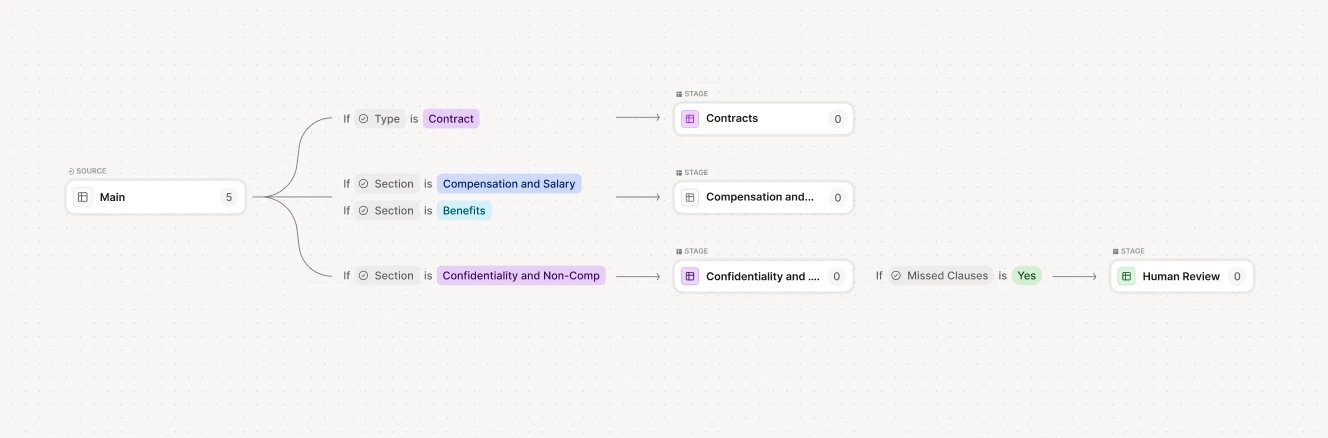
An obligation register is only actionable if the obligations have dates. Sort them by whether they can be dated at all, and three groups appear.
Group | What it looks like | How to handle it |
|---|---|---|
Recurring and calculable | Quarterly financials 45 days after quarter end. Annual insurance certificate on renewal. Compliance certificate with each delivery | Compute the dates from the anchor and schedule them. This is the majority, and it is the easy majority |
Event-triggered | Notice of a material adverse change. Consent before an asset sale. Reporting on a new lease above a threshold | Cannot be scheduled. Register as conditions to check against events, and attach them to the process that would trigger them |
Date not yet knowable | Anything computed from a date that has not happened, or from a figure not yet determined | Hold in a backlog until evidence makes it calculable, and re-check on each new document |
The honest implementation schedules the first group and is explicit about the other two. A calendar that silently omits the event-triggered obligations looks complete and is not. In practice the useful pattern is to cover the recurring majority first, keep an uncertain-obligation backlog visible alongside it, and promote items out of the backlog as later documents make them calculable.
Anchor dates move, and everything hanging off them moves too
The failure that costs real money is not a missed deadline. It is an amendment that shifts an anchor date, after which every obligation computed from that anchor is quietly wrong on a calendar nobody has rebuilt.
A fiscal year end changes. A facility is extended. A closing date is restated in an amendment and three reporting deadlines move with it. If the dates were typed into a spreadsheet once, there is no mechanism that notices.
This is the argument for keeping every extracted value linked to the clause it came from. When the clause changes, you can see what depended on it. That is a different requirement from accuracy at the point of extraction, and it is the one that matters over the life of a facility.
Every obligation needs an owner, not just a date
A register with dates and no owners produces a predictable failure: the deadline is visible to everyone and belongs to nobody. Reporting obligations usually sit with finance, insurance conditions with operations or risk, negative covenants with whoever approves transactions, and notice requirements with legal.
Splitting them by owner also exposes the obligations nobody would naturally pick up. An insurance certificate naming the lender as loss payee is a finance obligation on paper and an operations task in practice. That is exactly the kind that lapses at renewal, without anyone noticing until a lender asks.
The register is also the answer to a question that arrives at the worst time: when a lender queries something, how quickly can you produce the clause, the figure, and the evidence you delivered it? If that takes a day of searching, the register is not doing its job.
Testing the Covenants
The ratios, kept in proportion. Two structural distinctions do most of the work.
Maintenance versus incurrence
A maintenance covenant must be satisfied on a schedule whether or not the borrower does anything. As Sidley's note on financial covenants in private credit puts it, these require periodic, typically quarterly, compliance with specified financial metrics, reported through compliance certificates delivered with the financial statements.
An incurrence covenant is tested only when the borrower takes a specific action: raising debt, paying a distribution, making an acquisition. Pass the test and the action is permitted. Do nothing and it is never tested.
The practical consequence is that they need different handling. Maintenance covenants belong on the calendar. Incurrence covenants belong in the approval process for the actions they govern, where somebody will need the answer within a day. Filing both in the same monitoring dashboard means one of them is in the wrong place.
Structures with no maintenance covenant at all are common enough to have their own name. Wall Street Prep's explainer on covenant-lite loans covers the mechanics, and Sidley notes that competitive dynamics in the middle and upper market have increased adoption of covenant-lite structures.
Headroom is a number worth knowing
Covenants are set with deliberate cushion against the borrower's own model. Sidley gives the range directly: a typical leverage covenant in a direct lending transaction may be set with a 25 to 35% cushion to the EBITDA projected in the sponsor or borrower model.
That figure is useful in both directions. For a borrower it says how far performance can fall before a test is at risk, which is a more useful management number than the ratio itself. For a lender it says how much of a warning the covenant actually provides, which on a 35% cushion is less than it appears.
The test is only as good as the figure fed into it
Every ratio depends on a definition drafted in the agreement, and those definitions are negotiated. Add-backs permitted in one credit agreement are not permitted in another. A covenant computed from a management EBITDA that does not match the contractual definition is not a covenant test, it is an estimate.
This is the same problem a quality of earnings review exists to solve at the point of the deal, applied every quarter afterwards. The definition has to come out of the document, not out of the model.
The compliance certificate is where it all lands
Everything above funnels into one artifact. The compliance certificate is the document that states the ratios, asserts compliance, and is signed by an authorised officer, which is what gives it weight. It is delivered with the financial statements, on the deadline the agreement sets.
Two things follow from that. The certificate is a periodic deliverable in its own right, so it belongs on the calendar alongside the financials rather than being treated as a by-product of them. And because somebody signs it personally, the working needs to be reproducible: which figure went into which line, under which definition, from which source. A certificate that cannot be reconstructed six months later is a problem waiting for an audit or a dispute.
What a Breach Triggers, and What Compliance Unlocks
Both directions are worth understanding, and the second gets almost no attention.
On the downside
A covenant breach rarely means immediate acceleration. It opens a set of lender options. Holland & Knight lists the usual range: declaring default, requiring the loan to be resized, imposing a mandatory cash sweep, restricting distributions, increasing reporting requirements and increasing guarantor liability.
Between the breach and any of that sits the cure mechanism. Sidley describes the standard form in sponsor-backed credit. Equity cure rights let a sponsor restore compliance by contributing additional capital as equity, or in some cases subordinated debt. The sponsor gets a limited cure period, and lenders are typically restricted from accelerating during it.
The operational point is that cure periods are short and start running on a date. Knowing the breach three weeks after the test date is materially different from knowing it on the day.
There is also a category of breach that has nothing to do with performance. Failing to deliver a compliance certificate on time is a breach of the reporting covenant regardless of whether every ratio was comfortably met. So is letting an insurance policy lapse, or making a distribution that a basket did not have capacity for. These are administrative failures with the same contractual consequences as a missed leverage test, and they are considerably more common, because nothing in the business signals them.
Most are also curable by doing the thing late, which is why they rarely become disputes. The cost is usually a waiver request, a strained lender conversation at renewal, and occasionally a pricing consequence.
On the upside, which is the part usually missed
Compliance is not only the absence of a problem. The same Holland & Knight summary lists what timely performance unlocks: access to earn-out funds, reduced guarantor liability over time, interest rate reductions, and the release of lender-required reserves.
That reframes the register. An obligation tracker built only to avoid default is watching one side of the ledger. Several of the conditions in a credit agreement release cash or reduce cost when they are satisfied, and they are satisfied by delivering documents on time. A reserve that could have been released two quarters ago is a real cost, and nobody sends a reminder about it.
When a Spreadsheet Is Still the Right Answer
Three cases where building anything more is not justified.
A handful of facilities with one lender and no amendments. A maintained spreadsheet and recurring calendar entries really do cover this. The threshold is roughly the point at which you stop being able to answer a question about a covenant from memory
Standard-form agreements that are actually standard. If every facility uses the same template with the same definitions, the abstraction work is done once and does not repeat
Before the agreements are gathered. If the current amendments cannot be located, structuring what you have produces a clean register of the wrong terms. Find the documents first

The failure mode to watch for is the opposite of the obvious one. It is not that the tracking is too manual. It is that a tidy dashboard built from a stale abstraction is trusted more than a messy spreadsheet somebody updates by hand, and is wrong in ways the spreadsheet would not have been. The person maintaining the spreadsheet knows which cells they are unsure about. A dashboard presents every field with the same confidence.
The threshold question is worth asking directly rather than by instinct. Count the facilities, then count the amendments across them, then count the distinct reporting obligations. If the third number is under about twenty and the second is close to zero, the existing process is probably fine. If amendments have accumulated and nobody can say confidently which terms are current, that is the signal, and it arrives well before anyone misses a deadline.
Where V7 Go Fits
V7 Go is not a loan servicing platform, a covenant monitoring product or a portfolio management system. It does not hold your facilities, calculate interest or produce lender reporting. It is the layer underneath those: getting the terms and obligations out of the agreements accurately, and keeping them tied to the clauses they came from.
V7 Go is AI infrastructure for private markets. Three things make it relevant to this workflow.
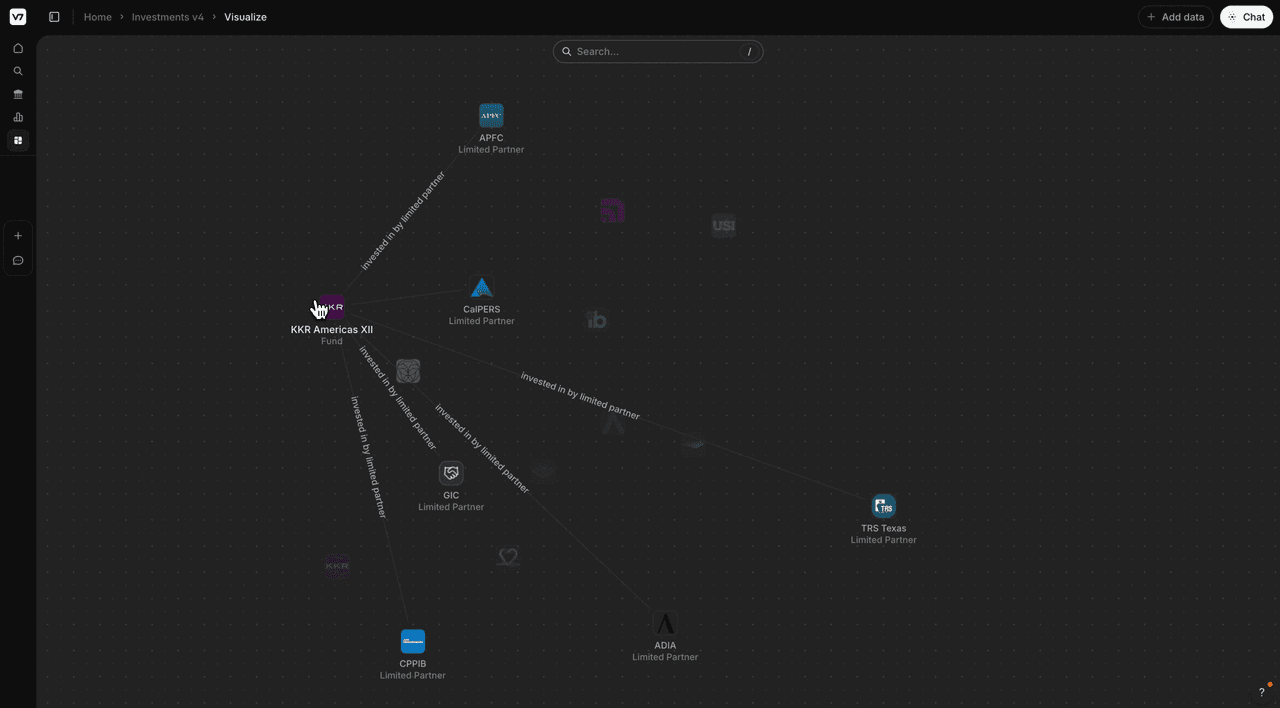
It runs against what the firm already knows. A facility is not read in isolation. It sits alongside its amendments, the prior facilities with the same borrower, and the definitions your firm has accepted before. Context Graph holds that record, so an extraction runs against the firm's existing position rather than against a single upload.
The steps are defined and repeat identically. A workflow told to pull every reporting obligation, its anchor and its deadline pulls all of them, on the two hundredth agreement as on the first. That is the difference against a general assistant, which re-solves the problem its own way each time and returns a different shape of answer. For a register you will run a compliance process on, the same structure every time is the requirement.
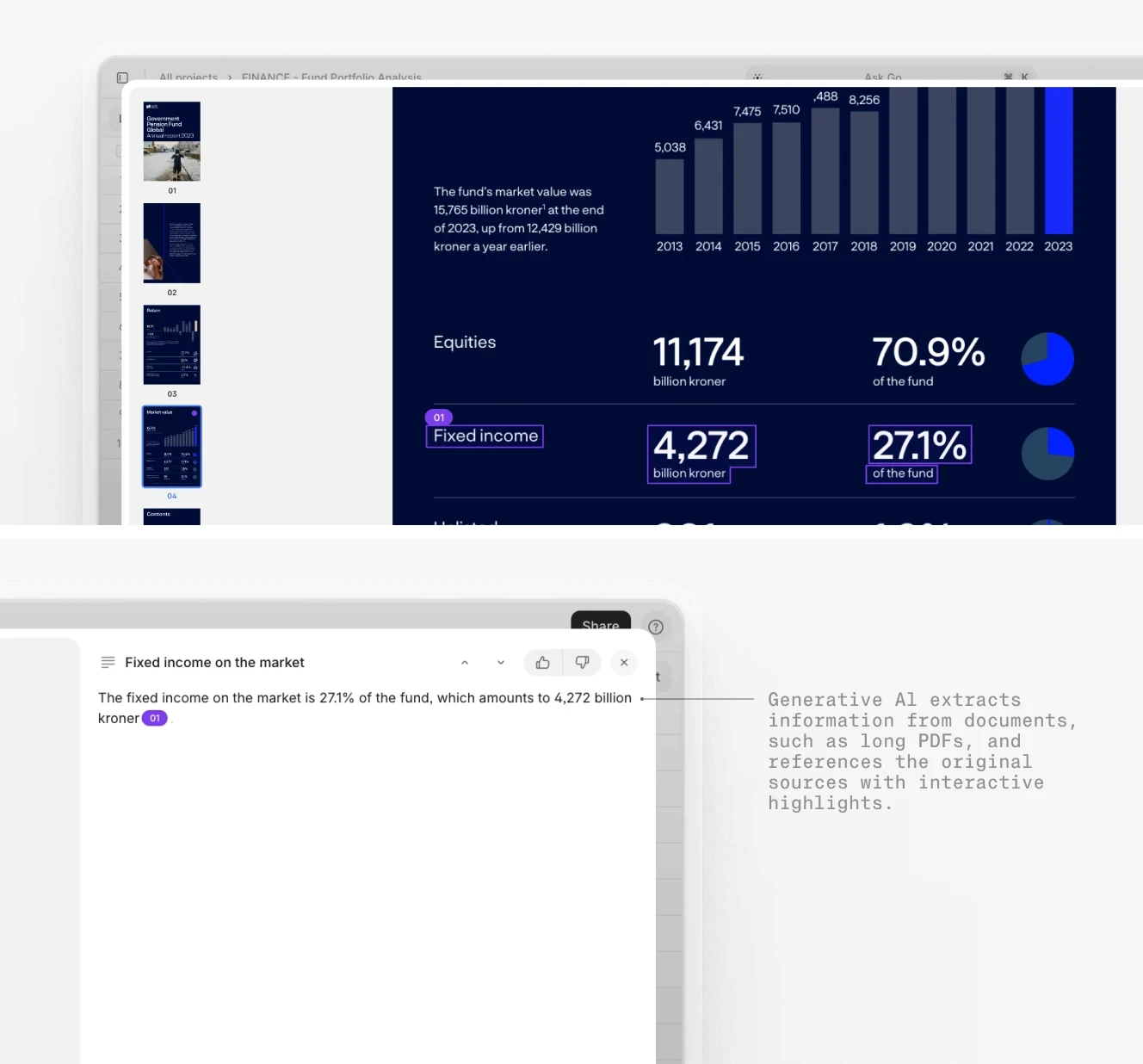
Every value opens the clause it came from. Each extracted term carries a citation back to its exact location in the document, which is what makes the anchor-date problem tractable: when a clause is amended, what depended on it is visible. Review points stay in the workflow, because deciding whether a term has been correctly interpreted is a judgement call with legal consequences attached.
In practice, firms point it at the agreement and its supporting documents, and extract the fields in the table above into a structured abstract. That abstract becomes the source for the obligation register and the covenant tests. The same pattern runs on LPA and side letter analysis, where side letters create obligations the fund documents do not mention, and on portfolio monitoring. Implementation is scoped and built with a solutions engineer against your own agreements.
If your problem is servicing the loan, buy a servicing system. If your problem is knowing what the agreements actually oblige you to do, and when, that is a document problem. Book a demo with V7 Go to see it run on one of your own facilities.
What is a loan covenant?
<p dir="auto">A loan covenant is a condition written into a credit agreement that the borrower agrees to meet. Financial covenants require a ratio to stay within a level, such as leverage or debt service coverage. Affirmative covenants require the borrower to do something, such as maintain insurance naming the lender or deliver quarterly financials. Negative covenants restrict actions, such as taking on additional debt or paying distributions. Breaching any of them can constitute an event of default, though what follows is usually a set of lender options rather than immediate acceleration of the loan. Which group a covenant belongs to determines how it should be tracked.</p>
+
What is the difference between a maintenance covenant and an incurrence covenant?
<p dir="auto">A maintenance covenant must be satisfied on a recurring schedule, typically quarterly, whether or not the borrower does anything. It is reported through a compliance certificate delivered with the financial statements. An incurrence covenant is tested only when the borrower takes a specific action, such as raising debt, making an acquisition or paying a distribution. Pass the test and the action is permitted; take no action and it is never tested. The practical difference is where each belongs: maintenance covenants on a calendar, incurrence covenants inside the approval process for the actions they govern, where somebody will need the answer the same day it is asked.</p>
+
How much headroom does a covenant usually have?
<p dir="auto">In direct lending, a typical leverage covenant may be set with a 25 to 35% cushion to the EBITDA projected in the sponsor or borrower model, according to Sidley Austin. That range is useful in both directions. For a borrower it indicates how far performance can fall before a test comes under pressure, which is often a more useful management number than the ratio itself. For a lender it indicates how much early warning the covenant actually provides, which at the wider end of that range is less than the existence of a covenant suggests. Cushions are negotiated and vary by credit, so the figure to work from is the one in your own agreement.</p>
+
What reporting deadlines does a loan agreement typically contain?
<p dir="auto">They vary by agreement and there are usually several running on different clocks. A representative set from Holland & Knight's summary includes unaudited quarterly financial statements within 45 days of each fiscal quarter end, audited statements within 60 days of the relevant quarter dates. Then federal tax returns within 60 days of filing with the IRS, and compliance certificates within 60 days showing debt service coverage and debt to tangible net worth, signed by an authorised officer. The complication is that these are counted from different anchor events, and an amendment can move an anchor, which shifts every deadline computed from it.</p>
+
What happens if a covenant is breached?
<p dir="auto">Parts of it, and it is worth being precise about which. Extracting terms and obligations from the agreement, computing deadlines from anchor dates, reconciling a current position across amendments and flagging where documents disagree are all mechanical and repeatable. Interpreting an ambiguous definition, deciding whether an add-back is permitted under the drafted language, and judging whether to request a waiver are not. The realistic target is that the reading and the reconciliation stop consuming the time, so the people making those calls are working from a complete and current register rather than reconstructing it each quarter.</p>
+
Can covenant compliance be automated?
Go is more accurate and robust than calling a model provider directly. By breaking down complex tasks into reasoning steps with Index Knowledge, Go enables LLMs to query your data more accurately than an out of the box API call. Combining this with conditional logic, which can route high sensitivity data to a human review, Go builds robustness into your AI powered workflows.
