21 min read
—



Casimir Rajnerowicz
Content Creator
V7 Go
A smarter way to manage due diligence and underwriting
The supplier contract is in the data room. Finance has checked the annual spend. Then, two days before signing, the buyer's lawyer finds a consent requirement in an amendment that never made it into the draft disclosure schedules.
In this hypothetical acquisition, the document was available, but the contractual disclosure was unfinished. Disclosure schedules are the companion to an M&A purchase agreement that supplies requested business information and identifies exceptions to its representations and warranties. Preparing them requires connecting the agreement's actual wording to the facts the company can support.
That connection is easy to lose during a busy transaction. The commercial team understands the supplier relationship. Legal has the amendment. The deal team knows the acquisition structure. Each holds part of the answer, while the schedule may still contain a reassuring reference to a folder of contracts.
For private equity buyers and portfolio-company sellers, the consequences extend beyond document quality. A missing consent can require a closing deliverable, a discussion about business continuity or a negotiated allocation of the resulting exposure. A well-organized schedule brings the issue to the people who can decide what to do about it.
Businesses assembled through add-on acquisitions face another collection problem: the relevant contract may belong to a subsidiary whose records never entered the central repository. Asking the right question therefore includes identifying whose records the team must check.
This guide focuses on US private-company M&A. It follows one illustrative supplier agreement from the disclosure requirement through evidence collection, drafting, buyer review and closing updates. Transaction counsel determines how the agreement and governing law treat each disclosure; the working team makes sure that judgment rests on identifiable, current facts.
The wider M&A due diligence process produces many of those facts. Schedule preparation gives them a specific contractual destination and a defined review path.
In this article:
Translate representations and warranties into a practical disclosure requirements map.
Draft specific entries, check cross-references and distinguish disclosure from resolution of a risk.
Control signing and closing versions, with AI helping prepare evidence for human review.
The aim is a schedule another reviewer can understand alongside the purchase agreement, supported by a work file that explains where each fact came from and which questions remain open.
What disclosure schedules do in an M&A agreement
Disclosure schedules perform two common functions: they provide information the agreement expressly requests, and they disclose exceptions to statements made in the agreement. Their legal effect depends on the contract's wording, including the provisions that connect a schedule to a representation.
Separate requested lists from exceptions
A representation might require a list of specified contracts. Another might state that the company has no pending litigation, subject to scheduled exceptions. The first calls for responsive information even when nothing is wrong; the second calls attention to a fact that qualifies the statement. Cooley GO's explanation of disclosure schedules describes this distinction and the complementary roles of company personnel and counsel in preparing them.
Keep those functions visible in the working instructions. An employee asked to report only "problems" may omit an ordinary, fully performed contract that the agreement requires the company to list. Someone asked to upload all contracts may provide a large collection without identifying the specific exception that needs attention.
Representations and warranties are contractual statements or assurances about matters such as ownership, financial information and business operations. Covenants impose obligations, such as obtaining a consent or operating the business in an agreed way before closing. For schedule preparation, the useful distinction is between describing the relevant state of affairs and agreeing what someone must do about it.
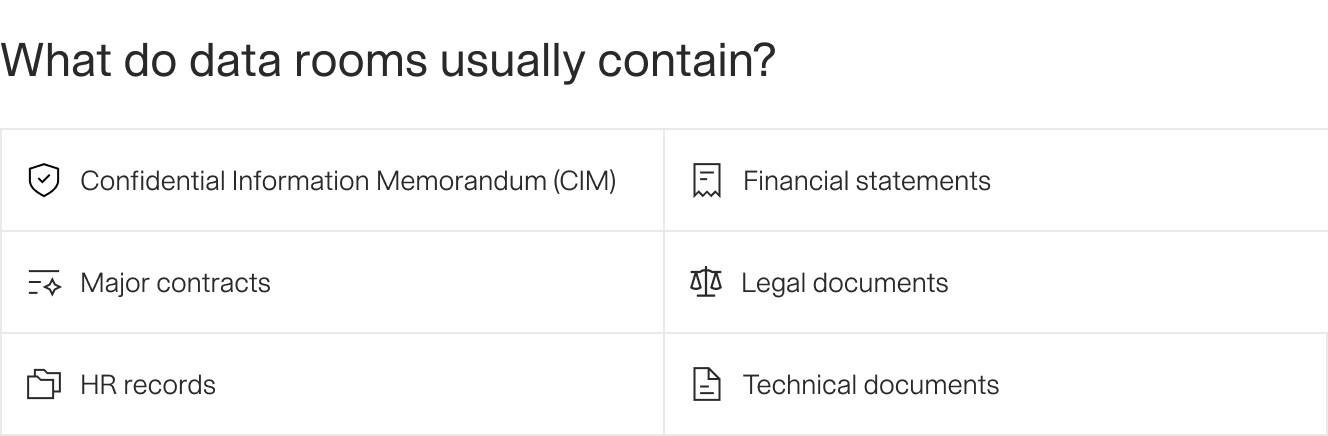
The data room contains source records. The agreement determines which facts must be listed or disclosed against a particular representation.
Check how the agreement recognizes disclosure
A data-room upload does not necessarily qualify a representation. Some agreements give specified data-room materials a contractual disclosure effect; others rely on numbered schedules and particular standards for incorporating documents. The working team needs counsel's instructions on that mechanism before treating a file location as a completed answer.
In the supplier example, three facts may need different treatment: the contract exists, its payment terms place it within a requested category, and an amendment contains a transaction-related consent provision. Listing the contract's title answers only the first question. Whether that listing also discloses the consent issue depends on the entry and the agreement's rules.
A file can be present while its significance remains undisclosed.
Avoid assuming that the buyer's diligence findings settle this question. What a buyer knew and how that knowledge affects a later claim can raise separate contractual and legal issues. Ask counsel to resolve the intended treatment explicitly while the parties can still agree it.
The same preparation discipline can apply to buyer representations that require schedules, for example where the acquisition structure calls for disclosures from the buyer. Assign responsibility based on who makes the representation. This guide uses seller schedules because they provide the worked example, without treating every acquisition agreement as identical.
Before collecting responses, identify the agreement version being answered. A schedule cannot stay accurate if the team keeps changing the questions without revisiting its answers.
Turn the representations into a disclosure requirements map
Build the collection instructions from the current purchase agreement. For each relevant provision, record what it asks, which entities and period it covers, and who can supply the facts. This map gives business owners a manageable request while preserving the legal wording counsel needs to review.
Capture the scope of each request
Start with the section number and a link to the controlling draft. Add a plain-language question alongside the full provision. If the agreement defines a capitalized term, keep a reference to that definition instead of paraphrasing away an exception or limitation.
Entity scope deserves its own field. A request covering the target and its subsidiaries may reach contracts held by an acquired business under an earlier name. In an asset deal, the requested population may depend on the defined business or purchased assets. An organization chart and an agreement definition need to agree before the team excludes records.
Also record any time period, financial threshold and knowledge qualifier. A representation limited by defined "Knowledge" may identify particular people and a required inquiry standard. Counsel should translate that wording into collection instructions; the team should not assume that one executive's recollection answers every provision.
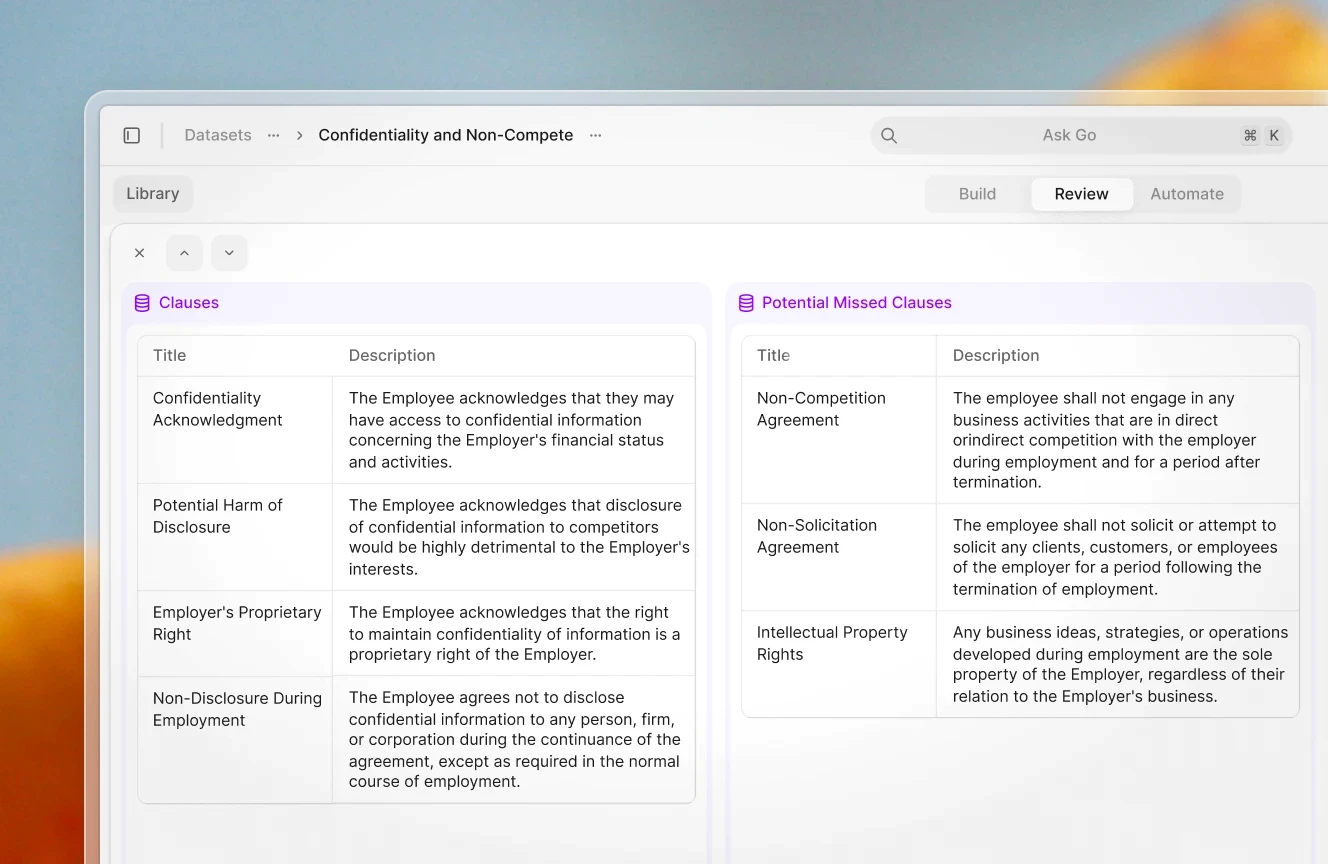
This illustrative V7 Go clause-review view places candidate issues beside contract text. Use the transaction's agreed requirements to direct disclosure collection.
Work one contract through the requirements
Assume a hypothetical draft requires Schedule 4.12(a) to list supplier contracts involving annual payments above $250,000. A separate Section 4.3 addresses consents required for the contemplated transaction. The target has a 2023 supplier agreement, a 2025 amendment and $300,000 of annual payments within the period specified by the draft.
Those amounts and section numbers are illustrative. The table shows how to organize the inquiry, not a standard disclosure threshold.
Agreement requirement | Evidence to assemble | Review question |
|---|---|---|
4.12(a): list contracts within the defined payment category | Executed agreement, amendments and finance support for the relevant annual payments | Does this contract meet the exact test, including its period and exclusions? |
4.3: identify required transaction consents | Consent clause, acquisition structure and any existing written consent | Does the provision apply to this transaction, and has the requirement been satisfied? |
Applicable contract-performance representation | Business-owner confirmation and relevant notices or correspondence | Is there a separate performance issue requiring disclosure under that provision? |
The payment ledger helps establish the listing category. It cannot determine whether the transaction triggers a change-of-control clause. Likewise, the presence of a consent clause does not establish that consent is required for every possible acquisition structure. Give counsel both the text and the transaction facts.
Record the relationship between these requests so an amendment found during contract review reaches the consent reviewer. A stable internal contract identifier can connect several schedule entries even when their final numbering changes.
If the next agreement draft lowers the hypothetical payment threshold to $100,000, reopen the affected collection request. Contracts previously outside the category may now belong in it. A redline showing only the schedule's new numbering would conceal that substantive change.
The output of purchase agreement analysis can help assemble provisions and definitions for this map. Have the legal reviewer confirm the instructions before business owners use them, and retain the earlier version so the team can identify which responses need refreshing.
Collect evidence from the people who know the business
Combine source documents with targeted business-owner confirmation. Documents show recorded terms and events; the people responsible for the relationship can identify missing amendments, informal disputes or changes that have not reached the deal room. Both inputs need a clear place in the review record.
Ask specific questions of named owners
For the supplier example, procurement can explain the relationship, finance can support the payment figure, and legal can locate executed amendments. Ask each owner a bounded question. "Please confirm whether this is the complete executed agreement set, including side letters and amendments" produces a more useful response than "Please review the schedule."
Send the relevant provision or counsel's approved explanation with the request. Include the entity names, relevant period and response date. An owner should be able to tell whether they are confirming facts within their responsibility or being asked to make a legal judgment outside it.
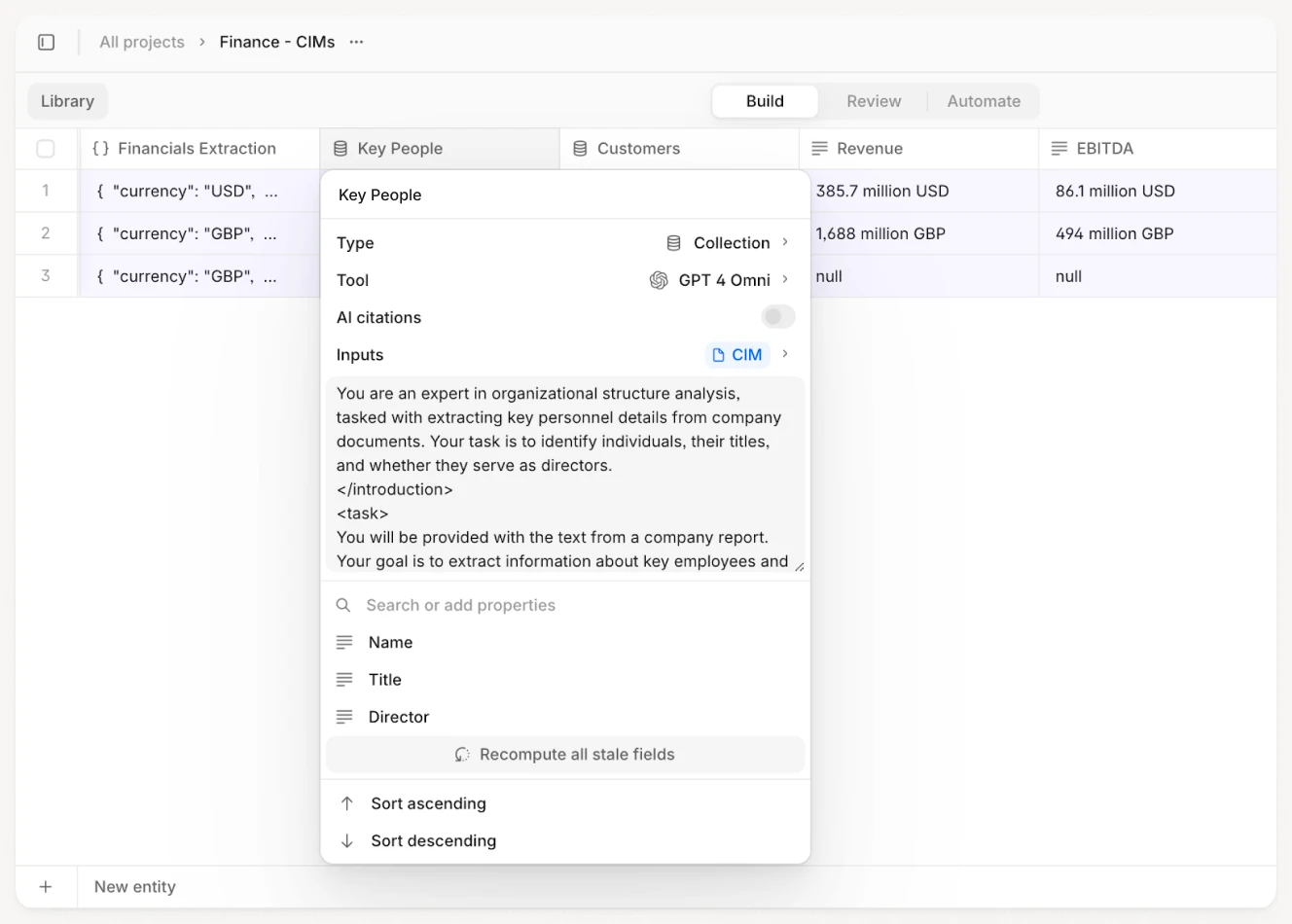
Names and roles extracted from documents can help identify people to consult. Management must confirm their responsibilities and any agreement-specific knowledge inquiry.
Search beyond the current data-room folder when there is a reason to expect more material. A reference to "Amendment No. 2" calls for the earlier amendment. A supplier email mentioning a waiver calls for the waiver itself. Records from a previous add-on acquisition may sit in an older repository under a former subsidiary name.
Use these clues to create follow-up tasks. Keep the reference that triggered the request, identify the person locating the missing record, and explain which draft entry depends on it. That prevents an apparently minor missing file from disappearing into a generic list of outstanding documents.
Maintain an internal evidence register
The internal work file has a different audience from the schedules exchanged between the parties. It should help reviewers trace facts, challenge assumptions and resolve questions before delivery. The table below illustrates fields for the supplier matter.
Work-file field | Illustrative content |
|---|---|
Matter and source IDs | SUP-014; 2023 agreement; 2025 amendment; payment support |
Potential schedule destinations | 4.12(a) contract list; 4.3 consent disclosure |
Source locations | Stable document links, amendment clause and relevant ledger period |
Business confirmation | Procurement owner, confirmation date and any limits on the response |
Open question | Locate evidence of written consent or confirm that it remains outstanding |
Review disposition | Facts checked; consent interpretation and draft entry awaiting counsel |
Keep legal advice and privileged reviewer communications within counsel's approved handling process. The existence of a legal-review column does not make the entire register privileged. Prepare the distribution copy deliberately, checking comments, attachments and tracked changes as well as visible text.
Separate "no responsive matter confirmed" from "no response received." If procurement has not answered, the item remains open. A blank cell or an extraction returning no result cannot support a final "None" entry without the required inquiry and review.
For larger collections, AI due diligence can help identify candidate documents and prepare cited facts. Missing attachments, unreadable scans and conflicting dates should remain visible exceptions. The review record should show when a person resolved each issue and which source supported that resolution.
Once the evidence is assembled, counsel can draft against a defined requirement. The work file should make it possible to check each substantive sentence without reconstructing the entire collection effort.
Draft specific disclosures and check every cross-reference
A useful disclosure identifies the responsive matter clearly enough to assess it alongside the representation. Match the entry to the facts and the agreement's disclosure standard. Avoid substituting a broad folder reference for an explanation when the representation calls for a particular exception.
Make the relevant fact visible
Return to SUP-014. Assume counsel has reviewed the 2025 amendment and concluded that the contemplated acquisition requires the supplier's written consent. Procurement confirms that the consent has not been obtained as of the schedule's stated date. Those assumptions allow a more specific draft for legal review.
Draft approach | Illustrative entry |
|---|---|
Too vague to explain the issue | See supplier contracts in the data room. |
Specific factual starting point for counsel | The supplier agreement identified in Schedule 4.12(a), item SUP-014, as amended in 2025, requires the supplier's written consent to the contemplated transaction under clause 7 of that amendment. That consent has not been obtained as of the date of these schedules. |
The second entry is an illustration, not language ready for signature. An actual entry needs the correct parties, document dates, identifiers and clause reference, plus counsel's assessment of any other relevant facts. Its advantage is that a reviewer can identify the issue and test the statement against a source.
Do not add unsupported reassurance. "Consent is expected shortly" requires a factual basis and still describes an expectation. If the supplier has acknowledged the request but has not agreed, keep those events separate. A commercial conversation should not become an assertion that the legal requirement has been satisfied.
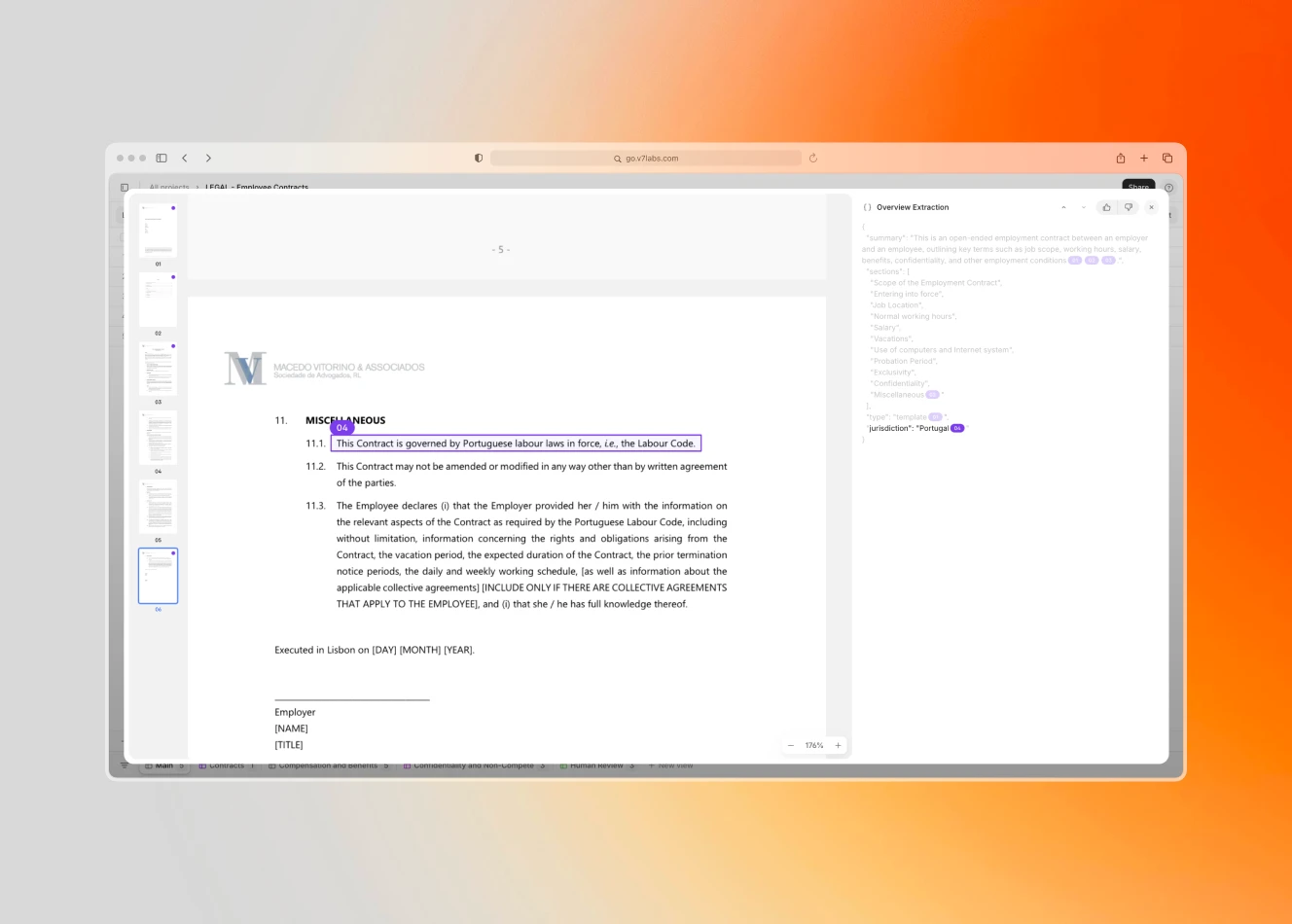
A source-linked contract view lets a reviewer inspect the passage behind an extracted fact. The displayed employment agreement illustrates navigation between a review field and its source.
Read the preamble with the numbered schedules
Cross-disclosure provisions determine when an item disclosed in one place also qualifies another representation. Check the purchase agreement, the schedule preamble and the actual entry together. Terms such as "readily apparent" can matter, as can an express requirement to identify the other section.
For SUP-014, the contract list and the consent schedule should tell a consistent story. Ask counsel whether to repeat the relevant facts, cross-reference an entry or use another agreed mechanism. A reference should point to the correct schedule and item in the final version, without forcing the recipient to guess which issue it addresses.
A Delaware decision shows why this deserves substantive review. In Aldrich Capital Partners Fund, LP v. Bray, decided May 17, 2024, the agreement permitted certain cross-disclosures where their applicability was readily apparent. The schedules' introductory language imposed a more specific cross-reference requirement. The dispute also involved an IP schedule marked "None" and a lawsuit disclosed elsewhere.
The Court of Chancery found the plaintiff's reading reasonably conceivable and denied the motion to dismiss. This was a pleading-stage decision, not a final finding of fraud. Nor did it establish that every agreement requires express cross-references. It illustrates how inconsistent instructions and entries can create an avoidable dispute about what a disclosure actually qualifies.
Review negative answers as carefully as positive entries
A "None" entry communicates an answer. Before approving it, confirm the relevant request was understood, the responsible owners responded, and related disclosures were considered. If an exception appears elsewhere, counsel should decide how that section should read under the agreed cross-disclosure language.
Then run a reader's check across the completed set. Follow every cross-reference. Open every incorporated document reference. Compare repeated facts, entity names and dates. Look for an entry that describes a resolved matter while another still calls it outstanding.
A process for AI contract review can help surface candidate inconsistencies for inspection. Keep the final sufficiency decision with the legal reviewer, who must assess the whole contractual arrangement rather than the wording of one isolated entry.











Review disclosed matters against the deal's risk allocation
Disclosure brings a matter into the contractual discussion; the buyer still needs to decide how it affects the acquisition. Review each significant issue with the people responsible for its legal consequences, commercial exposure and practical resolution. A completed schedule entry is only one part of that decision.
Give the disclosed issue a commercial disposition
For the supplier consent, procurement should explain what the relationship supports, whether alternatives exist and what interruption would mean. Counsel can assess the contract and possible responses. The deal lead can then evaluate the issue against the transaction timetable and investment assumptions.
The parties might agree to obtain consent before closing, adopt another permitted contractual solution or allocate specified exposure through negotiated terms. None of those outcomes follows automatically from including an entry. Record the decision in the appropriate agreement provision or closing deliverable and give the associated task an owner.
Disclosure does not obtain the consent.
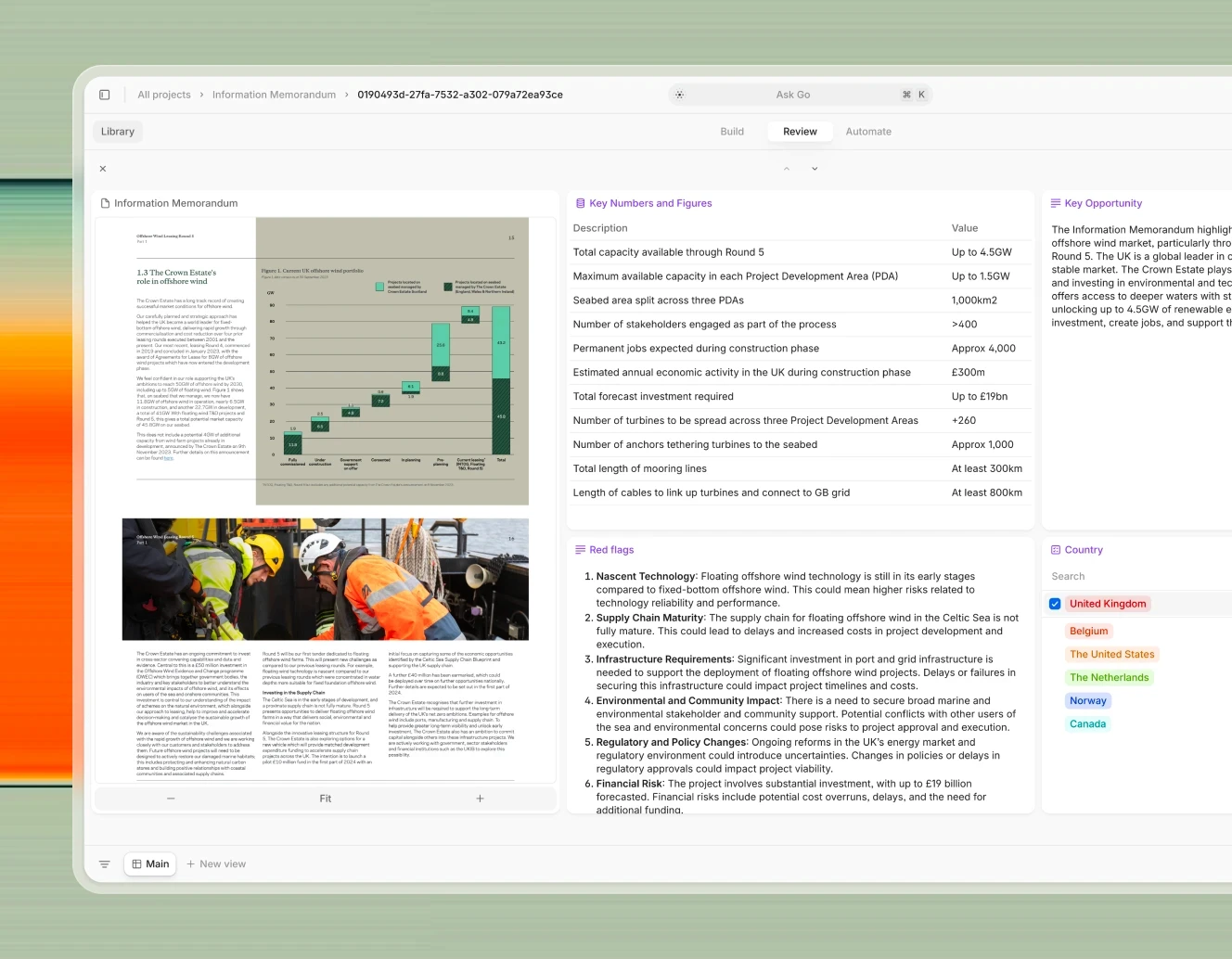
An illustrative diligence workspace connects source material with analysis. Those findings inform legal and commercial decisions about a disclosed matter.
A buyer's follow-up question should seek the missing decision input. "Has the supplier responded in writing?" and "Which operations depend on this agreement?" move the review forward more effectively than an unqualified request to "provide more detail." Attach the answers to the matter record so the schedule reviewer and commercial team work from the same facts.
Keep different materiality tests separate
The hypothetical $250,000 contract-listing threshold answers which contracts belong in a requested category. It does not determine whether a breach is material for every other purpose. Read separately the provisions governing breach, recoverable loss, closing conditions and any exceptions to those provisions.
A materiality scrape tells the parties to disregard specified qualifiers for a stated purpose, which may include assessing breach, calculating losses or both. Its wording and exclusions control. It does not automatically erase every disclosure threshold. Fasthoff's private-company M&A guide explains this purpose-specific distinction.
A material adverse effect clause addresses a separate contractual question. In Akorn v. Fresenius, the Delaware Court of Chancery's October 2018 opinion analyzed a sustained business decline under the negotiated MAE definition, including its exceptions. The opinion emphasized the demanding, fact-sensitive nature of the inquiry and the significance of duration.
That analysis supplies no universal percentage or schedule-listing cutoff. If a disclosed issue raises an MAE question, provide counsel with evidence of the impact, expected duration and relevant causes. A spreadsheet label saying "material" cannot perform that legal analysis.
Identify the insurance question explicitly
Representations and warranties insurance may be part of the negotiated structure. Chubb's US product description describes protection for certain unintentional and unknown seller-representation breaches, subject to the policy's terms. A known disclosed issue should not be assumed covered merely because the transaction has a policy.
Have counsel and the insurance advisers assess the actual coverage position and any separate treatment required. The work file can identify the disclosed matter, supporting evidence and unresolved coverage question. It should record the reviewed answer without promising that the insurer will pay a particular loss.
Control signing versions and closing updates
Finalize the schedules against one identified agreement version, then manage later developments through the contract's notice and update provisions. Preserve the signing record so reviewers can distinguish what the parties agreed from what was learned or changed afterward.
Run a pre-signing disclosure schedule checklist
Use the final review to test substantive dependencies as well as formatting. The person maintaining the work file should be able to show which agreement changes triggered renewed collection and which entries have received the required business and legal review.
Agreement alignment: section numbers, defined terms, entity scope, periods and thresholds match the selected draft.
Evidence: responsive sources are identifiable, amendments are accounted for, and missing-file questions have a reviewed disposition.
Business confirmation: named owners have answered the relevant requests as of an identified date.
Consistency: cross-references resolve correctly, repeated facts agree, and "None" entries have been checked against related disclosures.
Open decisions: unresolved issues are escalated to the responsible deal or legal lead before approval.
Delivery: counsel has approved the distribution copy, including its attachments, comments and tracked-change treatment.
Freeze a copy of the signed agreement, delivered schedules and any incorporated document set identified by the agreed mechanism. Retain the version and delivery record. A later upload should not silently change what the signing package contained.
In a shared contract repository, this means distinguishing the preserved signing copy from the current working version. Users should be able to retrieve either without guessing which file named "final" is authoritative.
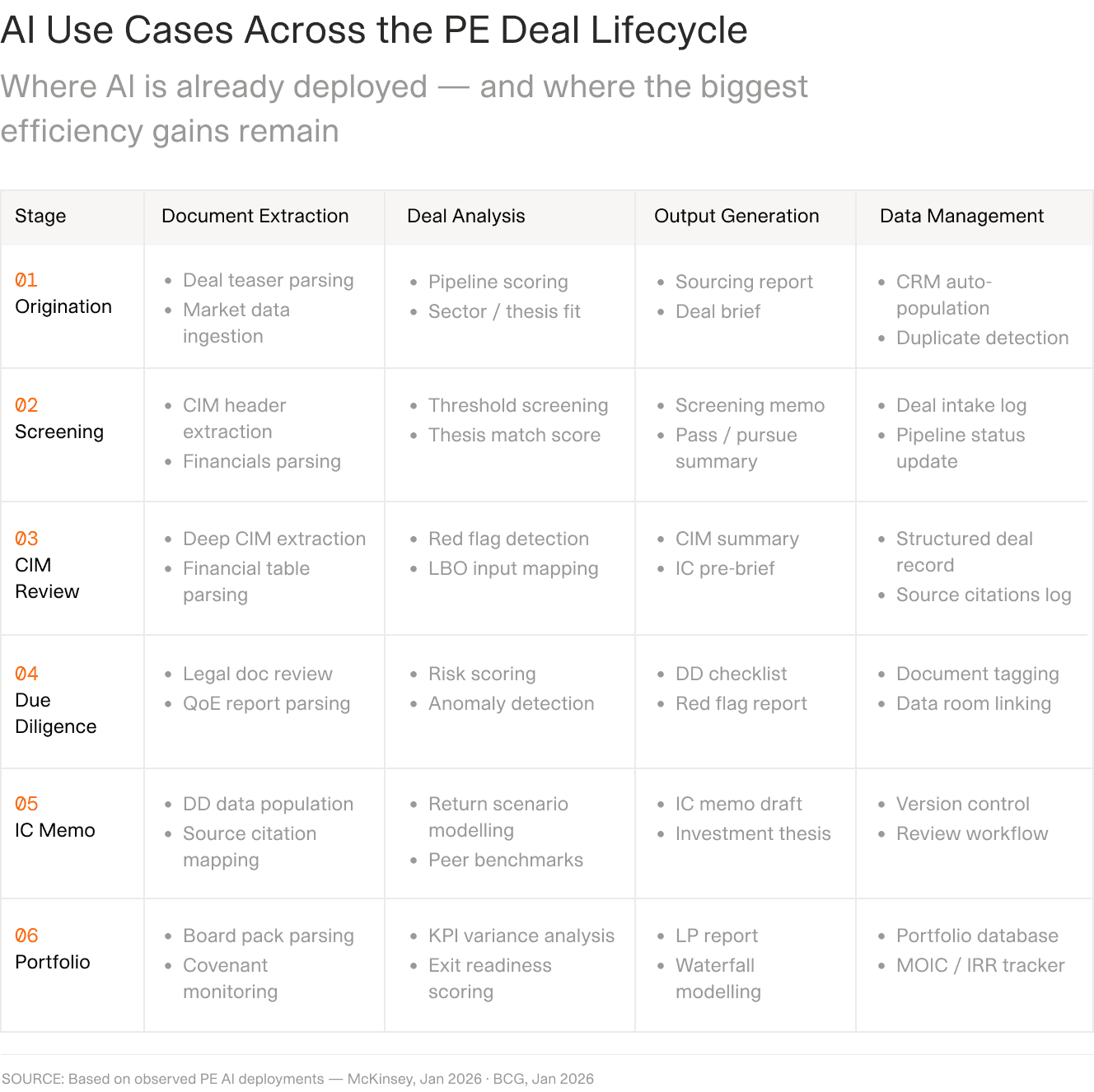
The PE use-case matrix places diligence, investment decisions and portfolio work in a broader operating context. Unresolved disclosure matters may require follow-up across those stages.
Separate a new event from a late discovery
Suppose the supplier grants consent after signing. That is a new event supported by a new document. Suppose instead that the team discovers after signing a notice the supplier had sent a month earlier. The discovery is new, but the underlying fact predates signing. Record both the event date and discovery date.
The contract determines whether an update is permitted or required and what it does. Notice of a development, qualification of a representation for closing, and changes to termination or indemnification rights are distinct questions. Goulston & Storrs' analysis of schedule updating describes the alternatives parties negotiate. Sending an updated schedule does not necessarily cure an earlier breach.
For each change, retain the proposed text, supporting document, affected provision and counsel's instructions for delivery and legal treatment. A buyer's acknowledgment of receipt should not be recorded as acceptance of the update's legal effect unless the reviewed record supports that conclusion.
Keep the original entry and the revision history. If consent is obtained, link the executed consent to SUP-014 and record the review confirming its scope. A consent with conditions, an expiry or a different transaction description may leave further work to do.
Hand remaining obligations to the operating team
At closing, transfer agreed follow-up actions to named owners with the supporting documents. An operating team may need to meet a notice deadline, comply with a consent condition or monitor an unresolved dispute. Give it the actual obligation and date, together with a contact for interpretation.
Keep this handoff concise enough to use. The complete legal work file can remain in the appropriate repository while the operating task identifies what must happen next. Closing the transaction should not automatically close every matter that appeared in its disclosure schedules.
Prepare a reviewable disclosure work file with V7 Go
V7 Go can support disclosure preparation by organizing permitted source material and producing structured, cited information for review. Start with a specific deliverable, such as the evidence record for one contract category, and define how counsel and business owners will check it.
Connect the firm's context to the agreement requirements
V7 Go is AI infrastructure for private markets. Its Context Graph connects documents, entities, relationships and source evidence. In a proposed disclosure workflow, relevant context could include the target's verified entity names, its acquired subsidiaries, contract relationships and counsel-approved disclosure instructions.
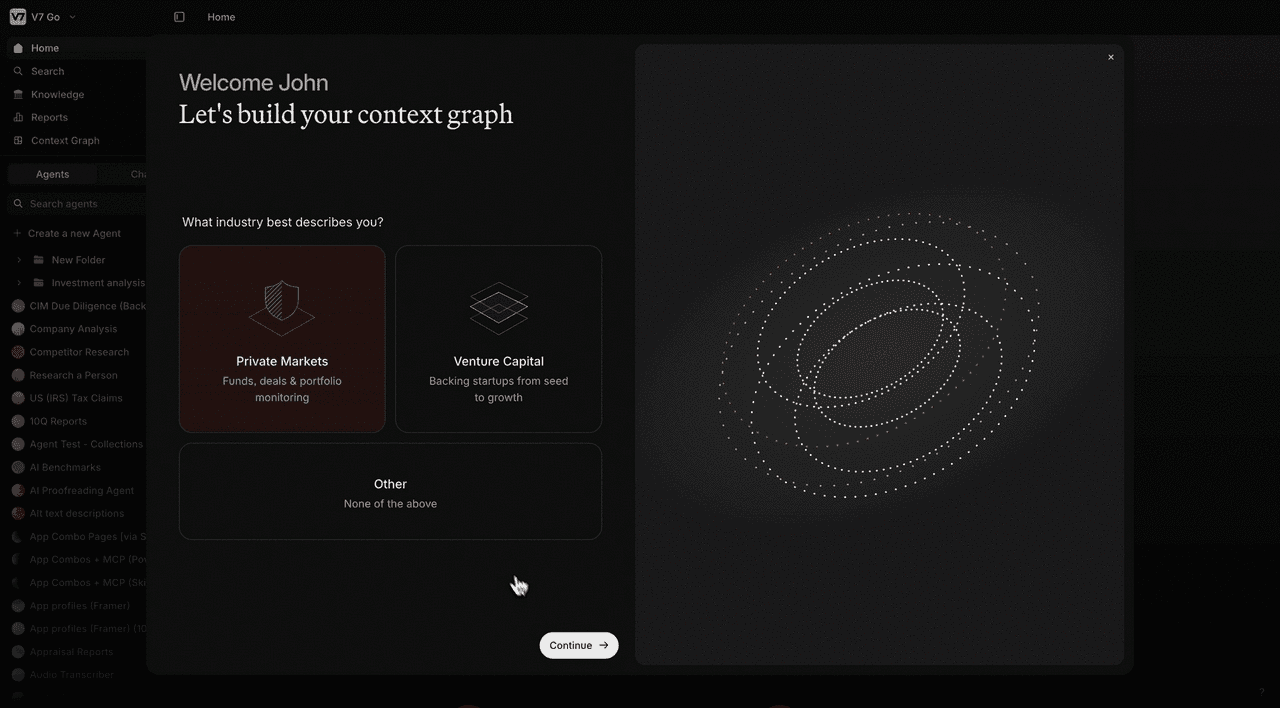
V7 Go onboarding establishes private-markets context. A disclosure workflow would then use the matter's permitted sources and reviewed instructions.
Scope that context to the matter's access permissions and approved uses. A historical subsidiary name may help locate a contract, but a suggested entity match should remain open until verified. Preserve the original name alongside the reviewed relationship so a source reference stays intelligible.
Configure defined steps using the right tools: read the agreement set, extract candidate facts, associate amendments, attach source references and identify missing inputs. Use typed outputs with separate fields for dates, amounts, entity names, document references and review status. An absent value should remain missing rather than becoming an invented answer.
An illustrative V7 Go tool selector shows configurable processing choices. Test the resulting fields against the source documents and the disclosure requirements.
Build and test the review handoff
V7's solutions engineers build workflows with your team. For SUP-014, agree an output containing the requirement version, contract identifier, candidate payment figure, cited consent language, amendment references and open questions. Keep model suggestions separate from business confirmation, counsel's interpretation and the approved schedule text.
Test the configuration using a permitted example whose relevant facts have already been reviewed. First remove the amendment: the workflow should expose the incomplete source set when the remaining records reference it. Then change the payment threshold: affected candidates should return for review. Finally introduce a conflicting entity name and check that it prompts verification.
Assess the actual output, including missed candidates and unsupported statements. Do the links open the correct document and passage? Does the extracted amount use the requested period? Can a reviewer correct an error and see which draft entry depends on it? These checks test the proposed configuration, without establishing that every required disclosure has been found.
Bring a representative agreement section, its source bundle and your preferred review fields to V7's solutions engineers to scope the workflow. The useful result is evidence your team can inspect and carry into its drafting process, with legal sufficiency and delivery approval assigned to the responsible reviewers.
Disclosure schedules work best when the team can trace each answer to the agreement requirement, the source evidence and a completed review. Start with one representation and assemble that chain before expanding across the transaction. Keep missing information visible, revisit answers when the agreement changes and preserve the version delivered at signing.
The supplier example ends when the team can explain both the disclosure and the remaining obligation. A clear entry identifies the issue; the agreement and subsequent decisions determine its treatment. A well-maintained work file helps everyone responsible follow that distinction through closing and into the business.
What are disclosure schedules in an M&A transaction?
Disclosure schedules accompany a purchase agreement and provide information or exceptions tied to its representations and warranties. A requested list of contracts serves a different purpose from an exception identifying a dispute or missing consent. Both must answer the relevant contractual wording. You may also encounter terms such as schedule of exceptions, although terminology and legal effect vary across transactions and jurisdictions. In practice, read the schedules with the agreement, its definitions and its disclosure provisions. A file uploaded to a data room does not necessarily perform the same contractual function. The preparation task is to identify responsive facts, support them with evidence and obtain the required business and legal review before delivery.
+
Who prepares and reviews disclosure schedules?
For seller disclosures, company personnel supply the underlying business facts and transaction counsel guides the legal drafting and review. A useful division of work assigns each request to the person responsible for the relevant records, such as finance for payment data or procurement for a supplier relationship. The person coordinating the schedules tracks responses, missing information and changes to the agreement. Counsel assesses how the facts should be disclosed and whether the draft meets the negotiated requirements. The buyer and its advisers review the resulting disclosures and pursue follow-up questions. Ownership should remain explicit when several departments contribute to one entry; a shared document does not identify who has confirmed its accuracy.
+
What should a disclosure schedule entry include?
The entry should identify the matter responsive to the representation and provide the information required by the agreement's disclosure standard. For a contract-related consent issue, that may include the correct parties, agreement and amendment dates, the relevant clause and the current consent status. Counsel determines the appropriate wording and cross-references. An internal work file can carry additional source links, owner confirmations and unresolved questions, but it should be reviewed before any material is shared with the buyer. Avoid unsupported conclusions such as saying a consent has been obtained when the evidence shows only that someone requested it. The recipient should be able to understand the disclosed issue without guessing which document or event the entry describes.
+
Does listing a contract in the data room count as disclosure?
It depends on the purchase agreement's disclosure mechanism and the facts involved. Some agreements give specified data-room materials a defined contractual effect; others require disclosures through numbered schedules or particular incorporation language. Even where a document is identified, the parties may dispute whether the relevant exception was sufficiently disclosed. Ask counsel how the agreement treats the data room, cross-disclosures and document references before using a folder link as a completed answer. Operationally, keep the document location and the proposed disclosure as separate fields until review confirms their relationship. Preserve any agreed data-room snapshot or incorporated document set so the signing record can later be reconstructed without relying on a folder that continued changing.
+
Can disclosure schedules be updated between signing and closing?
AI can help organize source documents, extract candidate facts, associate amendments and prepare structured information with references for reviewers. A useful starting task is a work file for one agreement requirement, with separate fields for source evidence, missing information, business confirmation and legal review. Test the workflow against a previously reviewed example and deliberately include difficult cases, such as a missing amendment or a changed payment threshold. Check omissions as well as incorrect suggestions. AI output should not be treated as proof that every required matter was found or that a disclosure has a particular legal effect. In a configured V7 Go workflow, the team and solutions engineers can define the evidence handoff while responsible reviewers retain drafting and approval decisions.
+
How can AI help prepare disclosure schedules?
Go is more accurate and robust than calling a model provider directly. By breaking down complex tasks into reasoning steps with Index Knowledge, Go enables LLMs to query your data more accurately than an out of the box API call. Combining this with conditional logic, which can route high sensitivity data to a human review, Go builds robustness into your AI powered workflows.
