8 min read
—

Casimir Rajnerowicz
Content Creator
V7 Go
A smarter way to manage due diligence and underwriting
The global eDiscovery market was valued at $16.99 billion in 2024 and is projected to reach $39.25 billion by 2032. This trajectory mirrors a daily reality for legal teams: discovery volumes keep rising while deadlines don’t. Evidence no longer resides in neat file cabinets; it's scattered across sprawling email chains, ephemeral chat logs, and countless cloud storage systems. Review work still dominates budgets, and legacy tools built for a simpler era of data struggle to keep pace.
AI changes the equation. It introduces a new way of working where technology augments human judgment instead of merely replacing manual clicks. By combining large language models, smart search, and sophisticated AI agents, modern platforms can prioritize what matters, surface key evidence faster, and document their reasoning with traceable AI citations. Early adopters report not just faster turnaround times and measurable cost reductions, but a fundamental shift in how they build a case narrative from day one.
In this article:
The scale of the eDiscovery challenge, and why review consumes the majority of the budget
The inherent limits of keyword search, traditional TAR, and first-generation predictive coding
How generative AI and agentic workflows actually help in practice, from ECA to production
Top use cases: review automation, ECA/legal holds, privilege protection, and centralized knowledge management
A defensible implementation playbook and a snapshot of the platform landscape (V7 Go, Relativity, Logikcull, Exterro)
Legal ethics, court acceptance of new technology, and what’s next for AI in the legal field
The eDiscovery Crisis and AI Opportunity
The Scale of the eDiscovery Challenge
The core problem in eDiscovery is a simple mismatch of scale. The volume of electronically stored information (ESI) grows exponentially, while the time and resources available for review do not. Daily global email traffic now sits in the 360–380 billion range, and that’s just one channel. Add in Slack, Teams, SharePoint, and countless other platforms, and it’s clear why discovery sets can quickly balloon into tens of millions of documents. With over 97% of business records being digital, what was once a manageable review process has become an exercise in finding needles in ever-expanding haystacks.
Costs scale directly with this volume, and the primary driver is linear human review. A landmark RAND analysis, which continues to frame the industry conversation, found that document review can consume around 73% of total discovery costs. Commentaries built on this research often cite staggering per-gigabyte costs that can reach five figures once hosting, processing, and contract attorney fees are included. This financial pressure is compounded by the human bottleneck; a typical reviewer can carefully assess around 50 documents per hour, a rate that is simply unsustainable against modern data volumes.
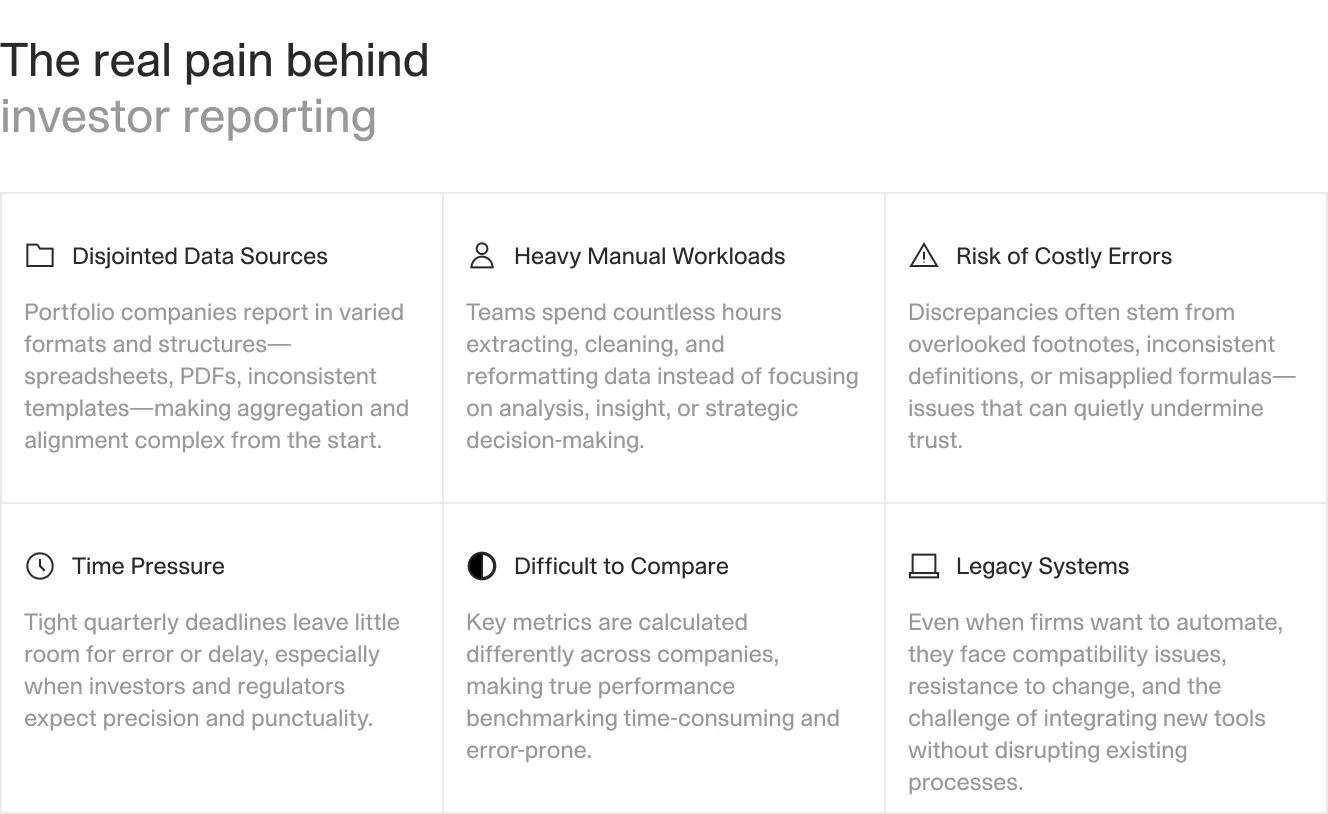
Review consumes the largest share of eDiscovery spend. Even small efficiency gains at this stage can cascade into major savings across the entire budget.
Traditional eDiscovery Technology Limitations
For years, the industry relied on two primary tools to manage this data deluge: keyword search and Technology-Assisted Review (TAR). While revolutionary in their time, both have hit a wall. Keyword searching is notoriously brittle; it’s only as good as the terms you can anticipate. It misses misspellings, slang, code words, and conceptual synonyms, leading to both over-collection (false positives) and under-collection (missed evidence).
Classical TAR, or predictive coding, offered an improvement by using machine learning to prioritize documents based on human coding decisions. However, traditional TAR workflows require significant upfront effort to create a training set of "seed" documents. This process can be time-consuming and its effectiveness often plateaus, especially in cases with nuanced or evolving legal issues. The models classify based on statistical patterns, but they don't truly "understand" the text. The industry's own evolution points to these limits; Microsoft, a major player, officially retired its predictive coding feature in Purview as of March 31, 2024, signaling a broader shift toward more context-aware AI.
The Generative AI Revolution in Legal Technology
Generative AI represents a fundamental change. Instead of just matching keywords or replicating patterns from a training set, large language models can read, comprehend, and synthesize information. In an eDiscovery context, this means you can move from asking "does this document contain the word 'acquisition'?" to "summarize any discussions about the acquisition's risk assessment." The Lighthouse 2025 AI in eDiscovery Report found that 95% of legal professionals now express medium to high trust in AI for discovery tasks, with strong adoption for privilege review, key document identification, and summarization.
This is made possible by sophisticated platforms that orchestrate multiple AI components. An AI agent can coordinate a workflow that begins with OCR to digitize a scanned document, proceeds to parse its layout and normalize entities (like names and dates), uses retrieval-augmented generation (RAG) to find relevant context within the broader case file, and finally presents a summarized answer. Crucially, every piece of AI-generated insight is accompanied by AI citations—direct links back to the specific page and line in the source document, providing an unassailable audit trail. For a deeper look at the foundational technologies, see our guide to intelligent document processing.











AI Applications in eDiscovery Workflows
The practical value of AI in eDiscovery isn't about replacing lawyers; it's about augmenting their expertise. By automating the most repetitive and time-consuming parts of the workflow, AI allows legal teams to focus on strategy, analysis, and advocacy. Here’s how this plays out across the Electronic Discovery Reference Model (EDRM).
1. Document Review and Analysis Automation
This is where AI delivers the most immediate and significant ROI. Instead of a linear, document-by-document review, AI enables a multi-faceted approach. Systems can automatically cluster documents by concept, allowing reviewers to tackle related conversations in a single batch. They can classify documents for responsiveness, privilege, and specific legal issues simultaneously. A platform like V7 Go can classify a document against a dozen or more issues in one pass, something that would require multiple manual review waves.
Furthermore, AI can generate concise, accurate summaries of long documents or email threads, complete with citations. This allows a senior attorney to quickly grasp the essence of a conversation and make a strategic call without having to read every single email. The result is a dramatic acceleration of the review process. While benchmarks vary by matter complexity, many firms report that AI-assisted workflows can reduce the volume of documents requiring full human review by 60% or more, with recall rates often in the mid-80s to mid-90s.
2. Early Case Assessment (ECA) and Legal Holds
In the early stages of a matter, AI can provide a quick, high-level understanding of the data landscape. By analyzing an initial data collection, it can identify key custodians, map out communication patterns (who talked to whom, and when), and surface potentially critical documents. This allows legal teams to make more informed decisions about case strategy, scope, and potential settlement value much earlier in the process.
On the governance side, this same intelligence can drive more effective legal hold management. An AI agent can monitor data sources and, based on the classification of new content (e.g., an email discussing a potential litigation), automatically trigger a legal hold notice for relevant custodians. Dashboards can then track compliance with the hold, providing counsel with a real-time view of data preservation efforts. Explore the mechanics of this in our overview of AI document processing.
3. Privilege Review and Protection
Protecting privilege is one of the most critical and highest-stakes tasks in discovery. Inadvertent disclosure of privileged material can have severe consequences. AI significantly de-risks this process. Models can be trained to identify communications involving attorneys (by recognizing email domains or names from a predefined list), as well as to detect language indicative of legal advice (e.g., phrases like “legal counsel,” “work product,” “confidential and privileged”).
The system can flag potentially privileged documents for dedicated review by a senior attorney, ensuring that the most sensitive material gets the highest level of scrutiny. This creates a more defensible privilege log, as the methodology for identifying privileged documents is systematic and documented. The scale of this advantage is illustrated by high-profile AI projects outside of litigation; JPMorgan’s COIN initiative, for example, used AI to review commercial loan agreements, saving an estimated 360,000 hours of manual legal work annually. This demonstrates the immense processing power AI brings to document-intensive legal tasks.
4. Centralized Knowledge Management
One of the most powerful but often overlooked applications of AI in eDiscovery is its ability to create a living, searchable knowledge base for a matter. As documents are processed, the AI extracts and normalizes key entities—people, organizations, dates, locations. It builds a timeline of events and maps relationships between different pieces of evidence. This turns a static collection of files into a dynamic, queryable resource.
A platform like V7 Go accomplishes this through its **Knowledge Hubs**. A Knowledge Hub acts as a centralized memory bank for a specific matter or even an entire practice area. All ingested documents, emails, and other files are indexed and made available for semantic search. An attorney can ask a plain-English question like, “What was the co-ownership split discussed in the Real Estate Income Fund documents?” The system will retrieve the exact passage from the relevant document, providing the answer with a verifiable citation. This functionality transforms how legal teams interact with evidence, allowing them to find critical information in seconds rather than hours of manual searching.
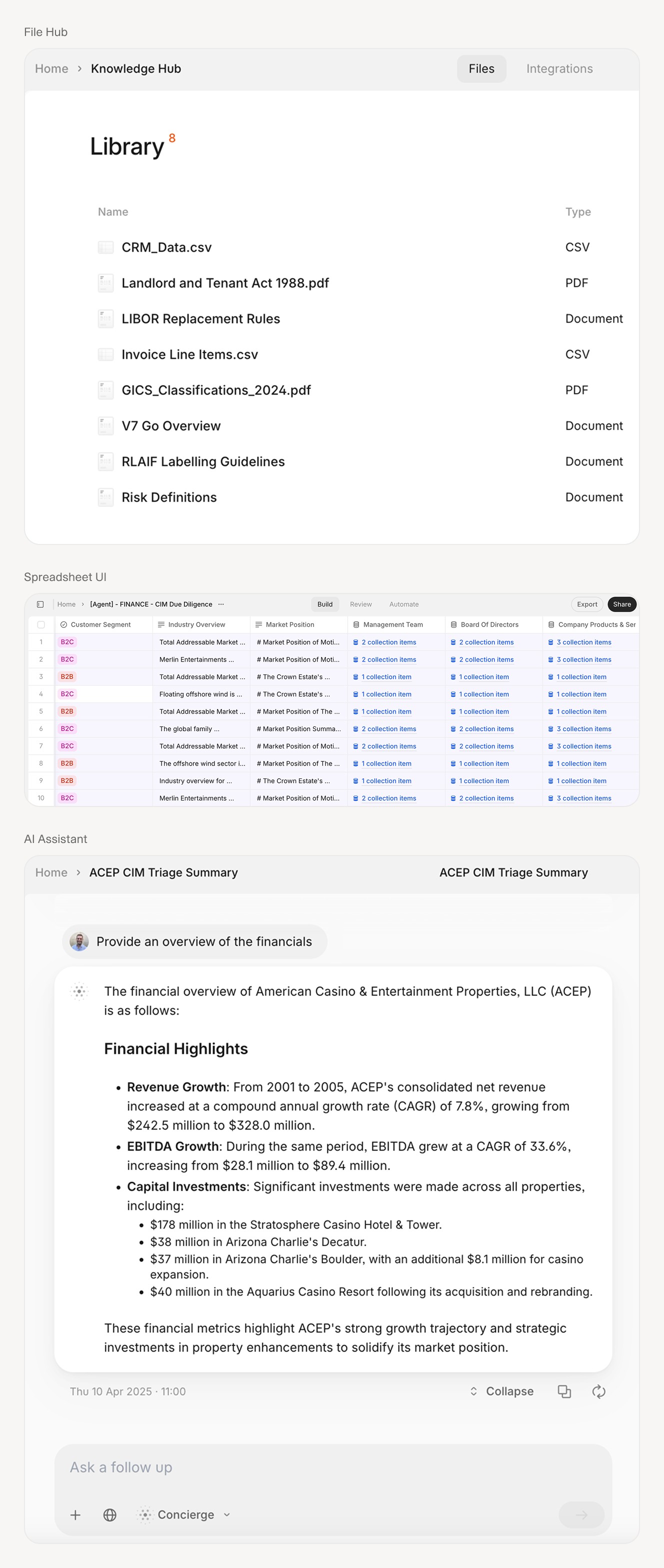
A Knowledge Hub centralizes all matter-related documents, turning them into a searchable and queryable asset for the entire legal team.
Crucially, this knowledge is not locked away. An AI agent can be tasked to query the Knowledge Hub as part of a larger workflow. For instance, when reviewing a new contract, an agent can automatically check the Knowledge Hub for related prior agreements or discussions, providing instant context. This creates a powerful feedback loop where every piece of reviewed evidence enriches the firm's institutional knowledge, making future discovery efforts faster and more insightful. For a more detailed look at this technology, explore V7's guides to knowledge management and AI search capabilities.
Implementation Strategy and Market Landscape
Successfully adopting AI in eDiscovery is less about a single, transformative event and more about a methodical, defensible process. The goal is to integrate these powerful tools in a way that is transparent, repeatable, and aligned with existing legal and ethical obligations. This requires both a smart pilot strategy and a clear understanding of the current market offerings.
Implementation Best Practices for Legal AI
A successful AI pilot project should be designed with the same rigor you would apply to any piece of evidence you intend to present in court. Defensibility is key.
Start with a Contained Corpus: Choose a past, closed matter or a well-defined subset of a current case. This allows you to test and validate the AI's performance in a controlled environment without impacting live deadlines.
Establish Baselines: Before you begin, measure your current metrics. What is your team's average review speed (documents per hour)? What are your typical recall and precision rates based on sampling? How many hours are spent on privilege review per gigabyte? These numbers will be your benchmark for measuring ROI.
Adopt a Human-in-the-Loop Workflow: Initially, AI should be used to augment, not replace, human reviewers. Use the AI to perform a first-pass classification or prioritization, but have human attorneys validate every significant coding decision, especially regarding privilege. This builds trust and allows the team to understand the AI's strengths and weaknesses.
Focus on Training and Prompt Craft: Effective use of modern AI is less about technical configuration and more about asking the right questions. Train your legal team on how to craft effective prompts and how to critically evaluate AI-generated summaries and classifications. Good prompt engineering is now a core legal skill. For a deeper dive, review our principles of AI workflow automation.
Document Everything: Keep a clear record of your process. Which models were used? What prompts were given for key classifications? How was the AI's output sampled and validated? This documentation will be crucial if you ever need to explain your methodology to opposing counsel or the court.
Leading AI eDiscovery Platforms (Snapshot)
The eDiscovery market is composed of both established, comprehensive suites that are integrating generative AI features, and newer, AI-native platforms built from the ground up around agentic workflows. The right choice depends on your organization's scale, technical expertise, and specific needs.
V7 Go: Advanced AI Agents for Legal Workflows
V7 Go is an AI-native platform centered on the concepts of **AI Agents** and **Knowledge Hubs**. It is designed for teams that need both powerful automation and granular control. An agent in V7 Go is a configurable, multi-step workflow that can be assigned to a specific task, like reviewing NDAs or performing due diligence on a set of documents. Users can interact with these agents via a simple chat interface (the "AI Concierge") or by running them in batch across thousands of files. Each agent's output is fully auditable and grounded with citations. This approach is ideal for firms that want to build reusable, specialized AI assistants for different practice areas or matter types. To see how these agents can be tailored to your specific workflows, schedule a demo.
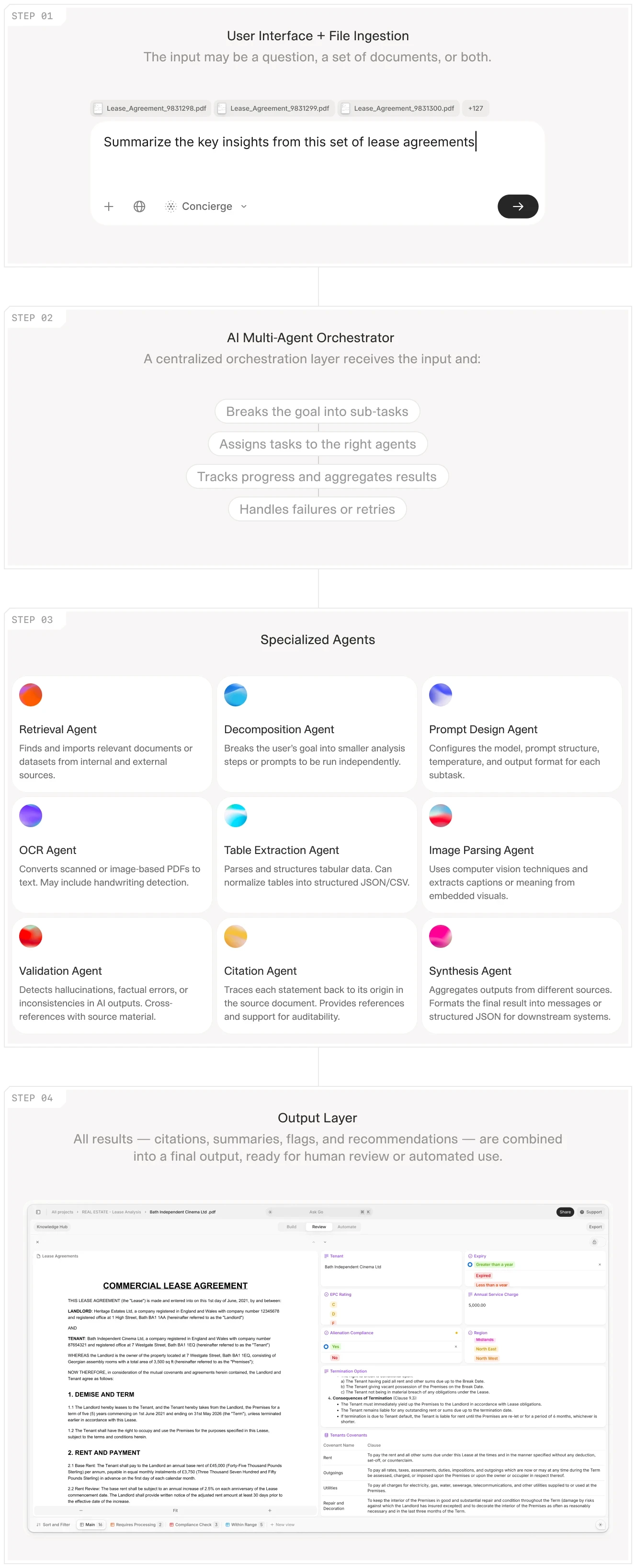
Agentic orchestration in V7 Go provides a step-by-step, auditable process for complex document analysis.
Relativity
Relativity remains the dominant enterprise-grade platform, offering a comprehensive, end-to-end solution for the entire EDRM. It has a mature feature set, including its well-regarded Active Learning (TAR 2.0) functionality. Relativity is increasingly integrating generative AI features, such as its `aiR` tool for relevance ranking. Its strengths are scalability and its vast ecosystem of certified partners. The trade-offs are complexity and cost; it typically requires certified administrators and a significant budget.
Logikcull
Logikcull is designed for simplicity and accessibility, targeting corporate legal departments and smaller firms that want to bring eDiscovery in-house. It features a drag-and-drop interface and transparent, predictable pricing. While it has added some LLM-powered features for document summarization and natural language search, its analytical capabilities are generally lighter than enterprise suites like Relativity or V7 Go. It excels in smaller, less complex matters where ease of use is the top priority.
Exterro
Exterro offers a broad platform that integrates eDiscovery with legal governance, risk, and compliance (GRC) functions like legal hold, data privacy, and incident response. This makes it a strong choice for corporate clients who need a unified solution for their legal operations. On the AI front, it offers predictive coding and is incorporating more generative AI features. Some users find its interface less nimble for deep, intensive reviewer workflows compared to more specialized tools.
Addressing Legal and Ethical Considerations
The use of any new technology in a legal context rightly invites scrutiny. The key to satisfying legal and ethical obligations is to treat AI as a powerful tool under the competent supervision of an attorney, not as an autonomous decision-maker.
Accuracy and Verification: LLMs can "hallucinate" or produce plausible but incorrect statements. It is an absolute requirement that any platform used for substantive review provides citations for its outputs. Legal teams must implement protocols for sampling and validating AI-coded documents, especially for critical determinations like privilege.
Transparency and Defensibility: Courts have generally accepted TAR and other AI-assisted methods when the process is reasonable, transparent, and documented. Legal teams should be prepared to explain, at a high level, how the AI was used to cull, prioritize, or analyze data, and what quality control measures were in place.
Security and Confidentiality: Client data is sacrosanct. Any AI platform must offer enterprise-grade security, including end-to-end encryption, granular access controls, and detailed audit logs. It's also critical to review a vendor's policies on data residency and whether client data is used for model training.

Human supervision is non-negotiable. The most defensible workflows pair AI's processing power with attorney judgment and require citations for every critical output.
Future Trends and Opportunities
The integration of AI into eDiscovery is only just beginning. We can expect to see several key trends mature in the coming years. Purpose-built legal language models, fine-tuned on vast corpora of contracts and case law, will offer even higher accuracy on domain-specific tasks. The wall between different legal tech applications will continue to break down, with insights from discovery flowing directly into tools for deposition preparation, motion practice, and trial presentation. And as the cost of AI compute continues to fall, these advanced capabilities will become accessible to a broader range of cases, not just "bet the company" litigation.
The competitive advantage will belong to the firms that master the art of human-AI collaboration. Those who standardize on explainable, agent-driven review platforms will not only operate more efficiently but will also deliver better, more defensible outcomes for their clients.
To see these capabilities in action, explore what's possible with V7 Go.
How accurate is AI compared to human document review in eDiscovery?
On straightforward responsiveness, well-calibrated AI can match or exceed pooled reviewer recall while improving consistency. Humans remain essential for nuance—sarcasm in chat, cross-matter context, and privilege. The best results come from AI triage with attorney verification and citation-backed explanations.
+
What are the security and privilege protection capabilities of AI eDiscovery platforms?
Look for encryption in transit and at rest, SSO with role-based access, audit trails, and data-residency controls. Privilege protection should combine pattern detection and communication-graph signals with low-confidence routing to senior reviewers. Every suggestion should link to the exact passage that triggered it.
+
How does AI handle complex legal language and context in document analysis?
Large language models read passages in context and, when grounded by retrieval over your corpus, answer in plain English with citations. Combined with layout parsing and entity normalization, they track people, dates, clauses, and topics across PDFs, emails, and spreadsheets.
+
What are the cost savings and ROI of implementing AI in eDiscovery workflows?
Savings come from reducing the review set and increasing reviewer throughput. Because review often represents most of the budget, even modest gains translate into outsized ROI. Prove it with a pilot: baseline recall, precision, hours per thousand documents, and rework before and after introducing AI triage.
+
How can legal organizations ensure ethical compliance when using AI tools?
TAR spreads human labeling across a corpus and works well for stable, binary calls. Generative AI reads and explains documents, searches by meaning, and returns citations. Many teams combine them—TAR for broad, defensible culling; LLMs for semantic search, explanations, and faster privilege and issue review.
+
What are the key differences between traditional TAR and modern generative AI approaches?
Go is more accurate and robust than calling a model provider directly. By breaking down complex tasks into reasoning steps with Index Knowledge, Go enables LLMs to query your data more accurately than an out of the box API call. Combining this with conditional logic, which can route high sensitivity data to a human review, Go builds robustness into your AI powered workflows.