12 min read
—



V7 Go
A smarter way to manage due diligence and underwriting
The last two weeks of a fund close look the same at every firm. Subscription agreements arrive from sixty, eighty, a hundred limited partners. Each runs fifteen to forty pages, carrying the investor's capital commitment, KYC declarations, beneficial owner disclosures, and wire instructions. Every one of them needs to be checked before the close can proceed. This is not a signing problem. Digital portals solved signing years ago. It is a data review problem: are the right fields populated, the right pages signed, the right declarations complete, and the numbers consistent across documents?
A single delayed document can hold up a fund close. A missed politically exposed person (PEP) declaration creates regulatory exposure. An unverified wire instruction is an anti-money laundering (AML) risk that lands on the fund administrator. For private equity fund administration, subscription agreement review is a close-critical function, entirely manual until recently.
This article covers what a private equity fund subscription agreement actually contains, how fund administrators review them at close, which errors most reliably delay one, and how AI agents are beginning to process them at a scale that manual review cannot match.
In this article:
What a fund subscription agreement is and how it differs from the LPA and side letters
What subscription agreements contain, section by section
How fund administrators review sub docs during a fund close
The errors that most commonly delay a close
How AI handles subscription agreement review at scale
What Is a Fund Subscription Agreement?
A fund subscription agreement is the legal document an investor signs to commit capital to a private equity, venture capital, or hedge fund. It records the investor's identity, capital commitment, eligibility declarations, and the representations and warranties required to participate in the fund. Each limited partner (LP) signs a separate subscription agreement — one document per investor, per fund, per close.
The subscription agreement sits alongside, but separate from, the limited partnership agreement (LPA). The LPA governs the fund's structure, governance, and economics; it applies to all LPs collectively and covers carried interest, distribution waterfalls, and governance rights. The subscription agreement is individual: it captures each LP's specific commitment and the declarations that LP is making about their identity and status. Investors sign the subscription agreement; they receive and are bound by the LPA. The LPA clause review process is a separate workflow from subscription agreement review.
Side letters are a third document type that sometimes creates confusion during review. Side letters modify the LPA's terms for specific investors: economics, reporting frequency, co-investment rights, and governance. The subscription agreement records what the investor commits to; the side letter records what the fund has agreed to provide that investor in return. Investment amount discrepancies between the two are among the most time-consuming review errors to resolve.
LPs complete and sign the subscription agreement. The general partner (GP) and fund administrator (or, in some fund structures, a placement agent or transfer agent) receive and review it before each closing of the fund. In practice, "sub docs" is the shorthand fund administrators use for the full submission: the subscription agreement itself plus accompanying KYC and AML documentation, beneficial owner certifications, and jurisdiction-specific tax forms. The terms are often used interchangeably; the subscription agreement is technically the legal instrument, and the sub docs are the complete package that accompanies it.
What Does a Private Equity Subscription Agreement Contain?
Standard private equity subscription agreements run fifteen to forty pages. Institutional investors and multi-jurisdiction structures often exceed sixty, driven by the number of representations required under applicable regulatory regimes. Fund administrators review five distinct categories of information in each subscription agreement during a close.
Investor Identity and Entity Information
Every subscription agreement opens with a full record of the investor's legal identity: name, registered address, entity type, jurisdiction of formation, and tax identification numbers. For entities such as limited liability companies, trusts, pension funds, sovereign wealth funds, and family offices, beneficial ownership declarations identify who ultimately controls and benefits from the investing entity.
This section is the most common source of review errors. A single character difference between the entity name in the subscription agreement and the name on KYC documentation is enough to require correction. Fund administrators check exact spelling against identity documents, not against the investor's email signature or how the name appears on a term sheet. An LLC registered as "Blackwood Capital Partners, L.L.C." but written in the subscription agreement as "Blackwood Capital Partners LLC" (without the periods) is technically inconsistent and requires resolution before the close proceeds.
Capital Commitment and Investment Amount
The subscription agreement records the LP's committed capital: the amount the investor has agreed to contribute over the life of the fund, typically drawn down through a series of capital calls. This figure must match the fund administrator's subscription ledger exactly. It also governs the mechanics of fund close capital calls: the timing, notice periods, and payment procedures for drawing down committed capital.
Discrepancies between the commitment amount in the subscription agreement and any negotiated side letter are a recurring problem. When both documents are in circulation, the subscription agreement typically controls, but the difference creates ambiguity that requires resolution before the investor can be admitted to the fund.
Investor Representations and Warranties
The investor must make a series of legally required declarations about their status and eligibility to participate in the fund. In the United States, this means accredited investor or qualified purchaser status under the Securities Act and the Investment Company Act respectively. In the UK and EU, it means professional investor classification under the AIFMD (Alternative Investment Fund Managers Directive) or MiFID II. US pension plan investors must provide ERISA (Employee Retirement Income Security Act) plan asset representations. The fund needs to understand whether the investor's assets constitute "plan assets" under ERISA, which determines whether the fund is subject to ERISA's fiduciary obligations.
These representations are not pro forma. Fund administrators check that each investor has completed the correct section for their jurisdiction. An investor from a non-EEA jurisdiction signing the EU professional investor section, or a US pension plan investor omitting the ERISA representations, triggers a correction request before the close can proceed. Incomplete suitability declarations are among the more jurisdiction-specific errors, and the hardest for generalist review teams to catch quickly without explicit checklists.
KYC and AML Declarations
Know your customer (KYC) and anti-money laundering (AML) declarations are embedded in most subscription agreements and supplemented by documentation submitted alongside them. The subscription agreement captures self-certifications: PEP status, ultimate beneficial owner (UBO) disclosure, source of funds statement, and the nature of the investor's business. Investor eligibility due diligence checks draw directly on these declarations.
FATCA (Foreign Account Tax Compliance Act) and CRS (Common Reporting Standard) self-certifications confirm the investor's tax status and reporting jurisdiction. The specific forms differ by investor type: a US person, a UK pension fund, and a Cayman Islands feeder fund each complete different certifications under the same AML framework. KYC and AML requirements also differ by jurisdiction. The specific obligations under US FinCEN rules, the UK FCA's AML regime, and the EU's Anti-Money Laundering Directives are aligned in intent but differ in specific requirements. Fund administrators review at the level of "applicable AML requirements" for the fund's jurisdiction and investor base.
Wire and Settlement Instructions
The subscription agreement includes the investor's bank account details for capital calls and distributions: account name, IBAN or routing and account numbers, and where applicable, correspondent bank information. Verifying these details against the investor's source-of-funds documentation is itself an AML control — it confirms that capital flows from a bank account that can be traced to the verified legal entity making the investment.
Wire instruction errors or mismatches between the bank details in the subscription agreement and the investor's supporting documentation are a critical review step. No digital signing platform resolves this automatically. A completed DocuSign envelope confirms the document was signed; it does not confirm that the bank account listed belongs to the entity named in the investor identity section.
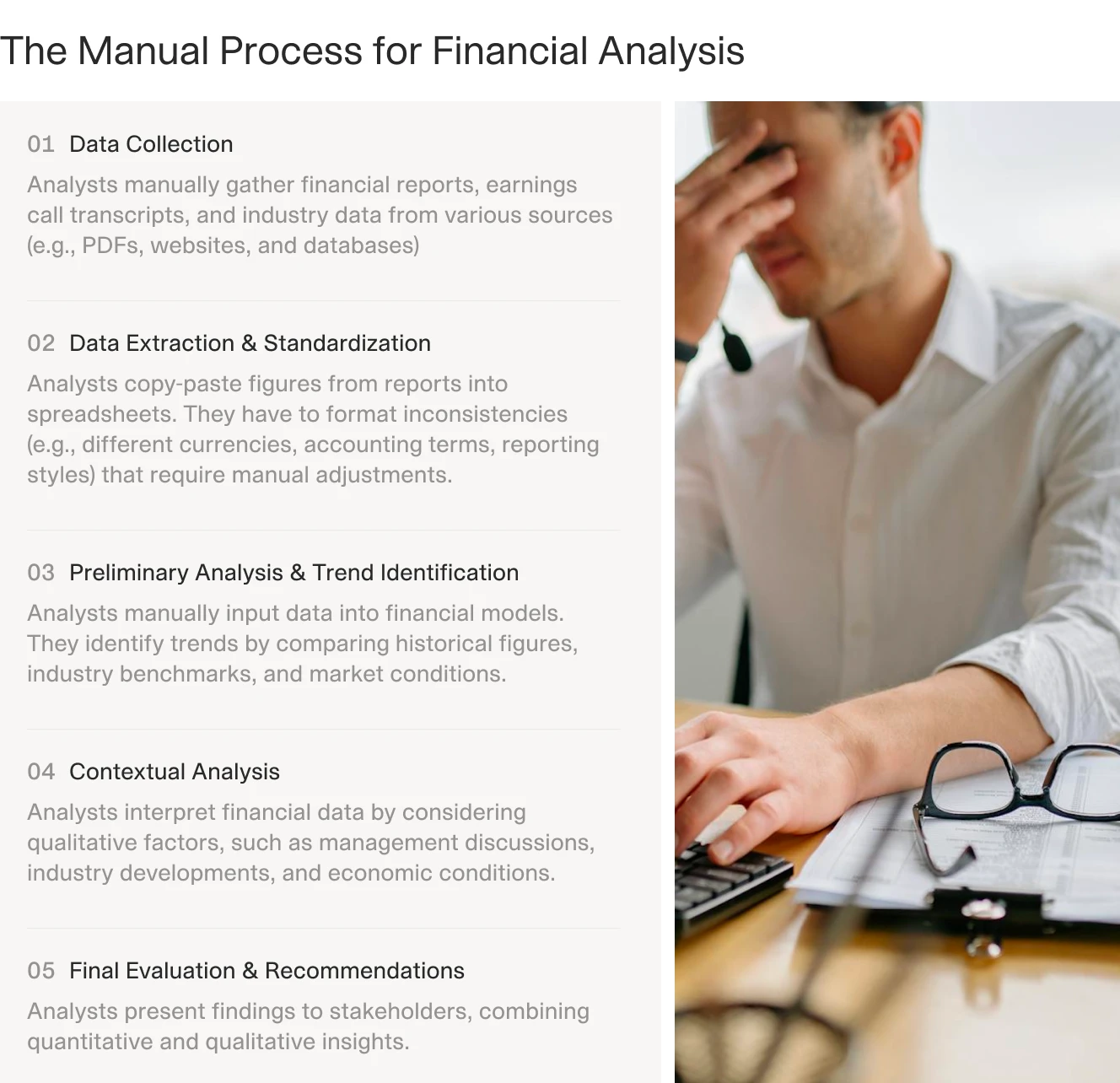
The subscription agreement review follows a similar staged structure: collect the document, extract required data, validate for completeness and consistency, assess compliance risk, and report exceptions before the fund close proceeds.











How Fund Administrators Review Subscription Agreements
Subscription agreement review is an operational completeness check, not a legal one. Legal counsel reviewed the fund documents during formation; by the time the close begins, the fund's structure and terms are settled. Fund administrators verify that every required field is populated, every section is signed, every declaration is complete, and every number is consistent across documents.
Fund administrators, placement agents, and in some fund structures, transfer agents, carry out this review before each closing of the fund. In a multi-close fund, there are typically two to four closings over the fundraising period. The final close concentrates the most documents into the shortest window.
What a Subscription Review Checklist Covers
A standard subscription review covers five areas, applied to every subscription agreement in the close:
Completeness: All required fields are populated. All pages are signed and initialled where required by the fund document.
Consistency: The entity name in the subscription agreement matches the name on KYC documentation exactly. The capital commitment matches the fund's subscription ledger.
Eligibility: The investor satisfies the fund's qualification threshold: accredited investor, qualified purchaser, or professional investor, depending on the investor's jurisdiction and the fund's regulatory perimeter.
Compliance: KYC and AML declarations are complete. FATCA and CRS self-certifications are included and match the investor's stated status. PEP and UBO disclosures are present.
Wire instructions: Bank details are present, internally consistent, and correspond to the entity named in the investor identity section.
A subscription agreement that passes all five areas clears review. One that fails any of them goes back to the investor (or, more typically, to the placement agent managing the investor relationship) for correction, resubmission, and a second review pass.
Common Errors That Delay a Close
The same errors appear at every fund close, regardless of fund size or investor sophistication. Missing beneficial owner identification documents is the most frequent: investors declare their UBOs in the subscription agreement but omit the supporting documentation. Unsigned or un-initialled pages come second. Forty-page documents with multiple signature blocks create genuine room for error, and institutional investors processing dozens of subscription agreements simultaneously sometimes omit a block midway through.
Entity name inconsistencies are the hardest to catch quickly because the difference is often typographic: "L.L.C." versus "LLC", a registered trading name instead of the full legal name, or a trust referred to by its common name rather than the name on its formation documents. Investment amount discrepancies between the subscription agreement and any negotiated side letter require the most back-and-forth to resolve, because they often need confirmation from the fund's legal counsel before either document can be treated as controlling.
Suitability declarations are the most jurisdiction-specific error. Non-EEA investors must confirm professional investor status under AIFMD; US pension plan investors must complete the ERISA representations. Catching these requires reviewers to know which section applies to which investor type, and to flag the document when the wrong section has been completed or a section has been omitted.
Online and Digital Subscription Agreements
Digital subscription platforms changed the logistics of fund document collection. Investors now complete and sign subscription agreements through AIFMD-compliant online portals rather than printing, signing, and returning physical documents. Platforms designed for fund administration track completion status, send automated reminders, and deliver executed documents to the fund administrator without a paper trail to manage.
Digital platforms did not change the review requirement. E-signature confirms a document was signed; it does not confirm the data inside is complete, consistent, or correct. A digitally signed subscription agreement with a missing UBO declaration is still a subscription agreement with a missing UBO declaration. A document signed by the right person but with the wrong entity name in the investor identity section still requires correction.
At the scale of a fund close, that gap between signed and reviewed is the operational constraint.
How AI Speeds Up Subscription Agreement Review at Scale
A fund with eighty limited partners produces eighty subscription agreements. Each is fifteen to forty pages. Fund administrators have days, not weeks, to complete the review and move the close forward. Reading each document, checking each field, cross-referencing KYC records, flagging inconsistencies: the manual process is the constraint on how fast a close can proceed. That constraint is structural. It does not improve with more experienced reviewers or better tools for managing the inbox. The documents still need to be read.
Wrong. The documents need to be checked. Reading is not the same as checking.
AI agents configured for subscription agreement PDFs extract structured fields from each document as it arrives: investor name, entity type, capital commitment, UBO declarations, FATCA classification, wire details, and the specific declaration fields required for the fund's regulatory perimeter. The extracted data is cross-referenced automatically against KYC records on file and against a defined review checklist. Documents that pass every check are marked clear. The agent flags documents with missing fields, unsigned pages, entity name mismatches, inconsistent capital amounts, or incomplete AML declarations — identifying the specific issue and citing the document section.
The output is not a stack of PDFs. It is a structured exception report, organised by investor and by document section, showing exactly which subscriptions require attention and why. Fund administrators review the exceptions. Clean documents pass through. Investors most likely to require additional scrutiny — PEPs, ERISA plan participants, FATCA edge cases — are flagged for escalation before any human reviewer opens the document.
V7 Go agents are configured for this workflow directly. The fund administrator defines the review checklist: required fields, consistency checks, compliance criteria for the investor base. The agent runs it against subscription agreement PDFs as they arrive. The agent extracts the data, validates it, and returns a structured report. The human reviews the flagged items. The Investment Document Analysis Agent and the AI Contract Review Agent handle the document processing layer; the fund administrator handles the judgment calls on exceptions and escalations. For the investor due diligence checks that accompany subscription review, the same agent architecture applies.
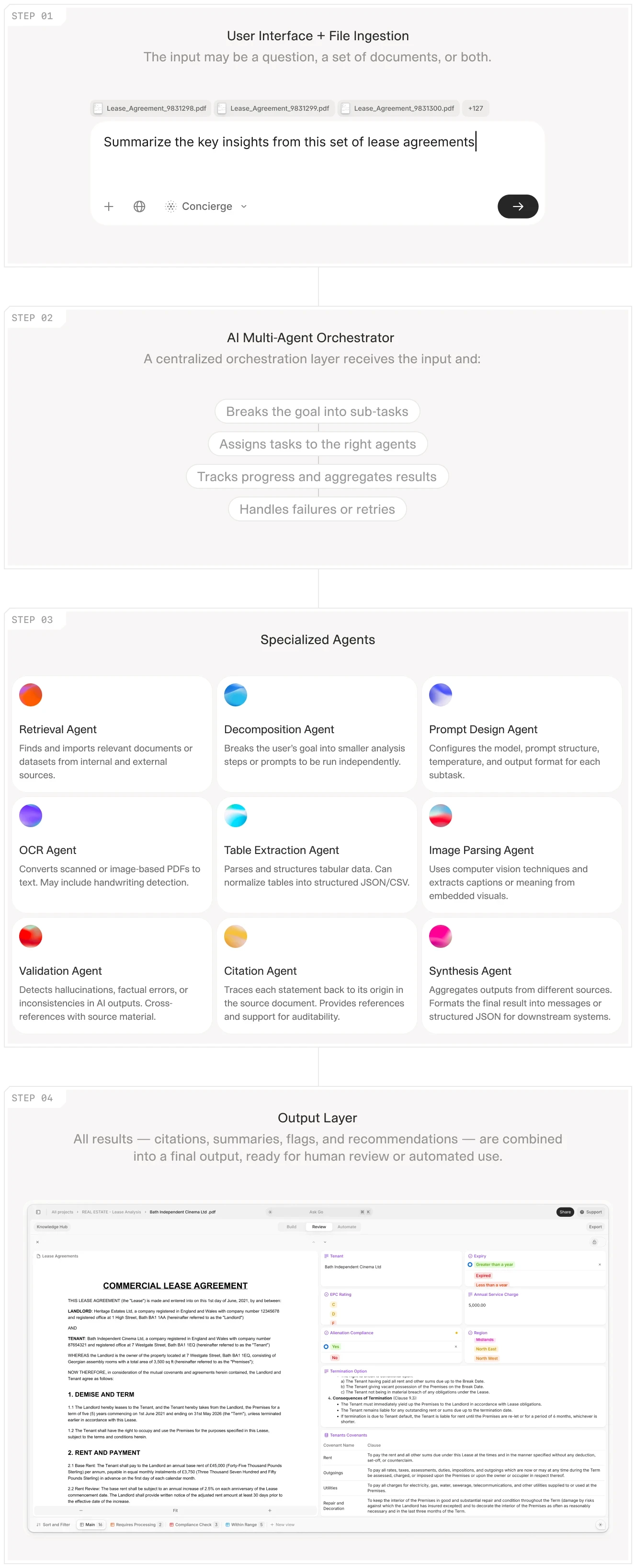
V7 Go processes subscription agreement PDFs through a configurable agent pipeline. The fund administrator defines the checklist; the agent extracts, validates, and returns a per-LP exception report. Human review is reserved for the documents that need it.
The economic case is direct. A fund administrator who spends three minutes manually reviewing each subscription agreement in a close of eighty LPs spends four hours on documents before a single exception has been investigated. An agent that processes all eighty in minutes and returns a ten-item exception list redirects those four hours to the problems that need judgment: the ERISA investor whose fund-of-funds structure requires additional review, the wire instruction that does not match the account currency, the side letter commitment that differs from the subscription amount by a rounding difference that may or may not be intentional.
When is a subscription agreement necessary?
A subscription agreement is required every time an investor commits capital to a private fund. It is executed prior to each closing of the fund, including the final close, and also when an existing LP makes a follow-on commitment to a subsequent fund. All investors, regardless of size or prior relationship, must complete a new subscription agreement for each fund they invest in. Some funds also require a refreshed subscription agreement when an investor's circumstances change materially, such as a change in beneficial ownership structure, a change in FATCA status, or a restructuring of the investing entity.
+
What is the difference between a subscription agreement and a limited partnership agreement?
The limited partnership agreement (LPA) governs the fund's structure, governance, and economics. It applies to all LPs collectively and covers carried interest, distribution waterfalls, governance rights, key man provisions, and investment restrictions. The subscription agreement is investor-specific: it records each LP's capital commitment, confirms their eligibility to participate in the fund, and captures the representations and warranties they are making about their identity and status. Investors sign the subscription agreement; they receive and are bound by the LPA. The two documents work together but serve distinct functions. An investor could in principle agree to the LPA but fail the subscription agreement review if their documentation is incomplete or their eligibility declarations are insufficient.
+
How long is a private equity subscription agreement?
A standard private equity subscription agreement typically runs fifteen to forty pages, depending on the fund's regulatory perimeter, the investor's jurisdiction, and the number of representations required under applicable AML and KYC regimes. Institutional investors, including pension funds, sovereign wealth funds, and fund-of-funds vehicles, often produce documents that exceed sixty pages because of the additional representations required under their own regulatory frameworks. Multi-jurisdiction investors may also be required to complete supplementary schedules for each relevant jurisdiction, which extends the document further. Fund administrators should not assume a fixed page count when planning review timelines, and template-based review processes that assume a standard structure tend to miss jurisdiction-specific schedules added to the back of longer documents.
+
What are sub docs?
Sub docs is the practitioner shorthand for subscription documents, which refers to the full set of materials an investor submits when committing capital to a private fund. This typically includes the completed subscription agreement, KYC and AML documentation, beneficial owner certification, and jurisdiction-specific tax forms such as FATCA and CRS self-certifications. The terms subscription agreement and sub docs are often used interchangeably in practice. Strictly speaking, the subscription agreement is the legal instrument that records the investor's commitment and representations, while the sub docs are the complete submission package that accompanies it. The distinction matters during review: fund administrators are responsible for checking the full package, not just the signed agreement.
+
What is the difference between a subscription agreement and an operating agreement?
An incomplete subscription agreement cannot be accepted. The fund administrator returns it to the investor, typically through the placement agent managing the investor relationship, with a specific list of the fields or sections that require completion or correction. The investor resubmits a revised document, which the fund administrator reviews again. Depending on how close the fund is to its final closing date, a single incomplete document can delay the entire close if the investor represents a material commitment that the fund is counting toward its target. This makes thorough, fast review a close-critical function rather than a back-office formality. Repeated correction cycles, which are common when review is manual, compress the timeline available for resolving genuine edge cases.
+
What happens if a subscription agreement is incomplete?
Go is more accurate and robust than calling a model provider directly. By breaking down complex tasks into reasoning steps with Index Knowledge, Go enables LLMs to query your data more accurately than an out of the box API call. Combining this with conditional logic, which can route high sensitivity data to a human review, Go builds robustness into your AI powered workflows.
+
Casimir is a seasoned tech journalist and content creator specializing in AI implementation and new technologies. His expertise lies in LLM orchestration, chatbots, generative AI applications, and computer vision.