13 min read
—


How institutional CRE acquisition teams review property disclosure documents, identify material red flags, and use AI to automate the process in pre-acquisition due diligence.

V7 Go
A smarter way to manage due diligence and underwriting
Institutional commercial real estate acquisitions operate under compressed timelines. A 30-day to 60-day due diligence period must cover financing, legal, environmental, operational, and physical property review simultaneously. Within that window, the property disclosure package covers both legal risk and physical condition simultaneously. It typically contains between five and fifteen distinct documents: produced by different parties, delivered on different schedules, in incompatible formats.
The inconsistencies between those documents are where material risk hides. A seller's disclosure statement that omits known structural defects. A Phase I Environmental Site Assessment flagging recognised environmental conditions the deal team has not yet seen. A title commitment carrying active liens that never entered the underwriting model.
These are not outliers in commercial real estate due diligence. They are routine findings, and they surface most reliably when someone has time to cross-reference each document against the others.
This guide covers each element of the pre-acquisition disclosure review from the perspective of the institutional buyer — including what the six-document package contains, which red flags are most material, and how AI is changing the review process at scale.
In this article:
What a CRE property disclosure package contains, document by document
Where disclosure review fits in the pre-acquisition DD timeline
Red flags to prioritise by document type
A structured real estate due diligence checklist
How AI automates disclosure review in institutional CRE workflows
What is a property disclosure package in commercial real estate?
A property disclosure package in CRE acquisitions is not the same as a residential seller's disclosure form. In residential transactions, disclosure is typically a single state-mandated form completed by the homeowner listing known defects. In commercial real estate, the disclosure package is a multi-document set assembled by the seller, environmental consultants, inspectors, and title companies. Each document covers a distinct dimension of the property's condition, legal standing, and regulatory status. The seller's statement, if one exists, is just one component.
The following six documents form the standard CRE disclosure package:
Seller's property disclosure statement
The seller's disclosure statement covers what the seller knows: material defects, structural issues, ongoing disputes, environmental conditions they are aware of, and any pending or threatened litigation involving the property. Unlike many residential disclosure forms, the seller's disclosure statement in a CRE transaction is not standardised. Its scope varies by jurisdiction, asset type, and what the seller's counsel decides to include. That variability is itself a signal: a thin or heavily qualified disclosure statement warrants scrutiny of what is conspicuously absent.
Who prepares it: the seller or seller's legal counsel.
What acquisition teams look for: material defects disclosed in attached addenda rather than the main body of the document; warranty language hedged to "seller has no current knowledge of..." rather than an affirmative representation of condition; and any reference to active litigation or code violations requiring further investigation.
Phase I Environmental Site Assessment (ESA)
The Phase I ESA is a desk research and site inspection exercise performed by a qualified environmental professional. It reviews historical land use records, aerial photography, regulatory databases, and visible site conditions to identify Recognised Environmental Conditions (RECs): any indication of a release, or threatened release, of hazardous substances that could affect the property. Phase I ESA is standard in virtually every CRE acquisition; a Phase II investigation involving intrusive soil and groundwater sampling is triggered only when Phase I findings require it.
Who prepares it: a qualified environmental professional, typically an environmental consulting firm.
What acquisition teams look for: RECs flagged for further investigation; historical land uses suggesting contamination risk (dry-cleaning operations, petrol stations, industrial manufacturing, agricultural chemical storage); and any Phase I report more than six months old on a site with prior industrial use. Conditions and regulatory database entries can change between report date and closing.
Property inspection report
The commercial property inspection report assesses the physical condition of the asset: structural integrity, roofing, HVAC systems, electrical, plumbing, lifts, and the building envelope. A thorough report estimates deferred maintenance and identifies capital expenditure items by urgency. For acquisition models, the inspection report is typically the primary input for CapEx reserve assumptions in the first three to five years of the hold period.
Who prepares it: a licensed commercial property inspector.
What acquisition teams look for: deferred maintenance already past its service window; roof and HVAC ages as proxies for near-term capital requirements (commercial HVAC systems typically carry a 15-to-20-year operational life); and ADA compliance deficiencies that constitute remediation obligations transferring with ownership.
Title commitment and title insurance report
A title commitment is the document issued by a title insurance company committing to insure title to the property, subject to a list of exceptions. Those exceptions (easements, covenants, restrictions, unresolved liens, survey discrepancies) are where title risk is concentrated. The title insurance policy, when issued at closing, covers whatever exceptions are either removed before closing or accepted by the buyer. Exceptions that remain are the buyer's responsibility post-acquisition.
Who prepares it: the title company, typically instructed by the buyer's legal counsel.
What acquisition teams look for: unresolved mechanic's liens, tax liens, and judgment liens that have not been cleared from the title record; access easements restricting the intended use or development of the site; and survey exceptions still open without a corresponding survey update to resolve them.
Survey
An ALTA/NSPS (American Land Title Association / National Society of Professional Surveyors) land title survey maps the property's boundary lines, improvements, easements, rights-of-way, and any encroachments. The survey and the title commitment must be reconciled against each other: title exceptions not confirmed by the survey, or survey findings not addressed in the title commitment, are a common source of pre-closing disputes and delayed closings.
What acquisition teams look for: boundary encroachments affecting developable area; easements shown on the survey that do not appear in the title commitment; improvements that sit outside the legal boundary of the parcel; and any discrepancy between the survey legal description and the title commitment legal description.
Zoning compliance letter
A zoning compliance letter, issued by the relevant municipality or planning authority, confirms the property's current permitted use, any non-conforming use status, and whether any outstanding zoning violations exist. For acquisition teams pursuing value-add or redevelopment strategies, zoning capacity is often a core assumption in the underwriting model. A non-conforming use designation — where the property's current use is legally permitted but could not be rebuilt to identical specifications if destroyed — has direct implications for insurance structure and development flexibility.
Who prepares it: the municipality or planning department, sometimes with accompanying analysis from the seller's attorney.
The pre-acquisition due diligence process: where disclosure review fits
Commercial real estate due diligence runs from the letter of intent to the closing date. A typical DD period runs 30 to 60 days; institutional acquisitions with complex ownership structures or financing conditionality may negotiate longer periods. Disclosure document review typically begins in the first one to three weeks, as sellers are expected to deliver the disclosure package within a defined number of days of LOI execution.
The coordination problem is rarely about any individual document. Each report is reviewed by a different specialist: the acquisition team handles commercial and operational analysis, legal counsel reviews the seller's disclosure statement and title commitment, an environmental consultant manages the Phase I ESA, and a property inspector produces the physical condition report. These parties rarely communicate with each other directly. Their reports arrive on different schedules. Nobody is formally assigned to cross-reference what one report implies against what another states.
That gap is where material issues hide. A seller's disclosure statement reporting no structural defects is not automatically contradicted by an inspection report listing deferred maintenance: they cover different things. But when the inspection report identifies foundation cracking and the seller's statement contains no mention of structural conditions, that inconsistency requires resolution before closing. For the financial document layer of CRE due diligence, including offering memorandum review, rent roll analysis, and financial model validation, the same principle applies: individual document review is necessary but not sufficient.
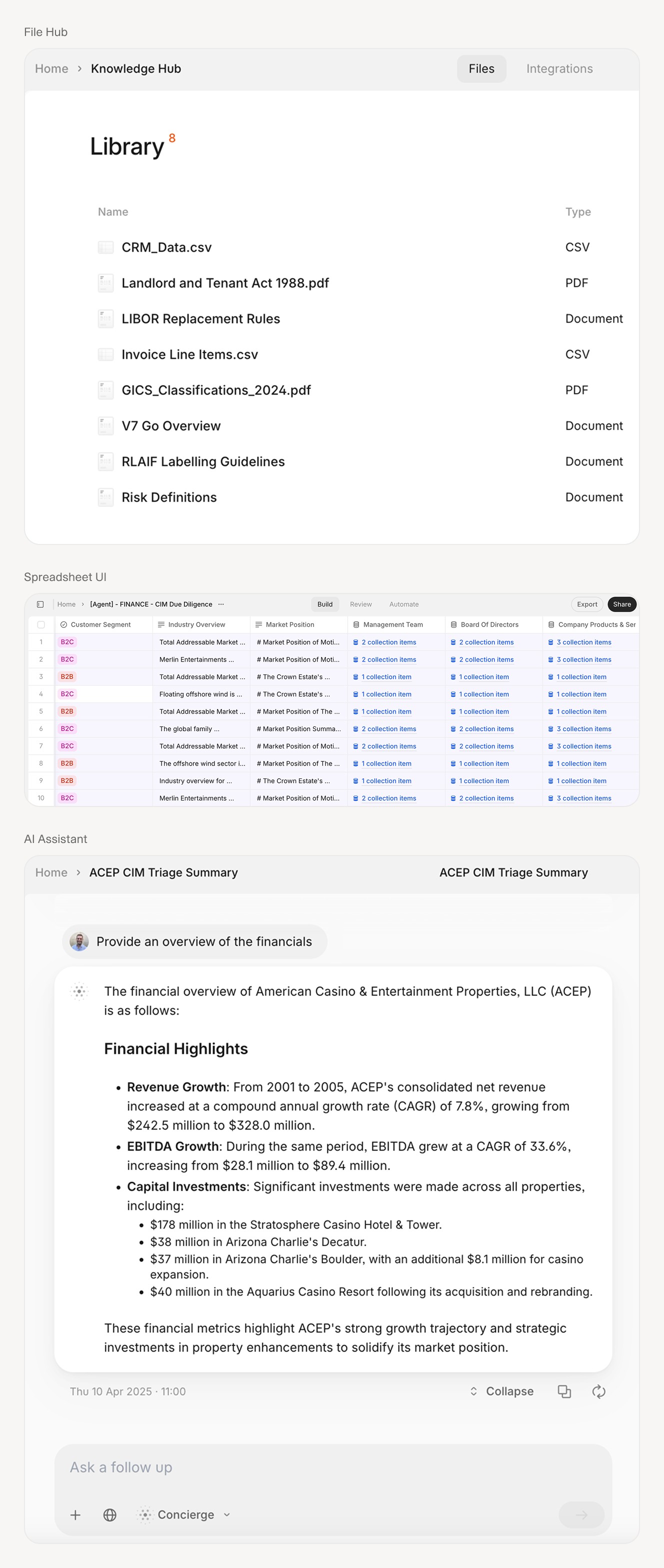
Sellers increasingly deliver disclosure packages through data rooms rather than email. This is operationally useful: documents are version-controlled and timestamped. But it does not reduce the review burden. Data rooms containing 40 to 50 documents for a single property are not uncommon in institutional acquisitions, and the disclosure documents are embedded within a larger set of financial, operational, and legal materials.
Red flags to look for in a property disclosure package
Not every issue in a disclosure package is material. The red flags below are those most consistently linked to deal economics impact, post-closing liability, or financing complications, organised by document type for the CRE due diligence checklist review.
Across all documents
Missing documents, particularly a Phase I ESA on any site with industrial, petrol retail, or dry-cleaning history. An absent environmental report is not evidence of a clean site.
Inconsistencies between documents: seller's statement reports no known structural issues; inspection report lists deferred maintenance on primary structural and mechanical systems.
Reports more than 12 months old without explanation. Phase I ESAs, title commitments, and surveys become stale. Phase I reports older than six months on sites with prior industrial use should be considered for update before closing.
Seller's disclosure statement
Material defects disclosed in attached addenda rather than the main body. Addenda are easier to miss and harder to incorporate into contractual representations in the purchase agreement.
Active or threatened litigation disclosed with minimal detail. The purchase and sale agreement typically requires seller representations about pending litigation; vague disclosure here creates post-closing disputes.
Missing seller signatures. An unsigned disclosure statement carries no legal standing as a representation of condition.
Warranty language limited to seller's current awareness. "Seller has no present knowledge of any material defects" is a narrow representation and does not warrant that no defects exist.
Phase I ESA
Recognised Environmental Conditions flagged for further investigation. Any REC that the Phase I recommends escalating to Phase II is a hold-or-renegotiate finding.
Historical uses suggesting contamination risk: dry-cleaning operations, petrol stations, electroplating facilities, or agricultural chemical storage on or adjacent to the site.
A report more than six months old on a site with prior industrial use. Regulatory database entries and site conditions can change between report date and closing.

Title commitment
Unresolved liens: mechanic's liens from contractors, tax liens from unpaid property assessments, or judgment liens from civil proceedings. Each requires resolution before insurable title can transfer.
Access easements that restrict the usable footprint or constrain intended development rights.
Survey exceptions ("matters that would be shown on a survey to be obtained") that remain open without a corresponding updated survey.
Property inspection report
Deferred maintenance scope that materially exceeds what the acquisition model's CapEx reserve assumes.
Roof age approaching or past 15 years. Commercial roofing systems carry a 15-to-25-year functional life depending on membrane type; replacement costs for larger assets can be substantial.
HVAC systems at or past the 15-year mark. Full replacement of commercial HVAC in a mid-size multi-tenanted building can be a seven-figure capital event.
ADA compliance deficiencies on properties with public-facing tenant mix. These are non-negotiable remediation obligations that transfer with ownership.











The CRE disclosure review checklist
The table below is a structured real estate due diligence checklist covering the six core disclosure documents. Each row specifies what to verify, covering both individual document content and cross-document consistency. Supplement with asset-specific items as each deal requires: environmental sensitivity, lease structure complexity, development entitlements, or pending regulatory changes.
Document | What to verify |
|---|---|
Seller's property disclosure statement | Completeness relative to known property history; seller signature validity; addenda disclosing material defects not in the main body; warranty language and its limitations; active litigation, code violations, or permit disputes; consistency with inspection report findings |
Phase I Environmental Site Assessment | Report date (within six months preferred); RECs identified and recommended follow-on actions; historical land uses within the report area; adjacent parcel regulatory database hits; whether Phase II is recommended; qualifications of the environmental professional |
Property inspection report | Roof age, condition, and estimated remaining life; HVAC system age and service history; structural deficiencies or deferred maintenance items; ADA compliance status; estimated CapEx for near-term remediation items; consistency with seller's disclosure statement |
Title commitment | Schedule B-I requirements: unresolved liens, open permits, prior conveyances to be cleared before insurable title transfers; Schedule B-II exceptions surviving to closing: access easements, use restrictions, maintenance covenants; whether each exception is acceptable, negotiable, or deal-blocking |
ALTA/NSPS survey | Boundary encroachments affecting developable area; easements shown on survey not disclosed in title commitment; improvements outside the legal boundary; consistency between survey and title commitment legal descriptions |
Zoning compliance letter | Current permitted use matches intended post-acquisition use; non-conforming use designations and implications for redevelopment and insurance; outstanding zoning violations; status of any pending rezoning or variance applications |
How AI automates property disclosure review in CRE acquisitions
The scale problem is straightforward. An institutional CRE investor with 20 to 30 active acquisitions in the pipeline is reviewing 100 to 450 disclosure documents simultaneously, across six document types, produced by a dozen different parties. Manual review at that volume requires either a larger team, a shorter review window, or both. Neither reliably prevents a cross-document inconsistency from going undetected until after closing.
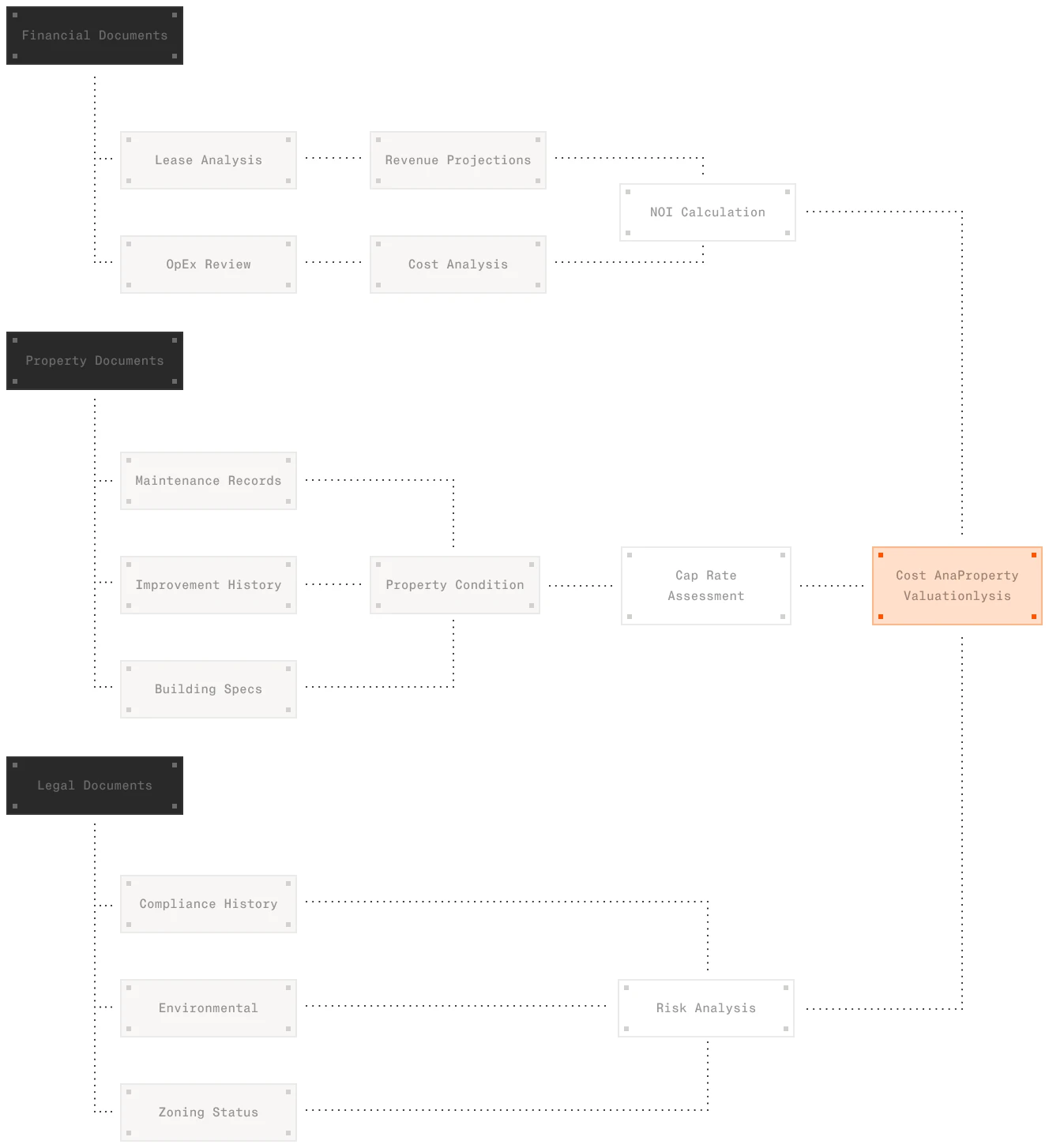
AI document extraction tools trained on the specific structures and language patterns of CRE disclosure documents address this in five concrete ways:
Document classification. Before any extraction can occur, each uploaded file must be identified. A well-configured AI agent classifies incoming documents automatically, distinguishing a Phase I ESA from a title commitment from an inspection report, and routes each to the appropriate extraction template. Acquisition teams running AI lease abstraction and disclosure review within the same DD workflow can process a full data room without manual document sorting.
Structured data extraction. Each document type contains specific data points that matter to the acquisition model: RECs from the Phase I ESA, Schedule B exceptions from the title commitment, deferred maintenance items and CapEx estimates from the inspection report, disclosed defects from the seller's statement. Machine learning models trained on CRE document structures extract these data points into a standardised output. The deal team can review and compare findings alongside AI offering memorandum analysis without re-keying data between systems.
Cross-document inconsistency detection. This is the highest-value capability — and the hardest to replicate manually at scale. An AI agent configured to compare extracted fields across documents flags three common inconsistencies: the seller's disclosure reports no structural defects, while the inspection report lists deferred maintenance on primary structural systems; the survey shows an easement not disclosed in the title commitment; the Phase I references a regulatory database hit that appears nowhere in the seller's statement. Human reviewers catch these when they have time to cross-reference everything. AI agents catch them consistently, on every deal.
Issue prioritisation. Not every flagged item carries equal weight. An extraction tool that surfaces an active mechanic's lien and a cosmetic defect as equal findings is not useful. Properly configured agents rank findings by materiality: active litigation and unresolved liens first, environmental RECs requiring Phase II second, deferred maintenance by CapEx quantum, cosmetic items last. Due diligence teams address issues in the correct order, not in the order documents happened to be uploaded.
Workflow integration. Extraction outputs that feed directly into the deal team's DD summary eliminate both a time cost and a transcription error risk. V7 Go agents can be configured to apply a custom property due diligence checklist — acquisition teams define exactly what they look for in each document type, and the agent applies that checklist consistently across every deal, every property, every market cycle.
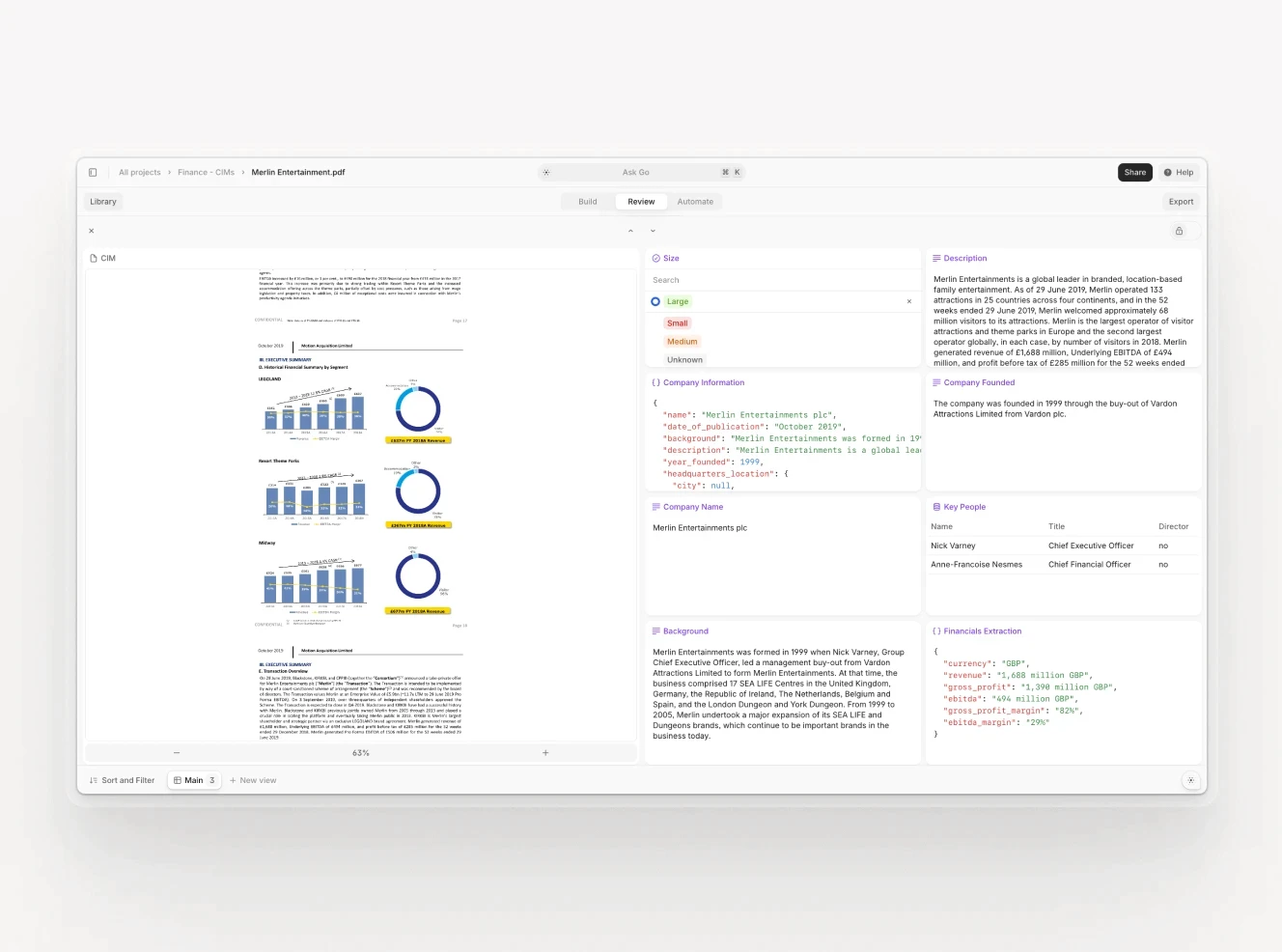
V7 Go runs the disclosure review workflow automatically — so your team spends time on decisions, not documents. See how it works →
What is an example of a disclosure statement in commercial real estate?
In commercial real estate, a property disclosure statement is not a standardised form the way it often is in residential transactions. A typical seller's disclosure statement in a CRE acquisition is a document prepared by the seller or their legal counsel that covers what the seller knows about the property's condition: material defects, structural issues, environmental conditions, pending or threatened litigation, and any active code violations or permit disputes. The scope and format vary significantly by jurisdiction, asset type, and how the seller's counsel has drafted the document. For a large multi-tenanted commercial property, the disclosure statement might run to several pages with attached addenda; for a simpler single-tenant asset, it might be two or three pages. The critical point for CRE acquisition teams is that the seller's disclosure statement is one component of a broader disclosure package. It must be read alongside the Phase I Environmental Site Assessment, the property inspection report, the title commitment, the survey, and the zoning compliance letter to constitute a complete pre-acquisition review.
+
What documents are included in a CRE property disclosure package?
A standard commercial real estate property disclosure package typically includes six document categories. First, the seller's property disclosure statement, prepared by the seller or their counsel, covering known defects, active litigation, and environmental conditions the seller is aware of. Second, the Phase I Environmental Site Assessment (ESA), prepared by a qualified environmental professional, reviewing historical land use and identifying Recognised Environmental Conditions. Third, the commercial property inspection report, covering structural, mechanical, electrical, and roof condition with deferred maintenance estimates. Fourth, the title commitment, issued by a title company, listing the exceptions that will survive to the title insurance policy and any outstanding requirements to be cleared before insurable title transfers. Fifth, an ALTA/NSPS survey mapping boundary lines, easements, and encroachments. Sixth, a zoning compliance letter from the relevant municipality confirming the property's permitted use, non-conforming status, and any outstanding violations. In institutional acquisitions, the disclosure package is typically delivered through a data room, embedded within a broader set of financial, operational, and legal materials.
+
What is pre-acquisition due diligence in commercial real estate?
Pre-acquisition due diligence in commercial real estate is the structured investigation a buyer conducts between the execution of a letter of intent and the closing of the transaction. Its purpose is to verify information presented in the seller's marketing materials, identify risks not apparent from those materials, and confirm that the asset's condition, legal status, and cash flow are consistent with the acquisition model. A standard CRE due diligence period runs 30 to 60 days and covers several workstreams simultaneously: financial and cash flow review, physical property inspection, environmental assessment, legal and title review, lease review and tenant credit analysis, and zoning and regulatory review. Property disclosure review sits within the legal and physical review workstreams. It encompasses the seller's disclosure statement, the Phase I ESA, the inspection report, the title commitment, the survey, and the zoning compliance letter. Each document is reviewed both individually and against the others: cross-document inconsistencies are among the most common sources of material findings in pre-acquisition due diligence.
+
What are the most common red flags in a CRE property disclosure review?
The most consequential red flags in a commercial real estate disclosure review fall into three categories. First, cross-document inconsistencies: when the seller's disclosure statement reports no material defects but the inspection report lists deferred maintenance on primary structural or mechanical systems, the inconsistency must be resolved before closing. Second, environmental findings: any Recognised Environmental Condition flagged in the Phase I ESA that requires Phase II investigation is a hold-or-renegotiate item. Phase II triggers are not uncommon on properties with prior industrial, petrol station, or dry-cleaning history. Third, title encumbrances: unresolved mechanic's liens, tax liens, judgment liens, or survey-identified encroachments not addressed in the title commitment create title defects that can delay or prevent insurable title transfer. Beyond these categories, the most routinely missed issues are deferred maintenance items in the inspection report that significantly exceed the acquisition model's CapEx reserve assumptions, and zoning non-conforming designations that restrict the buyer's ability to redevelop or significantly renovate without triggering full code compliance.
+
How does AI review property disclosure documents?
In commercial real estate, disclosure obligations are determined by a combination of jurisdiction-specific law, the terms of the purchase and sale agreement, and the seller's knowledge at the time of the transaction. Unlike residential real estate, where many jurisdictions mandate specific disclosure forms covering a defined list of conditions, CRE disclosure requirements are less standardised and more reliant on contractual negotiation. Sellers are typically required to disclose material facts that they are aware of and that would affect the buyer's decision to purchase or the price they would pay. What constitutes a material fact varies by jurisdiction, and sellers frequently limit their representations to what they know at the time of signing. This is why the seller's disclosure statement in a CRE acquisition commonly uses hedged language: 'seller has no current knowledge of any material defects' is a narrower representation than a warranty of condition. For institutional buyers, the practical implication is that the disclosure package must be supplemented by independent investigation: the Phase I ESA, property inspection, title review, and survey, rather than treated as a comprehensive representation of the property's condition.
+
Do commercial real estate sellers have to disclose everything?
Go is more accurate and robust than calling a model provider directly. By breaking down complex tasks into reasoning steps with Index Knowledge, Go enables LLMs to query your data more accurately than an out of the box API call. Combining this with conditional logic, which can route high sensitivity data to a human review, Go builds robustness into your AI powered workflows.
+
Casimir is a seasoned tech journalist and content creator specializing in AI implementation and new technologies. His expertise lies in LLM orchestration, chatbots, generative AI applications, and computer vision.