21 min read
—


A practitioner's guide to appraisal management platforms for lenders, AMCs, and appraisers. We evaluate LenderX, ValueLink, HouseCanary, CoreLogic, and how AI agents solve the data ingestion gap that spreadsheets still fill.

Casimir Rajnerowicz
Content Creator
V7 Go
A smarter way to manage due diligence and underwriting
Ask a loan officer at a mid-sized mortgage lender where their appraisal data lives, and they might point to an expensive logo on a slide deck. CoreLogic. Mercury Network. Black Knight. But ask the operations manager where the actual, workable data lives—the data used to answer an urgent compliance question at 8:00 PM on a Tuesday—and they will almost invariably point to Microsoft Excel.
This is the dirty secret of the appraisal management industry. The appraisal management platform market is valued at roughly $1.2 billion in 2024 and projected to reach $2.5 to $3.7 billion by 2033. Yet the industry's backbone remains a fragile mesh of spreadsheet workbooks, manual data entry, and offshore BPO teams re-keying scanned PDFs. The core problem is not a lack of software. The problem is that most appraisal management platforms are designed as systems of record—glorified databases for storing completed appraisals—rather than systems of engagement that handle the messy, incoming data streams that appraisers, lenders, and AMCs deal with every day.
In this article:
The Architecture of Modern Appraisal Tech: Understanding the critical split between the ledger and the ingestion layer.
Software Reviews: Deep dives into LenderX, ValueLink, HouseCanary, CoreLogic, and TOTAL by a la mode.
The Data Gap: How AI agents are finally automating the processing of appraisal reports, compliance documents, and UCDP/EAD submissions.
Implementation Guides: What to expect when migrating from legacy systems to a modern stack, including UAD compliance and MISMO XML considerations.
The Core Challenge: Why Appraisal Management Platforms Fail
To select the right platform, you must first understand why so many implementations fail. The core issue is a fundamental misunderstanding of what an appraisal management platform is designed to do versus what the day-to-day workflow of a lender, AMC, or appraiser actually requires.
The "System of Record" vs. "System of Engagement"
Most traditional appraisal management platforms—CoreLogic, Mercury Network, Black Knight—are designed as Systems of Record. Their primary job is to be an immutable repository of completed appraisal reports, compliance documents, and audit trails. They store the finished 1004. They track the appraiser assignment. They maintain the audit log.
The daily workflow of an appraisal operations team is different. They deal with messy, incoming data streams: a scanned handwritten appraisal report that needs to be digitized, a PDF valuation summary with embedded tables requiring extraction, or a compliance document that needs cross-checking against Fannie Mae's Uniform Collateral Data Portal (UCDP) submission requirements. The gap between these two realities creates the bottleneck.
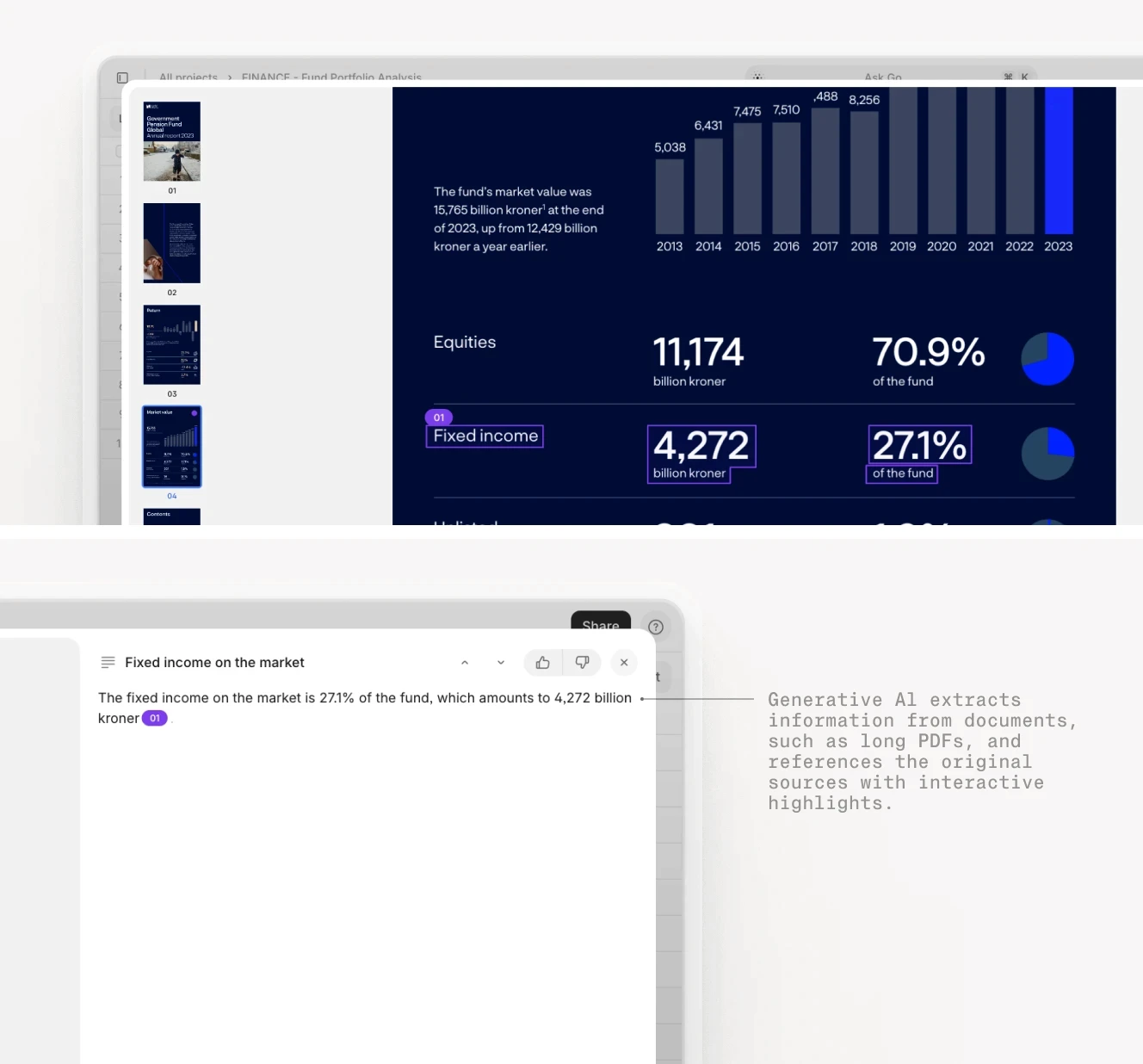
AI extraction with visual grounding ensures every data point is traceable to its source document.
Appraisal teams spend up to 5 days post month-end reconciling data because the platform cannot ingest and validate incoming documents automatically. They rely on manual data entry, VLOOKUPs across multiple Excel tabs, and offshore BPO teams to re-key information. One Reddit user in the r/appraisal community put it bluntly: "TOTAL is a bloated overpriced piece of junk but everything else I've used is worse so I'm stuck." Another noted: "I can't understand why I can't put the MLS number in and it imports that data automatically."
The Modern Solution: A Modular Stack
Leading firms in 2025 are moving away from monolithic platforms. They are building composable tech stacks that separate concerns into distinct layers:
The Intelligence Layer (Ingestion): Tools like V7 Go reside at the top of the funnel. They read scanned PDFs, extract data using AI and OCR, visually verify it against the source document, and structure it into a clean format. This is the layer that handles the messy incoming work.
The Management Layer (Workflow): Platforms like LenderX, ValueLink, or Reggora receive the clean data and handle workflow orchestration—appraiser assignment, compliance checks, UCDP submission, and status tracking. This is where the "system of record" lives.
The Reporting Layer (Analytics): Tools like Tableau, PowerBI, or specialized dashboards present the final data to stakeholders. This layer answers questions like "What is our average turn time by appraiser?" or "How many revision requests did we have this quarter?"
V7 Go's agent library showing pre-built workflows for document processing, OCR extraction, and batch analysis.
Understanding the Appraisal Management Workflow
Before evaluating platforms, you need to understand the core workflow that any appraisal management platform must support. This workflow has five critical stages, and the friction points differ at each one.
Stage 1: Order Placement and Assignment
A lender or AMC receives a loan application and needs an appraisal. The platform must route this order to a qualified appraiser based on geography, property type, license status, and current workload. For residential properties, this means checking appraiser credentials against state licensing databases and ensuring compliance with Appraiser Independence Requirements (AIR).
Platforms like LenderX and Reggora excel here. They automate the assignment process, rotate appraisers based on capacity, and provide real-time status updates. The key artifacts at this stage include the appraisal order form (typically XML-based for integration with loan origination systems), the appraiser engagement letter, and the fee disclosure.
Stage 2: Data Collection and Field Work
The appraiser visits the property, takes photos, measures square footage, and collects comparable sales data. Modern platforms need to support mobile data capture—appraisers need to input data from the field on tablets or phones, upload photos in real-time, and access MLS data without returning to the office.
This is where legacy platforms struggle. Mercury Network, for example, was designed for desktop-first workflows. Appraisers using older software like TOTAL by a la mode often report that mobile functionality is an afterthought. One practitioner noted: "I would want a software that used both the MLSs in my area and took the county sales list to get all the sales for my MC forms." The disconnect between field work and the desktop creates data entry bottlenecks.
Stage 3: Report Generation
The appraiser compiles data into a standardized appraisal report. For residential properties, this is typically the Uniform Residential Appraisal Report (URAR, Form 1004). The form itself has not changed substantially since 2005, though Fannie Mae and Freddie Mac have been working on new dynamic forms—a project that has been "about to launch" for several years.
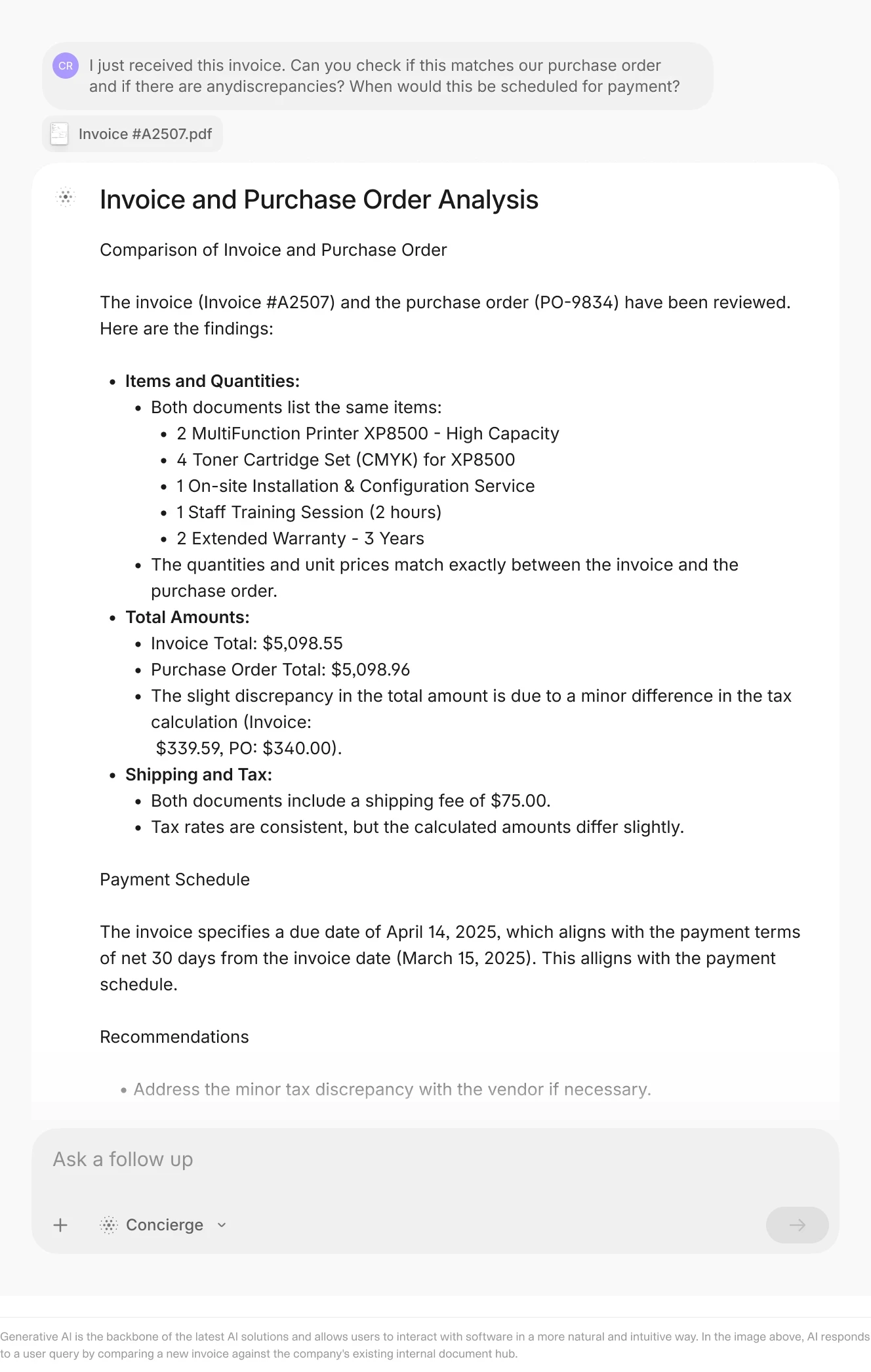
AI document comparison identifying discrepancies between source documents.
Most appraisers still use desktop software like TOTAL by a la mode. The software works, but practitioners describe it as "ancient." Specific pain points include: clunky support for non-1004 forms, difficulty loading Marshall & Swift cost approach data into manufactured home forms, and limited ability to import MLS data automatically into the appropriate fields. For commercial appraisers, the landscape is even more fragmented—many still rely on Microsoft Word templates, with data pulled manually from CoStar and other sources.
Stage 4: Review and Quality Control
The completed appraisal report is submitted to the lender or AMC for review. This is the primary bottleneck. Reviewers need to check compliance with USPAP standards, verify comparable sales against MLS data, validate adjustments, and ensure the report meets Uniform Appraisal Dataset (UAD) requirements before UCDP submission.
This process is almost entirely manual in most organizations. A typical reviewer opens the PDF, cross-references it against MLS data in a separate browser tab, checks the appraiser's calculations with a calculator, and manually redlines any issues. For an AMC processing 500 appraisals per month, that translates to 250-500 hours of manual review time.
The UAD requirements add another layer of complexity. Every field in the appraisal must conform to specific data standards—condition ratings (C1-C6), quality ratings (Q1-Q6), and standardized abbreviations for property features. Reviewers must verify that the XML extract from the appraisal software matches these standards before submitting to UCDP or Freddie Mac's Loan Collateral Advisor (LCA).
Stage 5: Delivery, Submission, and Archival
Once approved, the appraisal is delivered to the lender and submitted to the GSEs. The platform must generate the ENV file (an XML-based format required for UCDP submission), handle the submission workflow, track Submission Summary Reports (SSRs), and archive the complete package for regulatory review.
Most platforms handle this stage adequately. The challenge is that the data required for clean submission depends entirely on the quality of data capture in stages 2-4. Garbage in, garbage out.
The Data Ingestion Gap
The biggest failure point is stage 4: review and quality control. This is where the "system of record" model breaks down. The platform can store the completed appraisal, but it cannot read it, validate it, or extract key data points automatically.
Consider a typical residential appraisal report. It is a 20-30 page PDF with embedded tables showing comparable sales, handwritten notes from the appraiser, property photos, and adjustment grids. To extract the key data points—property address, appraised value, comparable sales, adjustments, condition ratings—a human reviewer must manually read the document and key the data into the platform or a spreadsheet.
This is where intelligent document processing comes in. An AI workflow can read the PDF, extract key data points using OCR and large language models, validate calculations against the adjustment grid, and flag inconsistencies—all in under 60 seconds. The AI does not replace the human reviewer; it prepares a structured summary that allows the reviewer to focus on judgment calls rather than data entry.
Cases interface showing AI-extracted fields from due diligence documents with visual grounding.











Deep Dive: Comparing Appraisal Management Platforms
Selecting the right platform requires understanding how each vendor approaches the data ingestion problem, supports UAD/UCDP workflows, and integrates with existing systems. This section provides a practitioner-level evaluation of the major players, organized by their architectural approach.
Modern Cloud-Native Platforms
These platforms were built (or substantially rebuilt) for cloud deployment and modern workflows. They prioritize API integrations, mobile access, and user experience.
LenderX
Website: lenderx.com
Core Positioning: End-to-end appraisal management for lenders and AMCs with strong regulatory compliance features.
LenderX provides centralized order management, automated appraiser assignment based on geography and qualification, and integrated quality/risk review workflows. The platform includes LXAssistant, a mobile-friendly messaging tool that keeps appraisers and reviewers connected without requiring them to log into the full platform. Order status updates flow automatically to loan origination systems via API.
For UAD compliance, LenderX includes built-in validation rules that flag common errors before UCDP submission—missing condition ratings, invalid abbreviations, and inconsistent adjustment calculations. The platform generates ENV files and tracks Submission Summary Reports within the same interface.
Strengths: Strong compliance tooling, responsive mobile interface, good integration with major loan origination systems (Encompass, BytePro). Reviewers report that the dashboard provides clear visibility into pipeline status.
Limitations: Implementation can be lengthy for large lenders with complex existing workflows. Some users expect more customization options for review checklists and approval chains. Pricing is enterprise-focused and not publicly listed.
ValueLink
Website: valuelinksoftware.com
Core Positioning: Cloud-native platform serving both commercial and residential appraisal workflows.
ValueLink offers two main products: ValueLink Direct (for lenders managing appraisals in-house) and ValueLink Core (for AMCs managing third-party appraisers). Both share a common architecture with mobile access, centralized document storage, and workflow automation.
The platform includes a virtual home inspection tool—useful for hybrid appraisals where an appraiser reviews property condition remotely based on borrower-provided photos. This became more relevant during the COVID-19 period and remains a differentiator for lenders seeking to reduce turn times on lower-risk properties.
Strengths: Highly adaptable to different user types (lenders, AMCs, appraisers). Strong customer service reputation. The 30-day free trial allows teams to test the platform with real workflows before committing. Good support for both residential and commercial property types.
Limitations: Advanced features require additional training. Initial setup can be complex for organizations with unusual workflow requirements or legacy data that needs migration.
HouseCanary
Website: housecanary.com
Core Positioning: Data-driven property valuation using automated valuation models (AVMs) and market analytics.
HouseCanary is less of a traditional appraisal management platform and more of a valuation data provider. Their AVMs use machine learning trained on millions of property transactions to provide instant property valuations. Lenders use HouseCanary to triage which loans need a full appraisal versus which can proceed with an AVM or hybrid valuation.
The platform integrates real-time property data—sale history, tax records, permit data, neighborhood demographics—into customizable dashboards. For risk analysis, lenders can assess portfolio concentration, identify properties with unusual valuation trajectories, and flag potential issues before ordering appraisals.
Strengths: Valuation data accuracy is highly regarded by lenders who have tested it. Modern interface with strong analytics. Useful for portfolio risk management and appraisal waivers.
Limitations: Not a full workflow platform—HouseCanary provides the data, but you still need a separate system to manage appraiser assignments, order tracking, and UCDP submissions. Cost structure is higher than workflow-only platforms, which may be difficult to justify for smaller lenders.
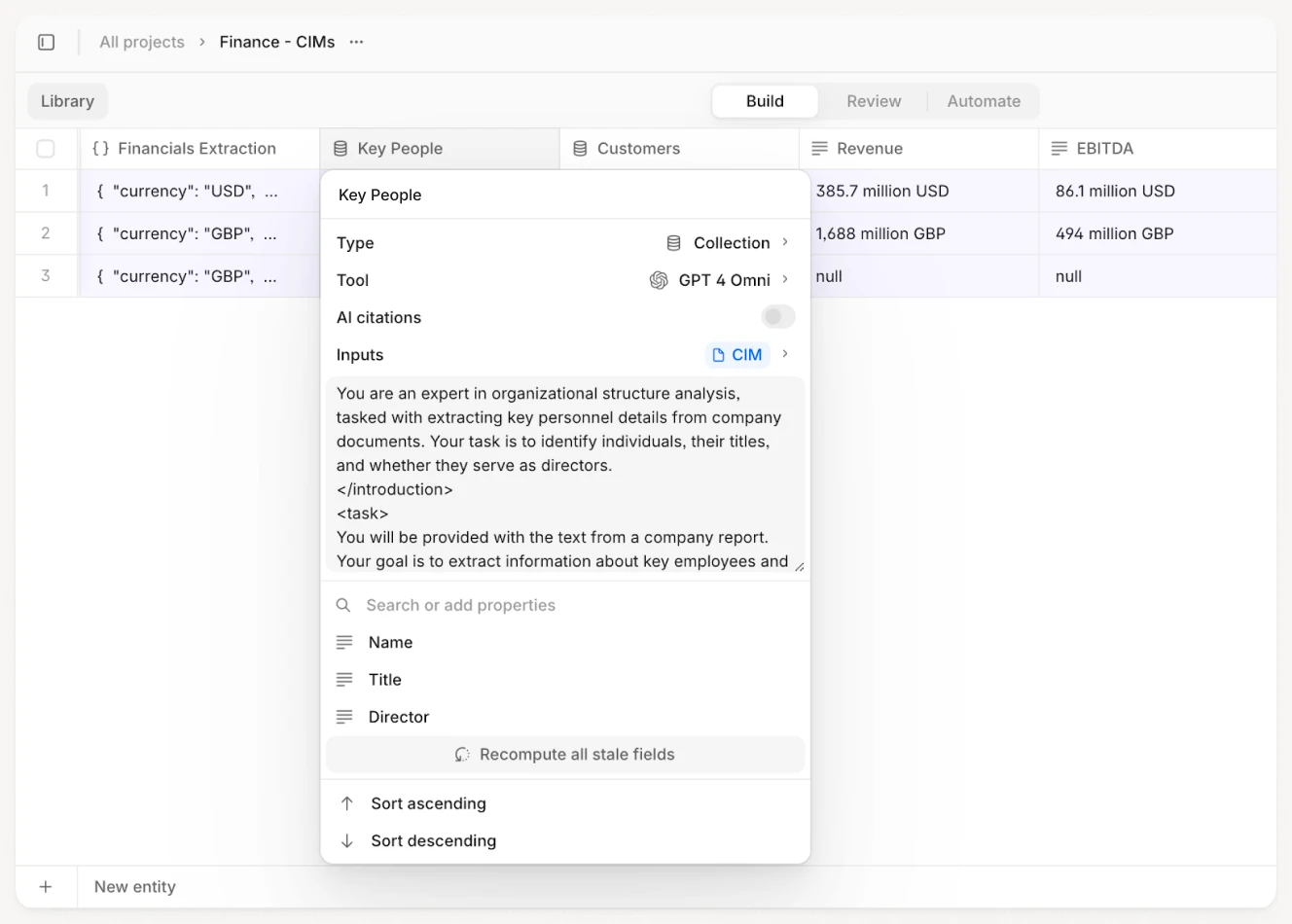
AI extraction of key data points from complex documents with visual grounding to source pages.
Legacy Platforms
These platforms have been in the market for decades. They have large installed bases, deep integrations with existing systems, and significant institutional knowledge. They also carry the technical debt of older architectures.
CoreLogic Appraisal Solutions
Website: corelogic.com
Core Positioning: Enterprise-scale property data and appraisal management for large lenders and servicers.
CoreLogic is the largest player in the appraisal management ecosystem. Through acquisitions, they now own a la mode (maker of TOTAL and Titan), Mercury Network, and multiple MLS data aggregation services. This vertical integration means CoreLogic can offer a "single vendor" solution from appraiser software through AMC platform through lender portal.
The platform provides extensive property databases—tax records, deed history, flood maps, comparable sales—integrated directly into the appraisal workflow. Compliance management is thorough, with built-in USPAP checklists, UAD validation, and audit trail documentation. For large lenders managing regulatory examinations, CoreLogic's documentation capabilities are a significant advantage.
Strengths: Trusted data accuracy with the largest property database in the industry. Comprehensive compliance and audit capabilities. Wide integration with loan origination systems. Strong support infrastructure for enterprise clients.
Limitations: Pricing is among the highest in the industry, often prohibitive for smaller firms. The user interface shows its age—practitioners describe it as "clunky" compared to modern cloud platforms. Implementation cycles are prolonged, typically 6-12 months for full deployment. The breadth of acquired products can create integration challenges even within the CoreLogic family.
Mercury Network (CoreLogic)
Website: mercuryvmp.com
Core Positioning: Established appraisal management and vendor management platform.
Mercury Network has been a workhorse in the appraisal industry for over two decades. It provides secure document management, workflow automation for order assignment and status tracking, and regulatory compliance tracking with audit trails. The platform connects lenders with a network of appraisers and AMCs through a centralized portal.
For UCDP and EAD submissions, Mercury Network provides direct integration pathways. Appraisers upload their ENV files, the platform validates them against UAD requirements, and submits to the GSE portals. Submission Summary Reports are tracked and archived within the system.
Strengths: Stable and reliable with extensive industry experience. Large network of connected appraisers. Solid compliance and audit trail capabilities.
Limitations: Interface design has not kept pace with modern standards—users describe it as dated. Update cycles are slow. Customization options are limited compared to newer platforms. Mobile functionality is not a strength.
TOTAL by a la mode (CoreLogic)
Website: alamode.com
Core Positioning: Desktop appraisal software for individual appraisers and small firms.
TOTAL is not an appraisal management platform for lenders or AMCs—it is appraisal form-filling software used by appraisers to create reports. However, understanding TOTAL is essential because the majority of residential appraisers use it. The quality and format of data that flows into your management platform depends on what appraisers produce with TOTAL.
TOTAL handles the 1004 and other Fannie Mae forms, generates UAD-compliant ENV files, and includes QuickSource for importing MLS data. The desktop application has a loyal user base, though practitioners frequently describe it as outdated. A web-based version (Titan) exists but has seen slower adoption.
Practitioner Pain Points: Non-1004 forms are poorly supported, especially in QuickSource. Marshall & Swift cost approach data cannot be loaded into manufactured home forms even when required. No macOS support forces Apple users into virtualization or web-based alternatives. The interface replicates 1990s design conventions. Pricing includes multiple add-ons that increase total cost.
These limitations matter for lenders and AMCs because they affect data quality. If an appraiser struggles to input MLS data correctly or produces a form with non-standard entries, the downstream review and UCDP submission process becomes more difficult.
Commercial Appraisal Considerations
The platforms discussed above focus primarily on residential appraisal workflows. Commercial appraisal management is a separate category with different requirements: longer report formats (60-150 pages), income approach valuations, narrative analysis, and less standardized forms.
Valcre is a common choice for large commercial appraisal firms. It specializes in data management for income-producing properties, with templates for office, retail, industrial, and multifamily assets. Narrative1 focuses on report generation and document automation for institutional clients.
Commercial appraisers often note that the market lacks good options. One practitioner described the landscape: "I've been using Narrative1 for commercial report writing for 10 years, but they hit us with a massive price increase." Another mentioned building custom automation with freelance developers to extract data from CoStar sheets and output formatted Word documents.
The AI Advantage: Closing the Data Ingestion Gap
The platforms reviewed above share a common weakness: they struggle with data ingestion. They can store appraisal reports, but they cannot automatically extract, validate, and structure the data within those reports. This is where AI agents provide a significant advantage.
How AI Agents Work in Appraisal Management
An AI agent is a specialized workflow that performs a specific business process. Unlike general-purpose chatbots, agents follow predefined steps with validation at each stage. In appraisal management, an agent might be configured to perform the following sequence:
1. Extract Key Data Points: Read a scanned or digital appraisal report and extract the property address, appraised value, effective date, property type, condition rating, quality rating, comparable sales addresses, sale prices, and adjustment amounts. The extraction includes visual grounding—each extracted value links back to the specific location in the source document where it appears.
2. Validate Against UAD Standards: Check that condition ratings conform to C1-C6 scale, quality ratings to Q1-Q6, and that abbreviations match the UAD field-specific standardization requirements. Flag any non-conforming entries for reviewer attention.
3. Cross-Check Calculations: Verify that the adjustment grid math is correct—that the sum of adjustments applied to each comparable equals the stated adjusted value. Identify discrepancies greater than a tolerance threshold.
4. Compare Against External Data: Optionally, compare extracted comparable sales against MLS records or public deed data to verify that the reported sale prices and sale dates are accurate.
5. Generate Review Summary: Produce a structured summary document for the human reviewer, highlighting key findings, flagging potential issues, and providing page references for every extracted data point.
This process takes a human reviewer 30-60 minutes per appraisal. An AI agent completes the same extraction and validation in under 60 seconds. The agent does not replace the human—it prepares the work so the reviewer can focus on judgment calls rather than data entry and arithmetic.
Knowledge Hubs overview showing document memory, citations, and Index vs RAG comparison.
Real-World Example: Automating Appraisal Review
Consider a mid-sized AMC processing 500 residential appraisals per month. Each appraisal requires 45 minutes of manual review time, covering data verification, UAD compliance checking, comparable sales validation, and adjustment grid review. That is 375 hours per month—roughly 2.3 full-time employees.
Deploying an AI appraisal report generation agent to handle initial data extraction and validation reduces review time to 10 minutes per appraisal. The reviewer receives a pre-populated summary with all key data points extracted, UAD compliance issues flagged, and calculation discrepancies highlighted. Total review time drops to 83 hours per month—approximately 0.5 full-time employees.
The direct labor savings: 292 hours per month, or approximately $58,400 per year assuming a fully loaded cost of $200 per hour. The indirect benefits are harder to quantify but equally important: faster turn times (same-day review instead of 48-hour queues), fewer revision requests (issues caught before delivery), and reduced risk of compliance findings during audits.
Integration Architecture
An AI ingestion layer sits between the incoming documents and the appraisal management platform. The typical integration flow looks like this:
Input: Appraisal reports arrive via email, upload portal, or direct API integration from appraiser software.
Processing: V7 Go agents extract structured data from each report. The extraction includes all UAD-required fields plus any custom fields defined by the lender. Visual grounding ensures every extracted value has a traceable citation to the source document.
Output: Structured data pushes to the appraisal management platform via API or file export (CSV, JSON, XML). The original PDF is archived alongside the extracted data for audit purposes.
Human Review: Reviewers work from the extracted data, focusing on exceptions and judgment calls rather than re-keying information. The management platform tracks status, routes approvals, and handles UCDP submission.
This architecture allows firms to keep their existing management platform while adding AI capabilities at the ingestion layer. There is no need to rip and replace—the intelligence layer supplements rather than replaces the workflow layer.

AI data validation automatically correcting inconsistencies in structured data.
Implementation Guide: Migrating to a Modern Stack
Migrating from a legacy appraisal management platform—or adding an AI ingestion layer to an existing setup—requires careful planning. This section provides a phased approach with specific acceptance criteria and risk mitigation steps.
Phase 1: Assessment and Planning (4-6 weeks)
Begin by mapping the current workflow end-to-end. Document every handoff, every manual step, and every system involved. Key questions to answer:
Volume and Mix: How many appraisals per month? What percentage are residential 1004s versus other form types? What percentage are purchase versus refinance? Different workflows have different automation potential.
Pain Points: Where does the process break down? Is it appraiser assignment, data entry during review, UCDP submission errors, or something else? Quantify the cost of each bottleneck in hours and error rates.
System Inventory: What platforms are currently in use? What loan origination system feeds appraisal orders? What document management system archives completed reports? What are the API capabilities of each?
Success Criteria: Define measurable goals. For most firms: 50-70% reduction in review time per appraisal, less than 2% error rate on extracted data fields, same-day turn time for routine reviews, zero increase in UCDP rejection rate.
Phase 2: Vendor Selection (6-8 weeks)
With requirements documented, evaluate vendors against your specific needs. Request demonstrations from 3-5 platforms and conduct proof-of-concept tests with sample appraisal reports from your actual workflow.
Evaluation Criteria:
Data Ingestion: Can the platform extract data from your actual appraisal reports? Test with scanned PDFs, digital PDFs, and any unusual form types you receive. Check extraction accuracy for UAD-required fields.
UAD and UCDP Support: Does the platform understand UAD field standards? Can it validate condition ratings, quality ratings, and abbreviations before you attempt UCDP submission?
Integration Capabilities: Can the platform connect to your loan origination system, document management system, and existing appraisal management platform? What API formats are supported (REST, SOAP, file-based)?
Visual Grounding: For AI ingestion tools, does every extracted value link back to a specific location in the source document? This traceability is essential for audit defense and reviewer confidence.
Phase 3: Pilot Implementation (8-12 weeks)
Run a controlled pilot with a subset of appraisals before full deployment. Select a representative sample—different property types, different appraisers, different form types.
Pilot Parameters:
Sample Size: 50-100 appraisals minimum. This provides enough data to measure accuracy and identify edge cases.
Parallel Processing: Run appraisals through both the old workflow and the new system. Compare results. Every discrepancy is a learning opportunity.
User Training: Train 5-10 reviewers on the new system. Gather feedback on usability, clarity of extracted data, and any workflow friction.
Acceptance Criteria:
Field Accuracy: 98% or higher accuracy on key fields (property address, appraised value, condition rating, quality rating, comparable sale prices).
False Positive Rate: Less than 5% of flagged issues should be false positives upon reviewer verification.
Turn Time: Average review time should decrease by at least 50% compared to baseline.
User Satisfaction: Reviewers should report that the system saves time and improves confidence in data quality.
Phase 4: Full Rollout (12-16 weeks)
If the pilot meets acceptance criteria, proceed with full deployment. This phase includes historical data migration, comprehensive user training, and workflow standardization.
Data Migration: Determine what historical data needs to move to the new system. At minimum, migrate active pipeline items. For compliance purposes, maintain access to historical appraisals in the legacy system or migrate them to the new archive.
Change Management: Full rollout is the hardest phase because it requires people to change habits. Expect resistance. Mitigate by: identifying champions within the review team who can advocate for the new workflow, providing clear documentation and quick-reference guides, establishing a rapid-response support channel for the first 30 days, and celebrating early wins publicly.
Monitoring: Track key metrics weekly during the first 90 days: appraisals processed, average review time, extraction accuracy rate, UCDP rejection rate, and reviewer feedback. Adjust configurations as needed based on observed patterns.
What Changes on Monday Morning
If you implement an AI-enabled appraisal management stack, here is what changes for your team on Monday morning.
For Appraisal Reviewers
The inbox no longer contains raw PDFs waiting to be read from scratch. Instead, each appraisal arrives with a structured summary: property address verified against MLS, appraised value extracted, condition and quality ratings flagged if they deviate from photo documentation, comparable sales listed with adjustment grid math verified, and any UAD compliance issues highlighted with specific field references.
The reviewer spends 10 minutes confirming the AI's work and checking the judgment calls: Does the appraiser's condition rating match the photos? Are the comparable sales truly comparable? Is the final value opinion supportable? The tedious arithmetic and data entry are gone. The focus shifts to expertise and judgment.
For Operations Managers
The 5-day post-month-end reconciliation sprint disappears. Real-time dashboards show exactly how many appraisals are in each stage: ordered, scheduled, received, under review, approved, submitted to UCDP. Pipeline visibility is instant rather than reconstructed from email threads and spreadsheets.
Turn time metrics improve immediately. If the old workflow delivered a 72-hour average from receipt to delivery, the new workflow delivers same-day for routine appraisals. Lenders notice. Referral relationships strengthen.
For Compliance Officers
Audit preparation becomes a query rather than a project. Need to produce every appraisal from Q3 where the condition rating was C5 or worse? Run a filter. Need to demonstrate that every appraisal passed UAD validation before UCDP submission? Pull the validation logs. Need to show the complete audit trail for a specific loan? The AI's visual grounding means every extracted data point traces back to a specific page and location in the source document.
The risk of regulatory findings decreases because the review process is documented, consistent, and traceable. The AI applies the same validation logic to every appraisal, eliminating the variability that comes with different human reviewers having different interpretations of requirements.
Choosing the Right Platform for Your Firm
The right platform depends on your firm's size, workflow complexity, and strategic priorities. Here is a decision framework:
Small Lenders or AMCs (under 100 appraisals per month): Start with a cloud-native platform like ValueLink or Reggora. These platforms are straightforward to implement, affordable, and provide core functionality without enterprise complexity. Add an AI ingestion layer if review bottlenecks persist after basic workflow optimization.
Mid-Sized Lenders or AMCs (100-500 appraisals per month): This is the sweet spot for AI-enabled workflows. The volume justifies the investment, and the operational improvements are immediately measurable. Consider LenderX or ValueLink for workflow management, supplemented with V7 Go for data extraction and review automation.
Large Lenders or AMCs (over 500 appraisals per month): Invest in an enterprise-grade platform like CoreLogic, but supplement it with an AI ingestion layer. The combination provides the reliability, compliance infrastructure, and scale you need while automating the data extraction and validation that the legacy platform cannot handle natively.
Regardless of which platform you choose, focus on the data ingestion gap. This is where the most operational friction occurs, and this is where AI provides the greatest value. To see how you can automate the ingestion of your appraisal reports—from scanned documents to UAD-compliant data—book a demo with V7 Go.
What is the difference between an appraisal management platform and appraisal software?
Appraisal software (like TOTAL by a la mode) is used by individual appraisers to create appraisal reports. It is a desktop application that helps appraisers input data, generate forms, and produce the final UAD-compliant report. An appraisal management platform is used by lenders and AMCs to manage the entire appraisal process from order placement to UCDP submission. It handles workflow orchestration, appraiser assignment, compliance checks, and document archival.
+
Can AI fully automate appraisal review?
No. AI automates the data extraction, validation, and flagging components. It removes the manual friction of reading documents and re-keying data. However, the final judgment—whether to accept, reject, or request revisions on an appraisal—remains a human task. AI augments the reviewer by handling tedious work and highlighting exceptions that require expert attention.
+
Is it safe to put sensitive appraisal data into cloud-based AI software?
Yes, provided the vendor meets enterprise security standards. Look for SOC 2 Type II certification, ISO 27001, GDPR/CCPA compliance, and encryption in transit and at rest. Enterprise-grade platforms like V7 Go include these protections by default. Additionally, confirm that the vendor's data retention policies align with your compliance requirements and that they do not use client data to train models.
+
How long does it take to implement an appraisal management platform?
It varies by complexity. A cloud-native tool for a small AMC might take 4-8 weeks. A complex enterprise implementation with CoreLogic often takes 6-12 months due to historical data migration, workflow configuration, and custom reporting requirements. Deploying a specialized AI ingestion layer like V7 Go on top of existing systems is much faster—typically operational within days to weeks, with a pilot running on real appraisals within the first month.
+
What is the ROI of automating appraisal review?
Pricing is typically customized. For enterprise platforms like CoreLogic or Black Knight, annual costs often range from $50,000 to over $250,000 for mid-sized firms, plus significant implementation fees. Cloud-native platforms like Reggora, ValueLink, or LenderX are often priced on a per-transaction basis, offering a more scalable entry point for smaller volumes. AI tools for data extraction like V7 Go are typically priced on usage (volume of documents processed), starting around $20,000-$50,000 per year depending on scale and configuration.
+
How much does an appraisal management platform cost?
Go is more accurate and robust than calling a model provider directly. By breaking down complex tasks into reasoning steps with Index Knowledge, Go enables LLMs to query your data more accurately than an out of the box API call. Combining this with conditional logic, which can route high sensitivity data to a human review, Go builds robustness into your AI powered workflows.
