7 min read
—


From BDR to Team Lead, Michael's been on the fast track at V7 Labs. Learn more about his day-to-day and his career journey.

V7 Team
V7 Go
A smarter way to manage due diligence and underwriting
In sales, everyone talks about career progression. But how many companies actually deliver on it? We sat down with Michael Chung, who joined V7 as a BDR and now leads the team, to talk about the opportunity, the money, the market, and what it really takes to succeed in a high-performance BDR role.
You've gone from BDR to leading the team in just over a year. Can you walk us through that journey?
For the first six months, I was a BDR. Then I progressed to Senior BDR from month six to month twelve. After that, I've now moved into leading the BD team. The progression has been incredibly fast, and I think it represents the fast-paced nature of working at V7.
What enabled you to go from BDR to Senior BDR?
As a BDR, the role is very outbound-heavy. Whenever you're not scraping leads or building lists to outbound, you're constantly on the phone dialing. You're doing LinkedIn and email outbounding as well.
The measure of being able to progress to Senior BDR is ensuring you're consistently hitting your targets. You'll get set monthly and quarterly outbound targets for booking meetings as well as attaining SQLs. If you consistently hit those targets and continue to develop the technical skill set required to pitch this across intro calls to prospective clients, that's when you can make the transition to Senior BDR.
V7 is operating in the agentic AI space, which is exploding right now. How does that market opportunity translate into what a BDR experiences day-to-day?
AI agents have already exploded in the previous year. As a result, different clients are along different parts of the curve when it comes to their progression and development within the AI space specifically.
For clients that are more advanced and have more technologically sophisticated teams, they are actively implementing and deploying AI and AI agents within their workflows. However, it's still a puzzle for them in how they can do this successfully to help automate the most manual, repetitive parts of their day.
This has given an incredible opportunity to new BDRs coming into the space. Currently, the industry is yearning and really looking to make use of AI, but perhaps they don't know where to start or how to properly implement AI systems within their existing tech stack.
So you're calling into active demand?
Exactly. It's a warm desk to come into.
What does a typical day look like for a BDR on your team?
A typical day starts with preparing all of the leads and lists that you need to outbound. This involves conducting market research on your relevant verticals. Within your specific verticals, you'd be looking to identify the ICP criteria—making sure you're targeting the right prospects to outbound. You'd be building a large enough list that you can call through for the remainder of the week.
The leads in your list will be pushed into outbound campaigns involving a blend of calling, emailing, and LinkedIn outbounding. At V7, we're very call-heavy. A new BDR can expect to be spending approximately two to three hours each day on the phone. You're doing 200 to 300 dials every single day.
What are you actually looking for in great BDRs?
The first thing is someone who's incredibly smart and intelligent. At V7, we really need innovative thinkers on the team since we're working with a product that is highly technical. A BDR, in order to be successful, must translate the complexities of the product into a digestible format that the client can understand and visualize how it would help them day-to-day.
Number two would be having grit and confidence. Being a BDR is incredibly manual and repetitive. You're doing 200 to 300 dials every single day. Having the grit to keep going when things aren't going your way is incredibly important. And having the confidence to come back stronger—because ultimately, you will be facing rejection nonstop on the role. It's up to you to take on the positive feedback you can get from that and continue to improve how you outbound.
Lastly, it would be coachability. A BDR role at V7 is one that is incredibly agile and you have to think very quickly on your feet. You'll constantly be thrown into new outbounding campaigns, adopting new strategies for improving your outbounding. The intensity of your outbound will be incredibly high. Your targets are very high. And in order to meet those expectations, you'll constantly be refining your approach and getting started before you're ready on new things.
How is the BDR role at V7 different from a standard BDR role at other companies?
The resilience component required at V7 is really unparalleled compared to traditional BDR roles. We have incredibly high targets here, and the outbounding intensity is very high. Of course, you're compensated very well for that.
What it means is that oftentimes, BDRs will be given targets where they need to book two meetings by the end of the day. This really means thinking outside the box or doing more than you're expected to do in order to hit those targets each and every day. That's what will make you a successful BDR here at V7.
Is there freedom in how you hit those targets?
Absolutely. One of the best things about V7 is how meritocratic it is. Ultimately, we're a results-oriented company. If you have your own methodologies and processes that will bring on better results for the team, it will always be welcomed. New, innovative, and creative ideas that will help the overall outbounding strategy are always welcomed on the team.
What kind of training and enablement does someone get when they join as a BDR?
From day one when you join, you're given a roadmap so you understand immediately the fundamentals that will help you onboard quickly. On top of that, we have daily one-on-ones with every member of different teams in order to immerse ourselves as quickly as possible, and we do team syncs to ensure we're progressing as a team.
Something at V7 which means you ramp up very quickly is how comprehensive the coaching and guidance is to set you up for success. There's never really a point in time where you don't know what you should be doing to continue improving as a BDR.
V7's product is pretty technical – AI agents, document automation, complex integrations. How do you help BDRs get comfortable talking about that with prospects?
It always comes from a hands-on approach. We encourage everybody across the company—not just BDRs—to make use of the platform for pretty much any use case, small or large, that they can think of. What this does is it enables them to start thinking through the lens of a client and how potentially they can pick apart problems to use V7 to help with their use cases.
Ultimately, BDRs will be expected to be building agents within their first few months of joining. They'll be expected to be able to build mock agents for use cases that are given to them and walk through these with clients on a call. That's the ultimate goal of a BDR at V7.
What's a recent win from the BDR team that made you proud?
We've been doing thousands of dials each week, which led to hundreds of meetings across the month. As a result, at the end of last year, the team collectively brought in 15% of the total pipeline that closed.
This is a monumental win that the team was able to achieve, and this is only the target I'm trying to beat for the new year.
Last question – what else should people know about working at V7 as a BDR?
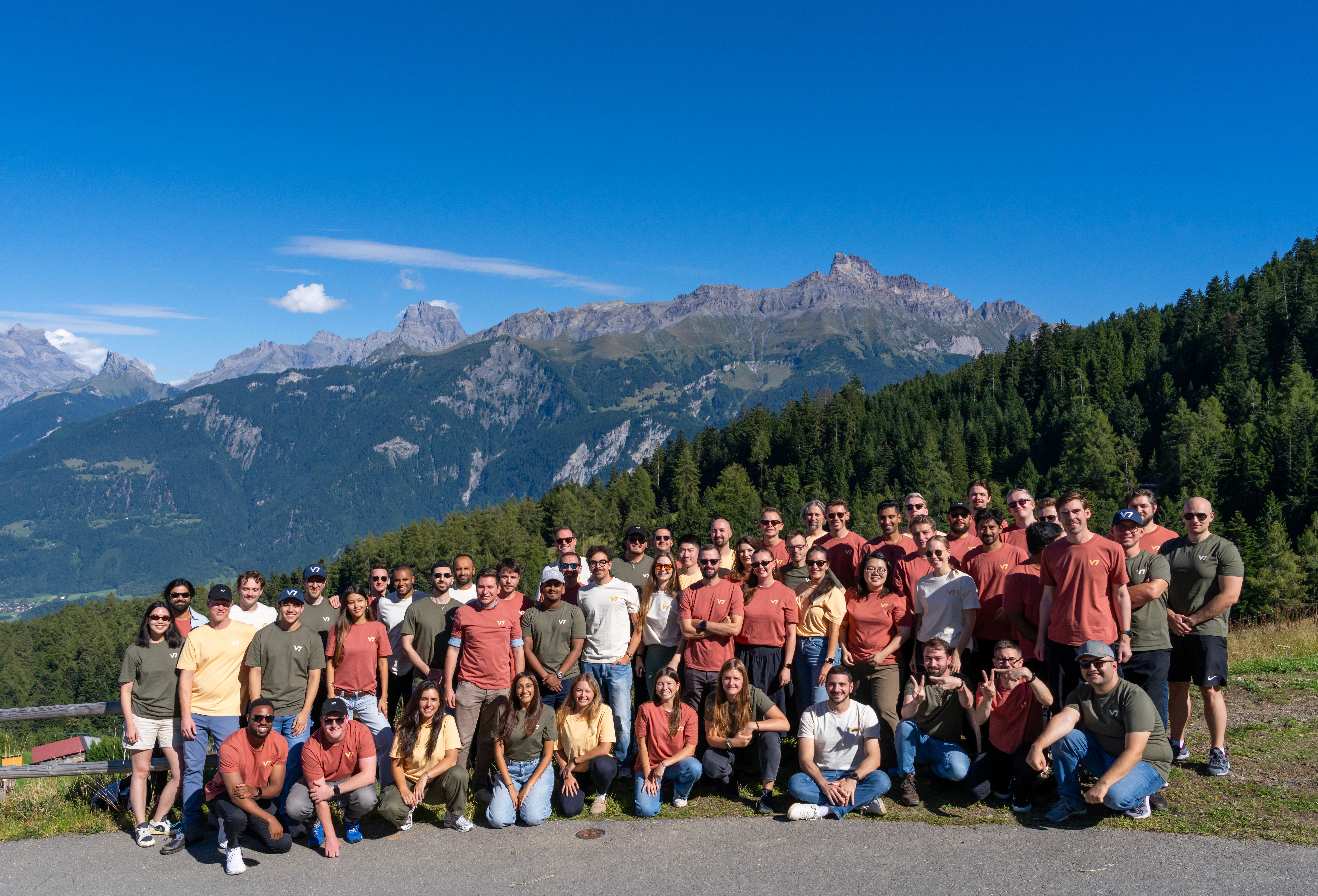
If culture fit is something that a new joiner is looking for, the people are one of the best things about V7. The people at V7 are some of the smartest people you'll meet—it's a very young and vibrant team, and everybody works incredibly hard. Everybody's super friendly, always accommodating, and looking to help you in any way that you may need.
Ultimately, the team spirit is one that means we're constantly trying to reach new heights because everybody is working to improve, to get better, and to make more money.











V7 Team
We enable organizations to create specialized AI agents that analyze, review, and reason over data with transparency, control, and auditability at their core.
