18 min read
—


An in-depth comparison of the best property management platforms for 2026, from modern cloud solutions to legacy enterprise systems, plus how AI agents solve the data ingestion bottleneck.

V7 Go
A smarter way to manage due diligence and underwriting
Ask a property manager at a mid-sized firm where their tenant data lives, and they will point to a logo on a slide deck: Yardi, AppFolio, or Buildium. Ask the operations manager where the actual data lives—the data used to answer an urgent owner question at 8:00 PM on a Tuesday—and they will point to Microsoft Excel.
This is the reality of property management in 2026. Despite spending thousands of dollars annually on sophisticated software platforms, the industry runs on a fragile mesh of spreadsheet workbooks, manual data re-entry, and siloed systems that require separate logins for accounting, maintenance, and tenant communication. According to Capterra's research, 32% of property management professionals report that delivering quality customer service is their top operational challenge—a problem directly tied to fragmented data systems and slow response times.
The bottleneck is not the software itself. It is getting data into the software. Lease agreements arrive as scanned PDFs with handwritten notes. Maintenance requests come via text message. Vendor invoices use inconsistent formats. Traditional property management software assumes your data is already clean and structured. In practice, data arrives messy—and the cost of cleaning it manually has become unsustainable.
In this article:
The Core Problem: Why property management software fails and what the "system of record" vs. "system of engagement" split means for your operations.
Software Deep Dives: Detailed reviews of AppFolio, Buildium, Yardi, TenantCloud, Rentec Direct, and other top-rated platforms—with migration pitfalls and month-end process impact.
The Data Ingestion Gap: How AI agents automate the processing of lease agreements, maintenance requests, and vendor invoices.
Implementation Roadmap: A week-by-week guide to migrating from legacy systems to a modern stack.
The Core Challenge: Why Property Management Software Fails
Most software implementations fail not because the software is bad, but because teams misunderstand what the software is designed to do versus what the day-to-day workflow of a property management team actually requires.
The "System of Record" vs. "System of Engagement" Problem
Traditional property management platforms are designed as Systems of Record. They function as glorified databases. Their primary job is to serve as an immutable ledger of transactions, lease terms, and payment histories.
The daily workflow of a property management team is different. Teams deal with messy, incoming data streams: a scanned lease amendment with handwritten notes, a maintenance request submitted via text message, a vendor invoice that needs reconciliation against a purchase order, or a tenant payment that hit the wrong account.
This gap creates the bottleneck. Your software can store perfect data, but if getting data into the system requires manual re-keying from PDFs into form fields, the system becomes a liability rather than an asset. One property manager on Reddit described it bluntly: "Sometimes it's easier to outsource data entry than deal with the clunky interfaces of these legacy systems."
Here is what the workflow actually looks like at a 200-unit residential firm:
A lease renewal arrives as a PDF from the tenant's email.
The property manager opens the PDF in one window and the PMS in another.
They manually type in the new monthly rent ($2,450), the lease end date (March 31, 2026), and the security deposit amount ($4,900).
They save the PDF to a SharePoint folder labeled "2025 Renewals."
At month-end, someone else pulls that SharePoint folder and cross-checks whether the PMS ledger matches the signed documents.
This process takes 15-20 minutes per lease. At 200 units with 30% annual turnover, that is 60 leases per year, or 15-20 hours of pure data entry—just for renewals. New leases, amendments, and addenda add more.
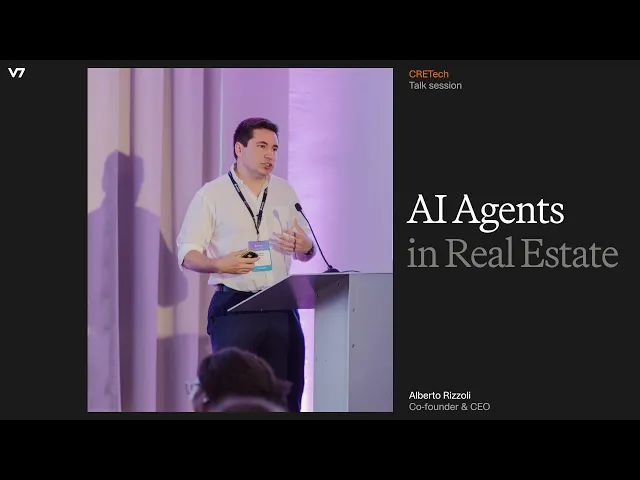
V7's presentation at CRETech showing AI document processing for real estate workflows.
The Modern Solution: A Modular Stack
Property management firms that have solved this problem in 2025 do not rely on a single monolithic platform. They build composable tech stacks that separate concerns:
The Intelligence Layer (Ingestion): Tools like V7 Go sit at the top of the funnel. They read emails, PDFs, and scanned documents, extract data using AI, verify it visually, and structure it into a clean format.
The Management Layer (Core Platform): Property management systems like AppFolio, Buildium, or Yardi receive the clean data and handle lease management, accounting, and tenant communication.
The Visualization Layer (Reporting): Tools like PowerBI or custom owner portals present the final data to stakeholders.
This separation means each layer does what it does best. The AI layer handles the unstructured mess. The PMS handles the structured record-keeping. The reporting layer handles the presentation. No single vendor has to be excellent at all three—and you avoid vendor lock-in.
What Property Managers Actually Need
Before evaluating specific platforms, it helps to understand what property managers actually do every day. The job breaks down into five core workflows:
1. Lease Administration
This includes tracking lease terms, renewal dates, rent escalations, and tenant obligations. The critical artifacts are lease agreements, addenda, and renewal notices.
The bottleneck: Extracting key dates and clauses from 20-page PDF leases and ensuring they are accurately reflected in the system. A single missed renewal option can cost the owner thousands in vacancy loss.
What breaks: Most PMS platforms have a "lease abstraction" screen with 30+ fields. Filling these manually from a scanned document takes 25-45 minutes per lease. Teams skip fields they consider "optional," which creates data gaps that surface months later during a dispute or audit.
2. Financial Management
Property managers track rent payments, late fees, security deposits, and operating expenses. They reconcile bank statements, process vendor invoices, and generate owner statements.
The bottleneck: Matching payments to the correct tenant and property when tenants pay via multiple methods (check, ACH, Zelle) or when invoices arrive in non-standard formats. One property manager reported spending two full days per month reconciling bank statements against the PMS ledger.
What breaks: The PMS assumes the payment description matches the tenant ID. It rarely does. A tenant named "John Smith" might send a Zelle payment with the memo "123 Main St rent." Someone has to manually match that to Tenant #4872 at Property #17.
3. Maintenance Coordination
This involves receiving maintenance requests, dispatching vendors, tracking work orders, and ensuring timely completion.
The bottleneck: The lag between a tenant submitting a request (often via text or email) and that request being logged in the system. If a tenant texts "AC broken" at 9 PM and no one logs it until 9 AM, the tenant has already left a 1-star review.
What breaks: Many PMS platforms have tenant portals for submitting requests, but tenants do not use them. They text the property manager directly. The property manager then has to re-enter the request into the PMS, attach photos, and assign a vendor—a process that takes 5-10 minutes per request.
4. Tenant Communication
Property managers send lease renewal notices, late payment reminders, and policy updates. They also respond to tenant inquiries quickly.
The bottleneck: Fragmented communication channels. Some tenants email, some call, some use the portal, some text. Without a unified inbox, messages slip through cracks.
5. Owner Reporting
Owners expect monthly financial statements, occupancy reports, and maintenance summaries.
The bottleneck: Aggregating data from multiple sources (the property management system, bank statements, vendor invoices) and formatting it into a professional report. Many firms spend 2-3 days per month on owner reporting alone.
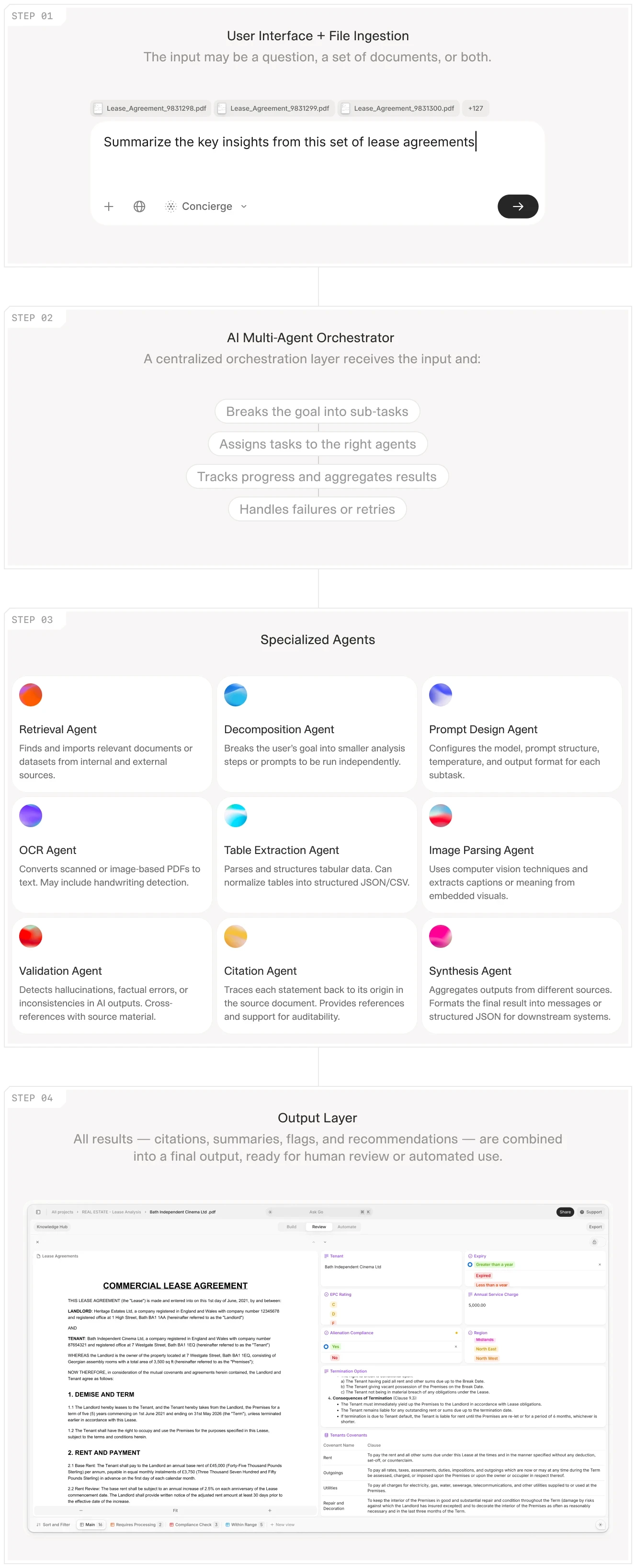
AI agent processing lease agreements through a four-step workflow: upload, extraction, verification, and export.
The Data Ingestion Bottleneck
Every workflow above depends on data getting into the system accurately and quickly. Most property management software assumes your data is already clean. In practice, data arrives in messy formats:
Scanned lease amendments with handwritten notes
Maintenance requests via text message or email
Vendor invoices with inconsistent formatting
Tenant payments with unclear descriptions
Traditional software offers two solutions:
Manual Data Entry: Hire someone to re-key everything. This is slow, error-prone, and expensive. At $20/hour and 15 minutes per document, processing 100 leases costs $500 in labor alone.
Outsourced Data Services: Some vendors offer "managed data services" where you email them your PDFs and their offshore teams manually key in the data. This works, but turnaround is 24-48 hours, and you have no visibility into the process.
The modern solution is to use intelligent document processing to automate the ingestion layer. V7 Go provides AI extraction that is faster than human services and more transparent than black-box automation—every extracted field links back to the exact location in the source document.
V7 Go's Cases interface showing automated extraction of key fields from property documents with visual grounding to source pages.











Deep Dive: Top Rated Property Management Software for 2025
The property management software market includes both modern cloud-native platforms and legacy enterprise systems. Each category has trade-offs. We have evaluated each platform based on three criteria that matter most to practitioners: ease of data ingestion, month-end close impact, and integration flexibility.
Modern Cloud Platforms
These platforms launched in the cloud era and prioritize mobile-first design, API access, and user experience.
AppFolio
Website: appfolio.com
Best for: Mid-to-large property management firms (100+ units) that want a unified platform with built-in automation.
AppFolio has become the default choice for growth-stage property management firms. Its core strength is the unified data model: leases, tenants, properties, vendors, and financials all live in one system with one login. This eliminates the reconciliation headaches that plague multi-system setups.
What works well:
Rent collection: Tenants can pay via ACH, credit card, or debit card directly through the portal. Payments post to the tenant ledger automatically, reducing manual matching.
Maintenance workflow: Tenants submit requests through the portal with photos. The system routes requests to the assigned vendor based on property and issue type. Work orders include timestamps, vendor notes, and completion photos.
Owner statements: AppFolio generates owner statements automatically at month-end. The standard template includes income, expenses, and a cash flow summary. You can customize the template, but customization requires support tickets.
Where teams struggle:
Lease import: If you are migrating from another system, lease data must be entered manually or via a CSV import. The CSV format is rigid—any mismatch in date formats or field names causes the import to fail. One operations manager reported spending 40 hours on initial data migration for 300 units.
Document storage: AppFolio stores documents, but the search is limited. Finding a specific lease amendment from 2019 requires clicking through folders. There is no full-text search across document contents.
Pricing opacity: AppFolio does not publish pricing. Quotes are customized based on portfolio size, and costs can escalate as you add units or features.
Month-end impact: Teams using AppFolio typically close books in 2-3 days for a 200-unit portfolio. The main delay is reconciling payments that did not auto-match (e.g., Zelle payments without tenant IDs).
Buildium
Website: buildium.com
Best for: Small-to-mid-sized property managers (10-500 units) who need strong accounting integration and resident communication tools.
Buildium focuses on accounting depth. The general ledger is more customizable than AppFolio's, with support for custom chart of accounts, class tracking, and accrual accounting. This matters if your owners have specific reporting requirements or if you manage properties for multiple entities with different accounting treatments.
What works well:
Accounting flexibility: Buildium supports both cash and accrual accounting. You can set up custom GL codes, track expenses by property or owner, and generate 1099s for vendors.
Resident portal: The tenant-facing portal is clean and functional. Tenants can view lease documents, submit requests, and pay rent. The portal branded to your company, not Buildium.
Pricing transparency: Buildium publishes pricing starting at $52/month for up to 20 units. This makes budgeting predictable for smaller firms.
Where teams struggle:
Mobile app reliability: Reddit threads consistently flag the mobile app as unstable. Property managers report crashes during inspections and slow load times for maintenance photos. One user wrote: "The mobile app's reliability is a major headache, especially during busy rent collection periods."
Reporting limitations: While the accounting is strong, custom reporting requires workarounds. Exporting data to Excel for pivot tables is common.
Document handling: Like AppFolio, Buildium stores documents but does not extract data from them. A lease PDF is just a file attachment, not structured data.
Month-end impact: Buildium's accounting depth can speed up month-end close if you have pre-configured the chart of accounts correctly. Expect 2-4 days for a 200-unit portfolio, with extra time for custom owner reports.
TenantCloud
Website: tenantcloud.com
Best for: Small landlords (1-20 units) who need a free or low-cost solution with basic features.
TenantCloud's value proposition is price. The free tier includes basic tenant management, online rent collection, and lease tracking. For landlords managing a few units as a side business, this is often sufficient.
What works well:
Free tier: No upfront cost for basic features. You can manage up to 75 units on the free plan.
Simple interface: The learning curve is minimal. Landlords can set up a property and tenant in under 30 minutes.
Online payments: Tenants can pay via ACH. The landlord receives funds within 2-3 business days.
Where teams struggle:
Limited accounting: TenantCloud does not include a full general ledger. If you need accrual accounting, custom GL codes, or detailed financial reports, you will need a separate tool.
Scalability: The system slows down as you add properties. Users with 50+ units report performance issues.
Support limitations: Free-tier users have access to email support only. Response times can exceed 48 hours.
Month-end impact: For a small portfolio (under 20 units), month-end close is quick—often same-day—because the accounting is simple. But if you need to generate formal owner statements, you will export to Excel.
Rentec Direct
Website: rentecdirect.com
Best for: Residential property managers (10-100 units) who prioritize mobile access and tenant screening.
Rentec Direct has built a loyal following among residential property managers. The mobile app is genuinely functional—you can approve work orders, communicate with tenants, and view financial dashboards from your phone without the instability issues reported with Buildium.
What works well:
Mobile app: Property managers can manage properties, approve expenses, and respond to tenant messages from the app. The interface mirrors the desktop version.
Tenant screening: Integrated screening includes credit checks, criminal background checks, and eviction history. Results return within minutes.
Pricing clarity: Rentec publishes pricing at $45/month for up to 10 units, scaling linearly as you add properties.
Where teams struggle:
Commercial limitations: Rentec is designed for residential. If you manage commercial properties with CAM charges, percentage rent, or triple-net leases, you will need a different platform.
Integration gaps: The API is limited compared to AppFolio or Yardi. Connecting to external tools often requires Zapier or manual exports.
Month-end impact: Expect 1-2 days for a 100-unit residential portfolio. The straightforward accounting and reliable mobile access reduce delays.
Legacy Enterprise Systems
These platforms serve large property management firms and institutional owners. They offer extensive customization but require significant implementation investment.
Yardi Voyager
Website: yardi.com
Best for: Large property management firms (1,000+ units) and institutional owners who need multi-asset-class support and deep customization.
Yardi is the industry incumbent. It manages portfolios spanning residential, commercial, industrial, and mixed-use properties. For firms with complex structures—multiple entities, joint ventures, mixed asset classes—Yardi's flexibility is unmatched.
What works well:
Multi-asset support: A single Yardi instance can manage apartments, office buildings, retail centers, and industrial warehouses. Each asset class has specialized modules.
Customization: Nearly everything is configurable: workflows, reports, data fields, approval chains. Large firms can make Yardi match their exact processes.
Compliance tools: Yardi includes modules for affordable housing compliance, CAM reconciliation, and regulatory reporting.
Where teams struggle:
Implementation timeline: A full Yardi Voyager implementation takes 6-12 months for a mid-sized firm. Data migration alone can take 2-3 months.
Learning curve: The interface shows its age. New team members require 20-40 hours of training before they are productive. One Reddit user reported: "The learning curve for some of these legacy systems is brutal—you spend more time figuring out the software than actually managing properties."
Cost: Yardi pricing starts at $50,000/year for smaller implementations and can exceed $500,000/year for large enterprises with multiple modules.
Month-end impact: Yardi's month-end close depends heavily on how well it was configured. Well-implemented systems close in 3-5 days. Poorly configured systems—where teams export data to Excel for manual reconciliation—can take 2 weeks.
Yardi Breeze
Website: yardi.com/solutions/yardi-breeze
Best for: Mid-sized firms (50-500 units) who want Yardi's reliability without the full Voyager complexity.
Yardi Breeze is the simplified version of Voyager. It targets firms that have outgrown AppFolio or Buildium but are not ready for a full enterprise implementation.
What works well:
Modern interface: Breeze has a cleaner, more intuitive UI than Voyager. The learning curve is 5-10 hours rather than 20-40.
Yardi ecosystem: Breeze integrates with other Yardi products, so firms can upgrade to Voyager later without starting from scratch.
Where teams struggle:
Limited customization: Breeze trades flexibility for simplicity. If your workflow does not match the default setup, you have limited options.
Pricing: Breeze costs more than AppFolio or Buildium for similar unit counts, and you pay extra for features that competitors include by default.
How AI Agents Solve the Data Ingestion Gap
The bottleneck across all property management platforms is data ingestion. Lease agreements, maintenance requests, and vendor invoices arrive as unstructured documents. Getting that data into the PMS requires manual re-keying—or it did, until AI agents made extraction reliable.
The V7 Go Approach
V7 Go uses AI agents to automate the extraction and structuring of data from property documents. Here is how the workflow operates:
Upload: Drop a batch of lease agreements, maintenance requests, or vendor invoices into V7 Go. Documents can come from email, SharePoint, Google Drive, or direct upload.
Extraction: The AI agent reads each document, identifies key fields (tenant name, lease dates, rent amounts, maintenance descriptions), and extracts them into structured data.
Verification: V7 Go's visual grounding shows exactly where each data point was extracted from the source document. You can verify accuracy without re-reading the entire PDF.
Export: The structured data exports as JSON, CSV, or Excel—ready to import into your property management system.
For a 200-unit portfolio with 60 lease renewals per year, this workflow reduces data entry time from 15-20 hours to under 2 hours, including verification.
V7 Go Knowledge Hubs showing document memory banks with instant Q&A retrieval and source citations.
Example Agent Workflows for Property Management
V7 Go provides pre-built agent templates designed for common property management tasks. Each agent can be customized to match your specific document formats and workflow requirements.
Lease Abstraction Agent
A Lease Abstraction Agent processes lease agreements and extracts key terms: tenant name, lease start date, lease end date, monthly rent, security deposit, renewal options, and special clauses.
Workflow:
Connect your SharePoint folder containing lease PDFs to V7 Go.
The agent processes each document, extracting fields based on a pre-configured template.
Review flagged items—clauses the agent could not parse with high confidence.
Export the structured data to your PMS via CSV import or API.
Metrics from a pilot with a 150-unit residential portfolio: Lease abstraction time dropped from 45 minutes per lease to 7 minutes (including human review). Month-end close shortened by 1.5 days because lease data was already accurate in the system.
Maintenance Request Extraction Agent
A maintenance agent processes requests submitted via email or text, extracts the tenant name, property address, and issue description, and creates a work order in your PMS.
What it handles:
Text messages: "AC not working at 123 Main St"
Emails with attachments: "See photo of leak under kitchen sink"
Portal submissions with incomplete fields
The agent normalizes these inputs into a consistent format, assigns an urgency score based on keywords ("flooding" = urgent, "squeaky door" = routine), and routes to the appropriate vendor.
Invoice Reconciliation Agent
An invoice agent processes vendor invoices, extracts the vendor name, invoice number, date, and line items, and matches them against purchase orders in your system.
For a firm processing 200 invoices per month, this agent reduces reconciliation time from 10 hours to under 2 hours. Discrepancies (invoices without matching POs, amounts that differ by more than 5%) are flagged for human review.
Implementation Roadmap: Migrating to a Modern Stack
Migrating from a legacy property management system to a modern stack requires careful planning. Here is a week-by-week roadmap based on implementations at firms managing 100-500 units.
Phase 1: Assessment (Weeks 1-2)
Week 1: Workflow Audit
Document current workflows for lease administration, financial management, maintenance, tenant communication, and owner reporting.
Identify where data gets stuck: manual re-entry points, Excel workarounds, duplicate systems.
Quantify the pain: hours spent on data entry, error rates, month-end close time.
Week 2: Vendor Evaluation
Request demos from 3-5 property management platforms that match your portfolio size and asset types.
Evaluate each platform on: data import flexibility, API availability, month-end close workflows, and mobile functionality.
Check references from firms with similar portfolios.
Phase 2: Data Migration (Weeks 3-6)
Week 3: Data Export
Export data from your legacy system: tenant records, lease terms, financial transactions, vendor lists.
Export documents: lease PDFs, inspection reports, vendor contracts.
Weeks 4-5: Data Cleaning
Standardize date formats, address formats, and naming conventions.
Resolve duplicates: tenants with multiple records, properties with inconsistent IDs.
Fill gaps: missing lease end dates, incomplete tenant contact information.
Week 6: Data Import
Import cleaned data into the new PMS using CSV imports or vendor migration services.
Validate a sample: spot-check 10% of records to confirm accuracy.
Phase 3: Configuration (Weeks 7-8)
Week 7: System Configuration
Set up chart of accounts to match your accounting structure.
Configure user roles and permissions.
Set up automated workflows: late fee calculations, renewal reminders, work order routing.
Week 8: AI Layer Setup
Connect V7 Go to your document sources (SharePoint, Google Drive, email).
Configure agent templates for lease agreement analysis, maintenance requests, and invoice processing.
Run a test batch: process 20-30 documents and verify extraction accuracy.
Phase 4: Training and Go-Live (Weeks 9-11)
Weeks 9-10: Team Training
Conduct hands-on training sessions for property managers, accountants, and maintenance coordinators.
Create quick-reference guides for common tasks.
Pilot with a subset of properties (10-20% of portfolio) to identify issues before full rollout.
Week 11: Go-Live
Roll out the new system to the full portfolio.
Monitor closely for the first month: track error rates, support tickets, and month-end close time.
Adjust configurations based on real-world usage.
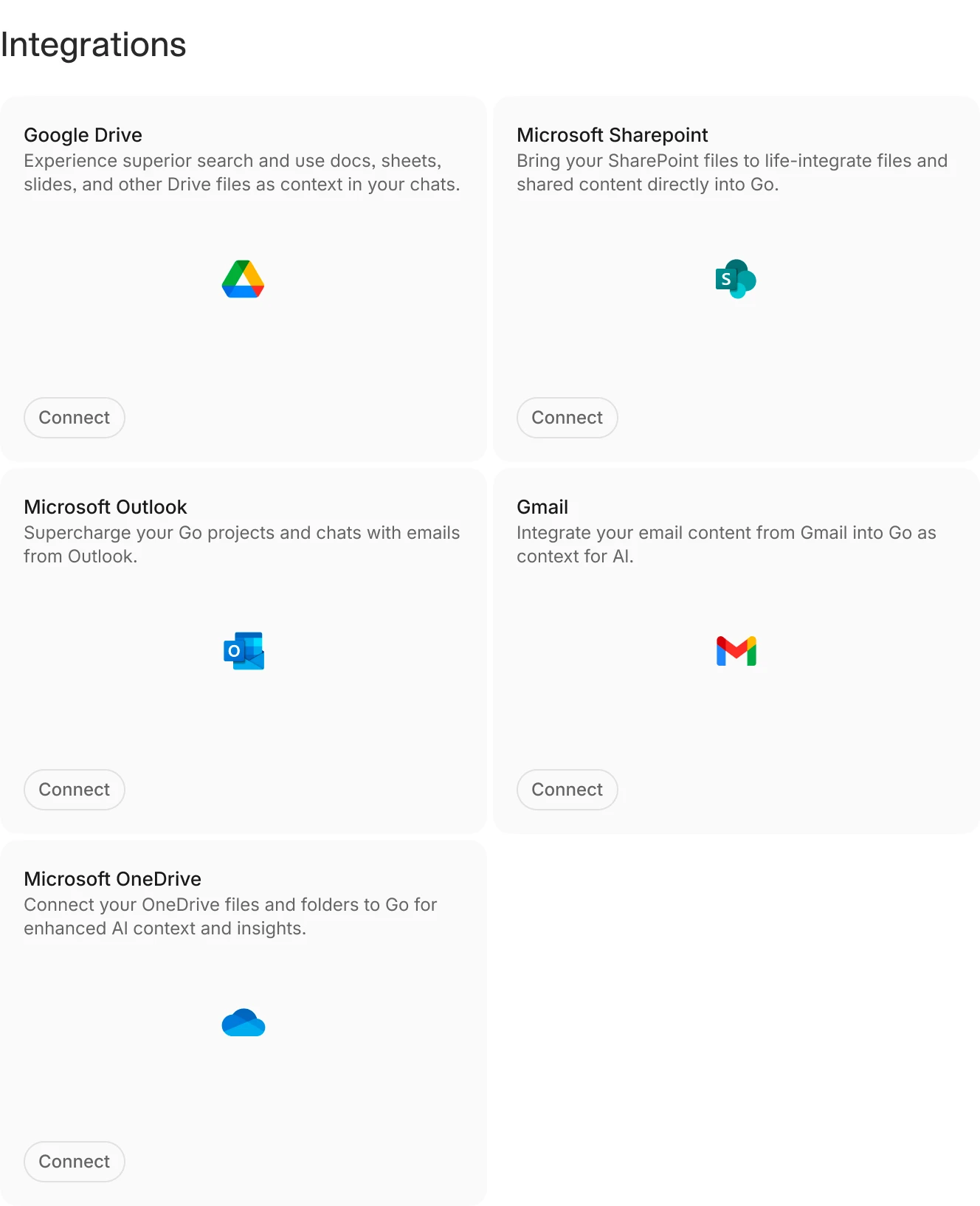
V7 Go integrations connecting to common document sources used by property management teams.
Advanced Use Cases: Beyond Basic Property Management
Once you have solved the data ingestion problem, modern property management software enables capabilities that go beyond lease tracking and rent collection.
Predictive Maintenance
By analyzing historical maintenance data, AI can predict when equipment is likely to fail and schedule preventive maintenance before tenants file complaints.
How it works:
V7 Go ingests historical work orders from your PMS (or from scanned records if your legacy system does not export cleanly).
The agent extracts equipment type, issue description, resolution, and cost for each work order.
A pattern emerges: HVAC units at properties built before 2005 require compressor replacement every 8-10 years. Water heaters fail within 6 months of the first "slow heating" complaint.
The agent generates a maintenance schedule based on these patterns, flagging units due for inspection.
One property management firm reduced emergency HVAC calls by 35% in the first year by shifting to predictive scheduling. The cost per unit for planned maintenance was $180; emergency calls averaged $450.
Rent Optimization
AI can analyze market data to recommend rent prices for each unit based on comparable properties, vacancy rates, and seasonal trends.
How it works:
The agent pulls comparable listings from public sources (Zillow, Apartments.com) and extracts rent, square footage, bedrooms, and amenities.
It compares your units against the market: a 2-bedroom at $1,300/month is 8% below comparable units at $1,410.
The agent recommends a rent increase to $1,375 at the next renewal—splitting the difference to balance revenue and retention.
A firm managing 400 units tested this approach on 50 renewals. Average rent increase was $47/month compared to $28/month using the old "3% annual increase" rule. Annualized revenue gain: $11,400.
Compliance Monitoring for Multi-Family
For firms managing affordable housing or Section 8 properties, compliance documentation is a constant burden. AI agents can monitor tenant files for missing documents and flag compliance gaps before audits.
What the agent monitors:
Income verification documents (must be updated annually)
Lease certifications with correct affordability covenants
Inspection reports meeting HUD standards
When a document expires or is missing, the agent creates a task in the PMS and emails the property manager. Audit preparation time dropped from 3 weeks to 5 days at one firm managing 800 affordable units.
The Future: Modular and Connected
The era of the "all-in-one" monolithic property management system is fading. The future belongs to modular, interconnected ecosystems where the best management platform (AppFolio, Buildium, or Yardi) connects with the best intelligence layer (V7 Go) and the best visualization layer (PowerBI or custom dashboards).
This approach reduces vendor lock-in and allows you to swap out components as technology improves. The critical glue holding this stack together is clean, structured data. By automating the ingestion layer, you ensure that every downstream system—from your accounting software to your owner portal—is fed with accurate, timely information.
For property managers, the competitive advantage will not come from having the same software as everyone else. It will come from information advantage—the ability to ingest, synthesize, and act on unstructured data faster and more accurately than the competition.
What Changes on Monday Morning
If you implement the strategies in this guide, here is what changes:
Lease renewals take 7 minutes instead of 45. You upload the PDF, the agent extracts the fields, you verify, and you import. The data is accurate the first time.
Maintenance requests log automatically. A tenant texts "AC broken," the agent creates a work order, and the vendor receives notification within minutes—not the next morning.
Month-end close drops from 5 days to 2. Bank reconciliation is pre-matched. Owner statements generate without manual data pulls. You spend your time reviewing exceptions, not re-keying data.
You stop exporting to Excel. The data in your PMS is complete and accurate enough to run reports directly. Excel becomes a tool for ad-hoc analysis, not a crutch for broken workflows.
To see how you can automate the ingestion of your property management data—from lease agreements to vendor invoices—book a demo with V7 Go.
What is the difference between property management software and accounting software?
Property management software is designed specifically for managing rental properties. It includes features like lease tracking, tenant communication, maintenance management, and rent collection. Accounting software like QuickBooks or Xero handles general business accounting: invoicing, expense tracking, and financial reporting. While some property management software includes accounting features (Buildium and AppFolio both have general ledgers), these are typically less flexible than dedicated accounting tools. Many firms use both: the PMS for property-specific workflows and accounting software for corporate overhead, payroll, and tax preparation.
+
Can AI fully automate property management?
No, and you should be skeptical of anyone claiming it can. AI automates the <em>data gathering</em>, <em>extraction</em>, and <em>reporting</em> components of property management. It removes the manual friction of getting data into the system and generating reports. The strategic decisions—lease negotiations, tenant relations, property improvements, rent pricing—remain human tasks. AI is a tool that amplifies human judgment, not a replacement for it. The firms seeing the best results use AI to handle the repetitive, error-prone data work so their team can focus on decisions that require context and relationships.
+
Is it safe to put sensitive tenant data into cloud-based property management software?
Yes, provided the vendor meets enterprise security standards. The baseline requirement is SOC 2 Type II certification, which verifies that the vendor has implemented controls for security, availability, and confidentiality. You should also look for ISO 27001 certification, GDPR/CCPA compliance, and encryption both in transit and at rest. Enterprise-grade platforms like AppFolio, Buildium, Yardi, and V7 Go include these protections by default. Before signing a contract, request the vendor's security documentation, ask about their data breach response plan, and confirm where your data is physically stored.
+
How long does it take to implement property management software?
It depends on portfolio size and system complexity. A cloud-native tool for a small landlord (under 50 units) might take 2-4 weeks, including data migration and training. A mid-sized implementation (100-500 units) typically takes 6-10 weeks due to data cleaning, custom configuration, and team training. Enterprise implementations with Yardi Voyager or similar platforms can take 6-12 months for large portfolios with complex accounting requirements. Adding an AI ingestion layer like V7 Go is faster—often live in days—because it sits on top of your existing systems and does not require a full data migration.
+
What is the biggest mistake property managers make when selecting software?
Pricing varies widely based on the platform and portfolio size. Free platforms like Innago and TenantCloud offer basic features at no cost for small landlords. Mid-tier platforms like Buildium and Rentec Direct charge $45-$200/month for small portfolios, with pricing scaling based on unit count. Enterprise platforms like Yardi Voyager and RealPage use custom pricing, typically starting at $50,000/year for mid-sized firms and exceeding $250,000/year for large portfolios with multiple modules. AI document processing tools like V7 Go are often priced on usage (volume of documents processed), offering a scalable entry point without large upfront commitments.
+
How much does property management software cost?
Go is more accurate and robust than calling a model provider directly. By breaking down complex tasks into reasoning steps with Index Knowledge, Go enables LLMs to query your data more accurately than an out of the box API call. Combining this with conditional logic, which can route high sensitivity data to a human review, Go builds robustness into your AI powered workflows.
+
Casimir is a seasoned tech journalist and content creator specializing in AI implementation and new technologies. His expertise lies in LLM orchestration, chatbots, generative AI applications, and computer vision.